





Why Should You Read This?
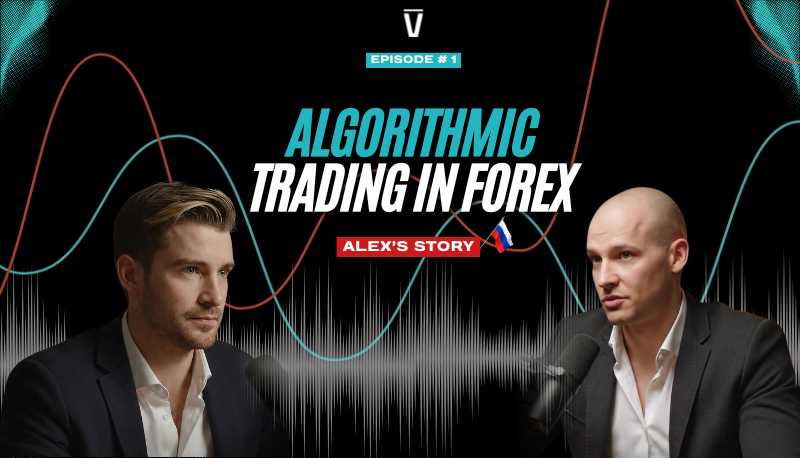
This episode of the Why Varianse podcast, recorded at the VDX Studio, features Alex, a veteran trader from Moscow with over 30 years of experience, who shares how he transitioned from traditional trading to algorithmic trading driven by logic and automation.
Alex explains how tools like Varianse’s reliable trading infrastructure and AI-assisted platforms such as ChatGPT have empowered him to design, test, and scale strategies efficiently eliminating emotion and improving precision. His story highlights why automation, clean data, and disciplined strategy development are key to consistent success in modern forex trading.
For traders and investors, this episode is a must-listen offering real-world insights into how technology, structure, and discipline can turn trading from a stressful chase into a scalable, data-driven craft.
 Ben (Host)
Good evening, Variansers! Welcome back to the Why Varianse series podcast. I'm your host, Ben, and today’s episode is extra special especially for tech enthusiasts. We’re bringing you another inspiring story right from the Varianse Studio, and this time we’re spotlighting a guest all the way from Moscow, the heart of Russia!
Joining me today is someone who knows how to make the markets move with code, logic, and precision. He’s sharp, innovative, and redefining what it means to be an algo trader. Alex made the leap from corporate life to becoming a full-time trader, and he now dedicates his time to teaching and mentoring others in their trading journeys.
In today’s conversation, I’m excited for Alex to share what algorithmic trading really is, his favourite systematic strategies, and how he balances life as a trader, mentor, and parent. Please give a warm welcome to today’s guest Alex!
 Alex (Guest)
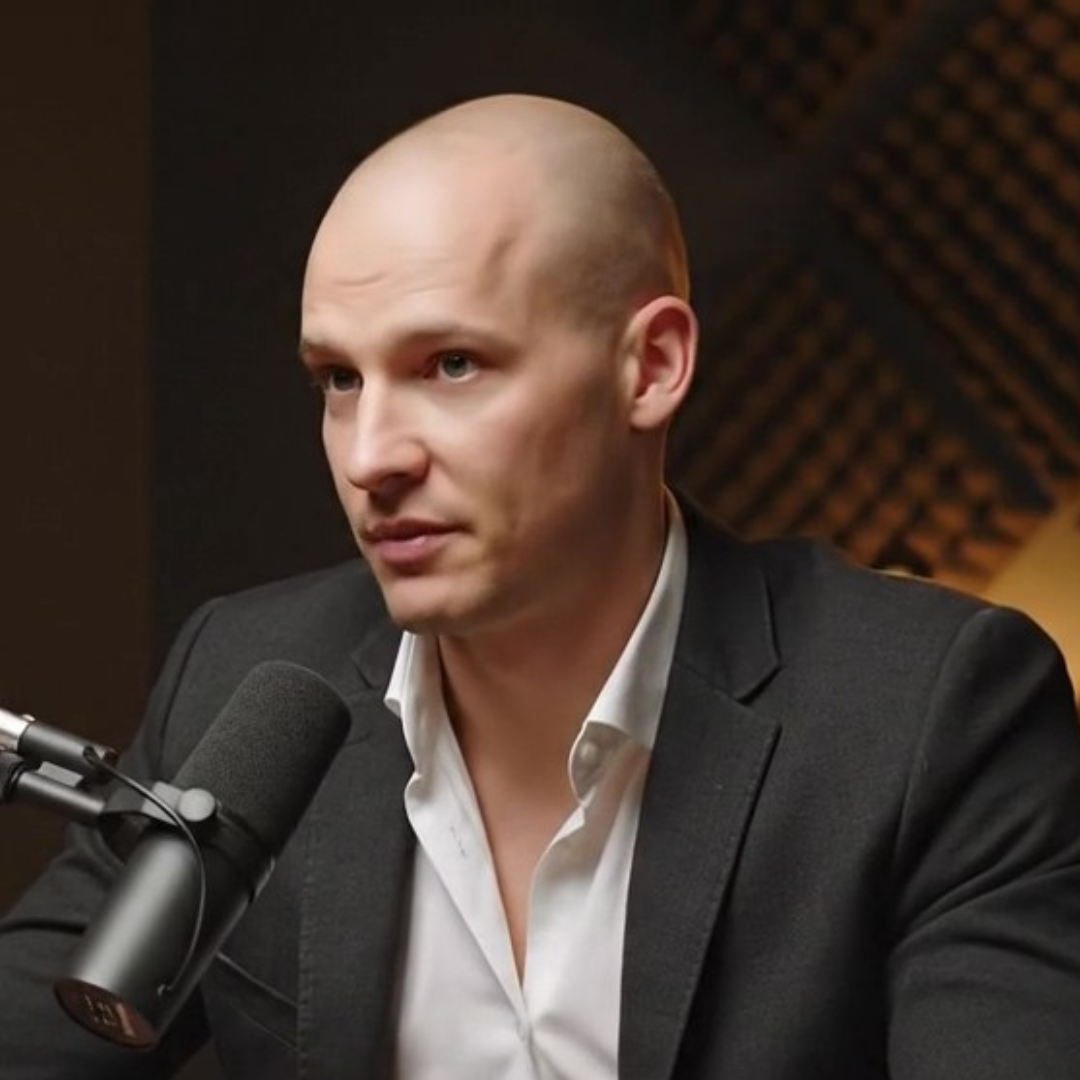
Thank you, Ben. It’s a real pleasure to be here especially in my hometown, Moscow. I’ve been following the Why Varianse series for some time, and it’s exciting to finally sit down in the Varianse Studio to share my story in automated trading.
I believe our audience will really enjoy seeing how algorithmic systems are transforming the markets and why I’m so passionate about combining logic, data, and technology to achieve trading discipline.
Ben (Host)
All the traders I’ve met so far, you’re one of the most experienced, Alex someone who’s truly seen the evolution of the markets. How long have you been trading?
Alex (Guest)
I’d say about 30 years since my very first trade.
Ben (Host)
Thirty years! That’s incredible! You’re a true veteran. Take us back to the beginning, Alex. What first sparked your interest in trading, and how did this journey begin?
Alex (Guest)
Back in high school, I was already thinking about what I wanted to do with my life. Believe it or not, my first dream wasn’t finance. I thought I’d end up in sports management. Maybe a sports agent, even owning a football team one day.
But everything changed when my dad handed me a copy of Forbes magazine. Inside was the famous list of the 400 wealthiest people, and I became fascinated. I started cutting out their profiles and organizing them by industry. My plan was simple: whichever folder was thickest by the time I graduated, that’s where I’d build my career.
After a few years, the clear winner wasn’t sports or manufacturing it was finance. What struck me was that these money managers and hedge fund founders weren’t all geniuses; they were simply disciplined, curious, and willing to take calculated risks.
That was my lightbulb moment. Around that time, I was helping athletes on the side, and a mentor told me,
“You’ve got the skills for this lean into finance.”
That advice gave me the push to take my first real step into trading.
Ben (Host)
That’s fascinating, Alex! So once you got that push and you knew finance was the path, what were your first steps? How did you actually start learning the craft and building that foundation?
Alex (Guest)
My mentor really encouraged me to learn how to manage money properly, and that got me into the financial business. From there, I became fascinated with studying some of the greatest investors and traders in history. I’d spend hours at the library digging through old articles on microfiche. Do you remember those?
Ben (Host)
Is that like a disc?
Alex (Guest)
Nope. It was like this piece of plastic film you fed into a big machine that projected the text on a screen.
One of the first people I really studied was Warren Buffett. His approach completely opened my eyes. At the time, I was living in Toronto, and I also came across Michael Lee Chin, who was building a reputation as Canada’s answer to Buffett.
He ran a small firm, and I worked hard to get in there. That’s where I really started to study value investing.
I realized my curiosity was pulling me more toward trading itself, not just managing money through mutual funds, but really understanding the mechanics of markets and building strategies. That’s when my knowledge base started shifting toward trading full time.
Ben (Host)
So you started out more in research fundamentals, value investing but then you moved toward trading. Why do you think that happened? Instead of staying on the traditional investing path, what drew you into the more active side of trading?
Alex (Guest)
As I got deeper into the industry, I spent a lot of time with money managers, and I noticed something interesting. They’d talk about individual stocks names that had doubled, tripled, even more over time. But when you looked at the overall fund performance, it was just 10%, 12%, maybe 14%.
It made me think: if you built a more focused portfolio, or traded these individual names directly, the potential returns could be so much greater. That realization pulled me away from being satisfied with those ‘regular’ returns, and pushed me toward a more active, hands on approach to trading.
Ben (Host)
Oh I see. So that was the moment you realized there was more opportunity in being active with individual names than just sticking to the standard fund returns?
Alex (Guest)
I wanted a bigger upside than traditional investing offered, and I was inspired by traders I had read about years ago in Forest magazine. I wanted to try an active approach that could potentially achieve those kinds of results.
Ben (Host)
Okay so that's how you got into trading then specifically how did you get into Algo trading?
Alex (Guest)
After a few years of manual trading, I kept running into the same problem: even if my strategy was solid, human emotions and timing errors kept holding me back.
One night, I was having dinner with some fund managers. They casually mentioned that their systematic trading fund returned 281% that year. I was like, wait… what?
That’s when it hit me. This isn’t magic, this is rules, executed perfectly by a machine.
A few months later, I got recruited by a firm building a machine driven trading platform. I became president, worked with engineers and data scientists, and saw firsthand how a well coded system could scan the markets, place trades, and manage risk all hands-free. It was like watching trading in hyperdrive.
That was my turning point. I realized I didn’t want to trade manually anymore. I wanted to build systems that trade for me, free from emotion, disciplined, and scalable. That led me to start my own Algo fund in my place, at a time when APIs were rare and mentorship was almost non-existent.
Today, my trading isn’t about staring at charts, it's about designing smart systems that work around the clock, even when I’m not watching.
That’s the beauty of rules-based trading: it's like giving your strategy a brain of its own.
Ben (Host)
I love how you connected the dots from being a manual trader to building programmatic frameworks that work even when you’re not watching.
So that’s how you got into trading. But specifically, how did you get into algo trading?
Alex (Guest)
Ah, that’s a fun story. Honestly, the moment I realized trading bots trade better than humans hit me when I was just testing a few scripts. I was grabbing coffee, and the system executed trades perfectly on its own. No hesitation, no panic, just following rules. I remember thinking,
‘Wait this is actually working!’
That’s when I knew I had to go all in with algo trading
Ben (Host)
Woah! That must have been both exciting and a bit scary.
Did you have doubts about trusting a machine with real money?
Alex (Guest)
Of course! I double checked every single trade in the beginning. But slowly, I realized the system doesn’t make emotional mistakes it doesn’t overthink.
Humans panic, algorithms don’t. That discipline! Total game changer for me.
Ben (Host)
So, how did you even start building your first initial trading script? Did you have help or was it all DIY?
Alex (Guest)
Initially, it was just me experimenting with Python and MQL5 scripts. Super simple rules to start: if price breaks the previous high, enter; if it falls below support, exit.
After I saw it working historically, I brought in a small team of engineers. That’s when it went from a personal side project to something scalable, something I could actually run professionally.
Ben (Host)
And when did it click for you that this could be more than a project that it could be a full fledged business
Alex (Guest)
The turning point? After the first year of backtesting and live trading. Consistent profits, minimal drawdowns, and the system didn’t care if I was asleep or in a meeting. That’s when I realized this wasn’t just a tool it was a business model that could scale globally and that’s exactly what I did next
Ben (Host)
Alex, you’ve clearly gone deep into data driven trading. Can you walk us through the technical side? How do you actually structure your programs and tactics
Alex (Guest)
Absolutely Ben. At its core, my approach is entirely rule based. I design the logic around clear market conditions - breakouts, trend reversals, support resistance levels, volume spikes. Everything is coded so that the mechanism drives without human intervention, minimizing emotional bias.
Think of it like an automated decision tree where every ‘if then’ condition has been backtested rigorously over years of historical data.
Ben (Host)
Algo trading is already pretty technical. But now with AI tools like ChatGPT, information is more accessible than ever.
Do you think AI is actually going to change the way traders learn, build, and test systems? Or is it just hype?
Alex (Guest)
I believe AI is going to change things massively. The amount of information traders can access today is on another level compared to when I started. Back then, if you came across a new concept, say VWAP, you'd have to stop, Google it, dig through Investopedia, hope the explanation was accurate, then figure out how it applied to your strategy. It was time consuming and not always clear.
Now?
You just open ChatGPT or any of these AI models, type “Explain VWAP like I’m five,” and instantly you get a crystal clear breakdown. That’s a game changer. It speeds up learning, it removes friction, and it allows traders whether beginners or pros to go deeper into systems, test faster, and iterate smarter.
So no, it’s not hype. It’s real. The traders who learn how to integrate AI into their workflow are going to learn faster, adapt faster, and potentially become profitable faster. To me, it’s like turbocharging the education and development cycle in trading.
Ben (Host)
So ChatGPT and a lot of these AI tools are out there… it’s not like you can just take what they spit out and instantly turn it into a trading strategy, right?
Alex (Guest)
Correct. Look, I’ve been using intelligent systems since the late ’90s, early 2000s. Back then, AI was already doing the heavy lifting on statistics, testing, crunching numbers, things that used to take me days or weeks could be done in minutes.
Now, with the chat side of AI, it’s phenomenal.
If you’re a developer and you know trading, you can say, “Write this code,” and boom you’ve got something you can test. But here’s the catch: if you don’t know trading, if you don’t understand strategy or risk management, it’s garbage in, garbage out.
That’s why I always tell people to learn the strategy first, get a mentor if you need one. AI can accelerate you, but it won’t save you from a bad foundation.
Ben (Host)
And when you’re coding these strategies, how do you test them for robustness? I imagine backtesting is crucial
Alex (Guest)
Exactly. Backtesting is non-negotiable. I run strategies on multiple timeframes intraday, daily, and even weekly to see how they behave under different market conditions. That’s where platforms like Varianse come in.
They provide me with reliable historical data, advanced charting, and real-time testing environments. It’s not just a tool, it's like having a sandbox where I can simulate trades at scale before deploying live.
The support from their team has been really helpful too; any data queries or platform issues are resolved quickly, which is critical when you’re running algo systems
Ben (Host)
Okay, but there are a lot of platforms out there. You could have gone with any of them.
Why Varianse Alex over other top brokers?
Alex (Guest)
Well, let me be honest, I didn't land on Varianse right away. I went through the usual journey that most algo guys do. I tried one platform that looked great on the surface, but when I dug in, the historical data was full of gaps. Imagine spending weeks fine tuning a system, only to realize your backtests were based on incomplete price feeds. That was frustrating.
Then I moved to another well known platform. The tools were fine for discretionary traders if you just wanted to click buy and sell manually, it worked.
But the moment I tried to automate, the API was clunky and limited. It would freeze during peak market hours, or miss execution windows. For algo trading, that’s a deal-breaker.
By the time I got to Varianse, the difference was night and day. The data was robust, the latency was low, and the backtesting actually reflected real-world conditions. On top of that, the support was incredible. Anytime I had a technical question or needed help with an API integration, their team actually understood the problem and fixed it quickly.
For me, that was the turning point. I realized Varianse wasn’t just another platform; it was built with systematic traders in mind and that’s why I’ve stuck with it and I would say the biggest reason?
Because it provides me fast execution and low slippage. Yeah that’s really important for me.
Ben (Host)
Interesting. So it’s not just coding, but also data, infrastructure, and execution that matter?
Alex (Guest)
Exactly. Beyond platforms like Varianse, I’ve been actively contributing to the MQL5 community for several years. Sharing strategies, reviewing code snippets, and discussing optimization techniques with other strategy developers has sharpened my approach.
It’s a knowledge-sharing ecosystem I learn, I teach, and together we improve the robustness of automated systems. For anyone getting started in computational trading, participating in communities like MQL5 is invaluable.
Ben (Host)
That makes sense.
Can you give a quick example of how a trade flows through your system from signal to execution?
Alex (Guest)
Sure. Let’s take a simple breakout strategy: once the algorithm detects a breakout above a defined resistance level, it triggers an entry. Stop-loss levels are calculated dynamically based on volatility, and targets are pre defined using historical ATR (Average True Range).
Orders are sent to the broker API instantly. If a condition isn’t met or the price reverses, the system exits automatically. It’s fully autonomous.
Humans just supervise and refine; they don’t intervene in execution.
Now, that’s the “vanilla ice cream” version. What I’m not giving away are the sprinkles on top like my tools for detecting market sentiment or filtering out false positives with a dash of AI and machine learning. Those are staying in the secret sauce… at least until maybe a future episode if Ben bribes me with enough coffee.
Ben (Host)
Ha! I’ll keep the coffee brewing then. Probably we’ll save those AI sprinkles for a future deep dive episode.
But let’s bring it back down to the practical side. At the end of the day, all those strategies, rules, and even the “secret ingredients” need a place to run and be monitored in real time. And that’s all on Varianse for you.
Alex (Guest)
Yes. Varianse lets me see live P&L, order flow, and alerts in one dashboard. Combined with my own backend scripts, I can scale strategies across multiple instruments with minimal overhead.
Ben (Host)
Fascinating. So this is pure algorithmic trading, human emotions out, rules in, data-driven decisions at every step. Being part of MQL5, I assume you also explore new indicators and optimization techniques regularly?
Alex (Guest)
Absolutely. MQL5 is where I test new ideas, benchmark strategies, and collaborate with other quant coders globally. Some of the concepts I’ve discussed there have been directly integrated into my live systems. It’s a continuous cycle of learning, coding, testing, and improving.
Ben (Host)
Trading system architects often worry about overfitting strategies where they look great in backtests but fall apart live. How do you deal with that?
Alex (Guest)
That’s a big one. Overfitting is the silent killer of strategies. You can make any backtest look amazing if you tweak enough parameters, but that doesn’t mean it’ll survive real markets. What I do is stress test across multiple instruments and randomize the data. For example, shuffle candles or add noise and see if the strategy still holds up. If it breaks easily, it’s not robust enough for live trading.
Ben (Host)
Execution latency and slippage are another pain point. Even the best logic won’t help if your fills are slow or off.
Alex (Guest)
Exactly. A strategy that looks profitable on paper can collapse if you’re half a second late or constantly slipping 1 - 2 pips. That’s where Varianse made the biggest difference for me. Other platforms just couldn’t guarantee stability under high load. Varianse’s low latency infrastructure and tight spreads turned my strategies from ‘theoretically profitable’ into actually profitable.
Ben (Host)
What about data? I’ve heard poor data quality can really skew results.
Alex (Guest)
That’s true. Many platforms give you clean-looking charts but the historical data is full of gaps, or worse, survivorship bias. You think your strategy is bulletproof until you run it live and suddenly it falls apart. With Varianse, the historical feeds are clean and reliable. I can trust the data, which means I can trust my backtests.
Ben (Host)
APIs are the lifeline of algo trading. Did you ever run into problems there?
Alex (Guest)
Oh, plenty! On some brokers, APIs would freeze during NFP or high volatility events. Imagine your stop-loss not triggering because the API hung for 30 seconds. That's a nightmare. With Varianse, I’ve had stability even during volatile events. When I did run into integration questions, their tech team was quick to respond. That kind of support is rare.
Ben (Host)
How do you handle scaling? Running one algo on EURUSD is one thing, but what about across dozens of pairs or asset classes?
Alex (Guest)
Well, scaling is where infrastructure really matters. Running the same algo on 30 instruments means you need pristine market data, stable execution, and enough computational power to handle simultaneous trades.
Varianse’s environment, combined with my own automation scripts, gives me that flexibility. Without it, you’d constantly run into bottlenecks.
Ben (Host)
Algo trading is supposed to remove emotion, but do traders still struggle psychologically?
Alex (Guest)
Definitely. Just because the trading logic deploys, it doesn’t mean you won’t feel nervous watching drawdowns. Many traders kill good systems too early because they don’t trust the process.
The key is building robust strategies you believe in so you don’t second-guess your own code. That’s where proper testing and reliable platforms come in.
Ben (Host)
Very impressive Alex!
Any advice would you like to give for someone starting today in rule based trading?
Alex (Guest)
If you’re just starting out, here’s my advice: don’t rush to automation. First, master the fundamentals, learn how markets move, learn technicals, understand execution. Trading is money, and money demands respect. Treat it like a craft, not a game.
Once you’ve built that foundation, then step into algo trading. At the end of the day, it’s just logic ‘if this, then that’ coded into a system. The beauty is, once the rules are solid, the machine will trade them with zero hesitation, zero emotion.
But remember, your system is only as good as the knowledge you put into it. Garbage in, garbage out. So be professional. Be disciplined. Keep learning, keep refining. If you do that, algo trading isn’t just a tool it’s a gateway. It can give you freedom, scalability, and a career that’s limited only by how far you’re willing to push yourself.
Start with one clear strategy, keep it simple, backtest thoroughly, and leverage platforms like Varianse for reliable data. Join communities like MQL5 to learn and share and remember, patience and discipline matter more than chasing the next ‘hot’ strategy algorithms don’t sleep, and neither should your preparation.
So take it seriously, invest in your skills, and I promise this journey can change your life.
Ben (Host)
Respect Alex for sharing your journey. For everyone listening here’s my challenge to you: don’t just listen, take action.
Pick one thing Alex mentioned today, maybe it’s backtesting your first idea, maybe it’s joining a community like MQL5, or maybe it’s just simplifying your trading rules and putting it into practice this week. That’s how you’ll move from theory to results
Thanks for being part of the Why Varianse community. Keep learning, keep building, and remember: the markets never stop, and neither should your growth. We’ll catch you in the next episode.