

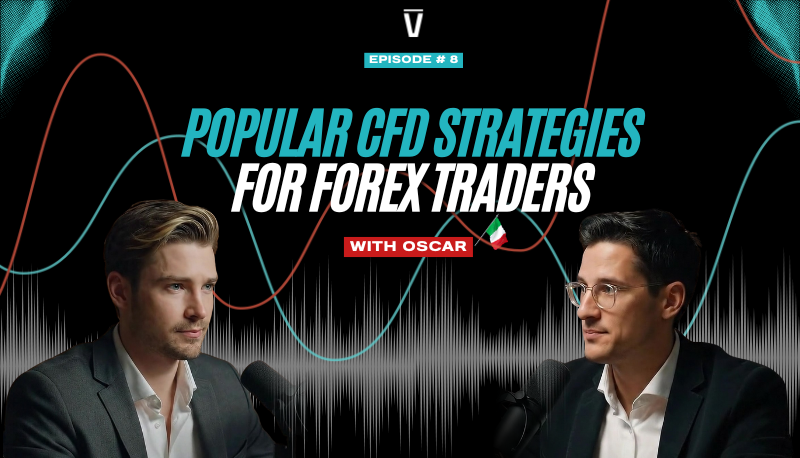




Trading success stories often begin with charts, indicators, and market predictions. But Oscar’s journey starts far from the markets in a quiet Sicilian town shaped by discipline, routine, and years of medical training. He never set out to become a trader; yet the same precision that guided him in the clinic would later redefine his approach to CFDs, risk, and the fast-moving world of forex trading in Italy.
Understanding CFD Trading Before You Trade
CFD trading, or Contracts for Difference, allows traders to speculate on global market price movements across stocks, indices, commodities, and forex without owning the underlying asset. This makes CFDs a flexible trading instrument, but one that requires structure, strategy, and risk management.
When Dr. Oscar moved into his new home in Milan and began trading, he quickly discovered that intuition is not a trading strategy. Coming from medicine where accuracy, discipline, and methodical decision-making can save a life, he applied the same structured approach to the markets:
Observe → Strategize → Implement → Review
Most Popular CFD Trading Strategies
1. Trend Following
Trend following involves identifying the market’s overall direction and trading in that direction.Oscar mastered this using moving averages, RSI, and momentum indicators entering when momentum strengthened and exiting when the trend weakened. This is one of the most reliable CFD trading strategies for traders looking to reduce emotions and follow market momentum rather than impulses.
2. Range Trading
Not all markets trend. Many move sideways within support and resistance levels.
Oscar traded ranges by buying near support, selling near resistance, and using tight stop-losses to manage risk. Using Varianse’s advanced charting tools, he could clearly see price zones and plan entries with precision.
3. Breakout Trading
For Oscar, breakouts were “the moment the market reveals its true direction.”
He waited for consolidation and entered when price broke through key levels with strong volume. This approach demands fast execution, which is why Direct Market Access (DMA) became essential for him. With DMA, orders are executed instantly, without dealer intervention.
4. Swing Trading
Because Oscar balanced his medical career with trading, he preferred swing trading — holding positions for several days to capture bigger price movements.
Swing trading gave him time to:
- Analyze setups calmly
- Plan entries and exits
- Place strategic stop-losses
- Avoid the noise of intraday fluctuations
“It felt like surgery carefully planned, zero guesswork.”
5. Scalping
Although not his main style, Oscar tried scalping CFDs during high volatility sessions.
He quickly realised that scalping requires:
- Ultra-fast execution
- Low spreads
- Reliable order types
- Institutional-grade infrastructure
All of which Varianse provides under its professional environment.
Oscar’s Personal Approach to CFD Trading
Over time, Oscar combined elements of these strategies into a hybrid trading approach systematic, data-driven, and deeply disciplined.
He was not going after excitement but structured clear risk management, journaled trades, and emotional control.
Instead of chasing excitement, he focused on structure: clear risk management, journaled trades, and emotional control.
His trading setup with Varianse provided:
- Access to the US equities market
- Advanced order types (limit, market-on-open, range)
- Flexible position sizing up to 20:1 leverage
- Clear charges and fast withdrawals
“With the right format, structure and a broker that delivers professional access, I stopped reacting to the market. I started understanding it.”
Golden Rules for Your CFD Trading Strategy
For Oscar, these “golden rules” became the backbone of his CFD strategy, helping him trade with the same precision he once used in the clinic: steady hands, clear decisions, and zero room for emotional noise.
1. Trade What You Understand
Oscar focused on industries he knew: healthcare, biotech, and sectors he understood fundamentally. Familiarity reduces errors.
2. Have a Plan for Every Trade
Every position needs a predetermined entry, exit, and stop-loss. Oscar treated it like a medical treatment plan.
3. Risk Only What You Can Afford to Lose
Leverage is a tool not a shortcut. Oscar never risked more than 1–2% of his account, even with a 20:1 margin.
4. Keep Emotions Out of the Equation
Emotional trades cost more than losing trades. Discipline protects your capital better than instinct.
5. Record and Review Every Trade
A detailed trading journal reveals patterns in your behaviour and performance that no indicator can.
6. Respect Market Volatility
Volatility can provide opportunities or traps. Adjust your position size and avoid chasing extreme moves.
7. Prioritize Liquidity
Trade assets with deep liquidity so you can enter and exit without slippage. Varianse’s infrastructure ensured clean, reliable fills.
8. Understand Fees and Taxes
Oscar never traded without calculating spread, commission, and tax impact. Transparent pricing is essential.
Final Thoughts
Dr Oscar’s journey is more than a trading story; it’s a masterclass in how discipline, structure, and professional-grade tools can transform the way you approach the markets. Instead of chasing luck, he built a system. Instead of fearing risk, he learned how to control it.
With Varianse giving him access to thousands of global equities, true DMA execution, institutional-level infrastructure, and transparent costs with fast withdrawals, Oscar discovered that he wasn’t just using a broker; he had found a genuine trading partner.
And whether you’re trading from Milan, Madrid, or Mumbai, his approach proves that clarity, discipline, and structure always outperform impulse. In trading, success doesn’t come from a lucky hunch; it comes from a precise, carefully designed plan.
Frequently Asked Questions
Who is the most trusted forex broker?
There isn’t a single broker that fits every trader globally — trust depends on factors like regulation, transparency, fee clarity, execution quality, and how well the platform supports your trading style. However, many traders consider Varianse a highly trusted choice because it focuses on the fundamentals that matter most:
Strong regulatory oversight, segregated client fund protection, transparent pricing, fast and reliable withdrawals, and institutional-grade execution conditions.
Is forex trading allowed in Italy for foreigners?
Yes, foreigners can legally trade forex in Italy, provided they use a broker that is properly regulated and authorised to offer services in their jurisdiction. What matters is not your nationality, but whether the broker you choose meets regulatory standards and allows clients from your country of residence.
Is it possible to live off day trading in Italy?
Yes, it is possible to live off day trading in Italy, but it requires far more than enthusiasm. Only a small percentage of traders achieve consistent profitability, and those who do treat trading as a serious business, not a hobby. Sustainable income from day trading demands strict risk management, strong emotional discipline, and a strategy that has been tested across different market conditions.
What time does the forex market open in Italy?
The forex market is international in nature and in effect it works 24 hours five days a week since as far as one region is closing in another opens somewhere around the world. To traders in Italy (CET time), one convenient method of looking at it is:
- The market opens (CET) towards the end of the Sunday evening when the Asia-Pacific session kicks in.
- The most common/liquid overlaps include London session and New York session overlap, approximating 14:00 to 18:00 CET (2:00 PM to 6:00 PM) of most major currency pairs.
Therefore, you can trade almost all day (Monday-Friday), however, the time you trade in is an important factor affecting liquidity, spreads and risk