


Why “Fundamentals” Matter More Than Most Beginners Think
Understanding fundamentals & macro intelligence helps you see why markets shift before you build your trading strategy. In Forex and CFDs, prices can stick to technical patterns for days, but a sudden policy change, an unexpected inflation report, or a big shift in market sentiment can flip the script in just a few hours.
What “Macro Intelligence” Means in Trading
Fundamentals & macro intelligence isn’t predicting the economy’s future. It’s about understanding how the market prices expectations, then using that info to manage risk, pick trades, and stay ahead of surprises.
It typically includes monetary policy, inflation and growth trends such as CPI, wage growth, GDP, and PMI, employment conditions, scheduled economic events, and market-wide risk sentiment
Pillar 1 — Monetary Policy and Interest Rates
Interest rates are the primary driver of currency value and cross-market relationships. This is why interest-rate expectations matter.
Central banks shape money flows and the financial climate through guidance, interest-rate tweaks, asset management, and hints about future moves. That’s why savvy traders see policy shifts as the backdrop, not just breaking news.
This foundation draws on insights from “Monetary Policy Explained: Central Banks, Interest Rates & Markets” and underpins monetary policy for trade.
This matches how the BIS discusses global liquidity and volatility conditions.
Pillar 2 — Macro Data: Inflation, economic growth, and job creation
Macro data serves as the market’s ongoing stream of evidence. Inflation, growth, and job numbers, such as CPI, wage growth, GDP, and PMI, help traders anticipate what central banks may do next. Markets usually respond more to expectations than the actual number itself.
A detailed guide on macro analysis for trading is covered in this related article
Pillar 3 — The Economic Calendar: Timing, Volatility, and Risk Windows
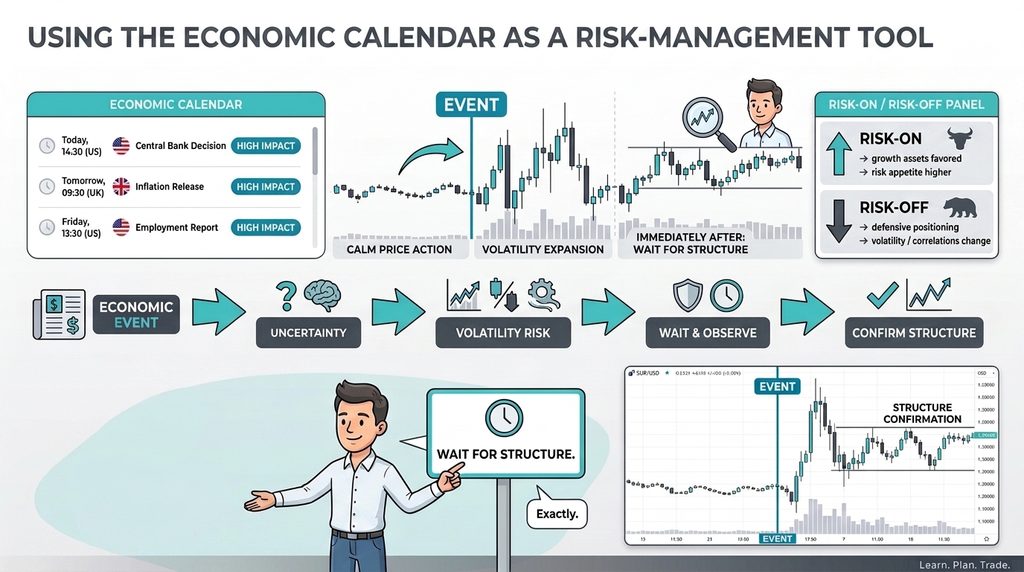
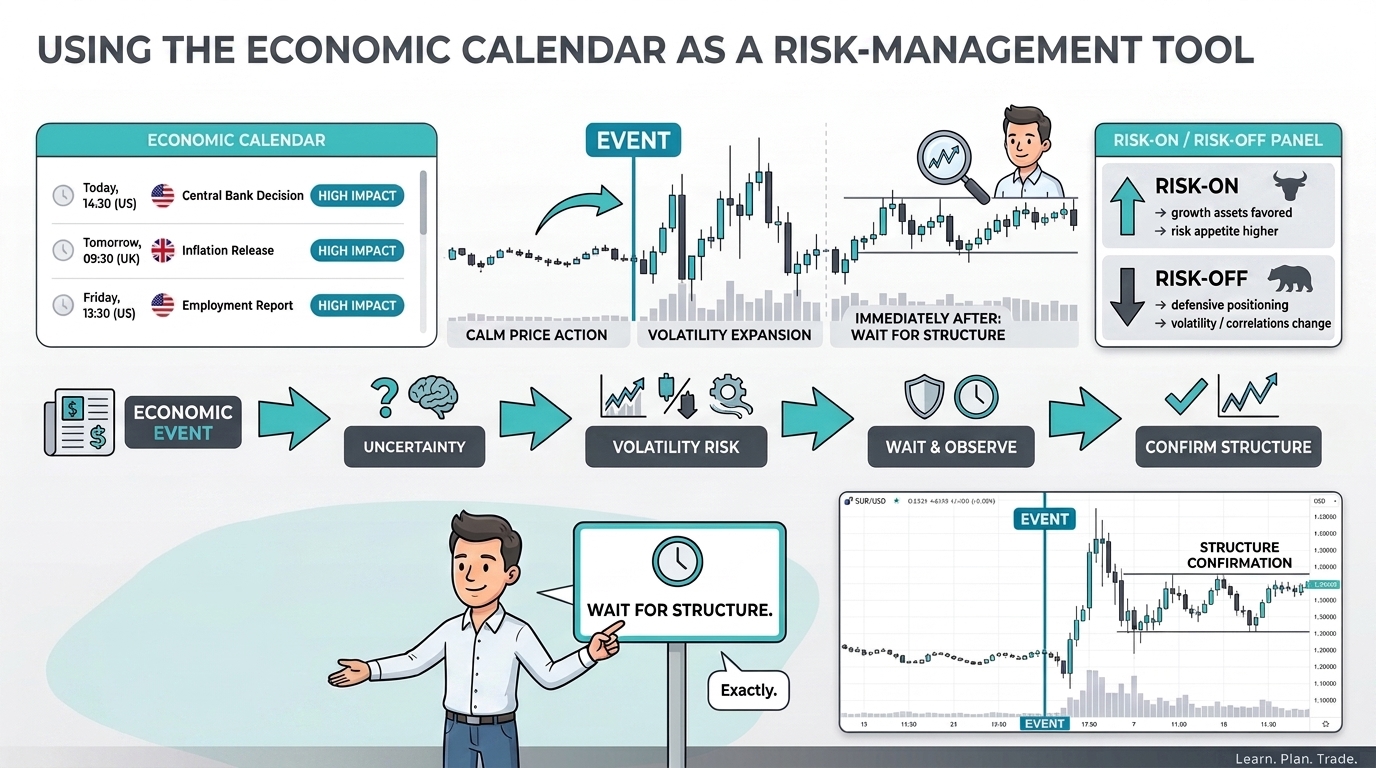
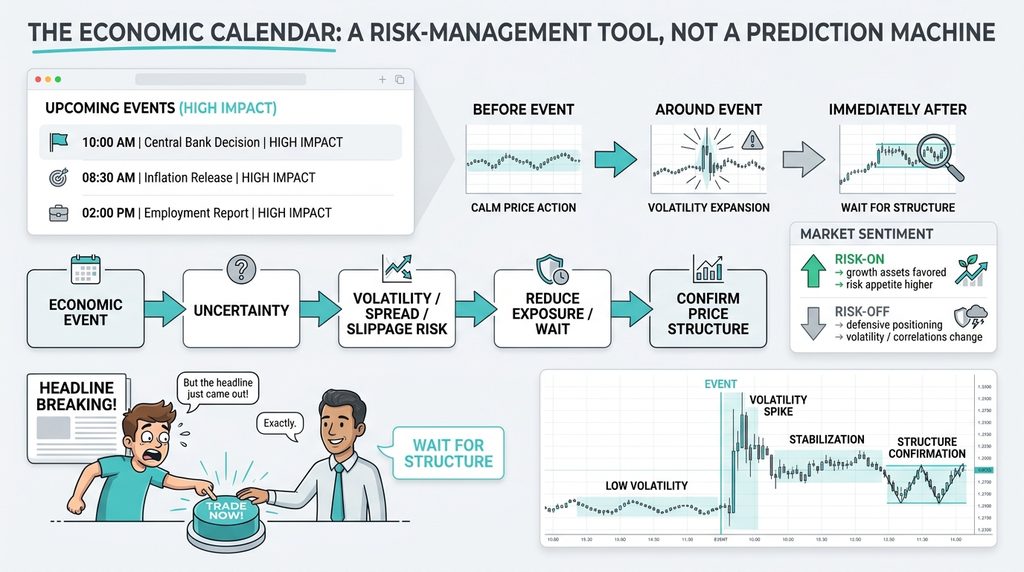
Economic calendar trading works best when you see it as a way to manage event risk, not just a reason to jump in or out of the market. Big news can increase liquidity and volatility, cause slippage, and trigger fake breakouts especially with leveraged CFDs. Smart traders with a big-picture view use economic calendar trading to strategize their market moves. This method is detailed in the book “Economic Calendar Trading: Events That Truly Move Forex & CFD Markets.”
Pillar 4 — Risk Regimes and Market Sentiment
Markets tend to move together before they begin to trade as separate assets. When risk-on/risk-off moods shift, they affect correlations, market volatility, and which currencies attract safe-haven flows.
Understanding the broader market regime is key.
Risk regimes are charted in the guide “Risk On Risk Off Explained: How Market sentiment Drives Forex & CFDs.”
To understand official policy communication and what’s expected, traders monitor central bank guidance.
Where Fundamentals Meet Price Action
Fundamentals & macro intelligence isn’t just a substitute for technical analysis; it’s the context that gives those technical decisions meaning. A practical workflow goes like this: the big picture sets direction and risk factors; the nitty-gritty details handle the execution and when to stop.
A Practical Fundamentals Workflow for Beginners
Step 1 — Start With Policy Bias
Tie your weekly focus to interest rate expectations and monetary policy for traders.
Step 2 — Track the Macro Triangle
Interpret inflation, growth, and jobs through macro analysis for trading, focusing on CPI and wage growth, GDP, and PMI.
Step 3 — Keep an Eye on the Calendar
Map high-event-risk windows using the economic calendar trading
Step 4 — Identify the Risk Regime
Check whether the market is in risk-on or risk-off mode and define the broader market regime.
Why This Matters Even More in CFD Trading
Because of leverage, forex fundamentals and broader fundamentals & macro intelligence become critical risk filters. Small macro surprises increase liquidity and volatility, leading to emotional mistakes.
Conclusion: Fundamentals & Macro Intelligence — The Trader’s Context Engine
Indicators can organize price data, but they can’t explain shifts in liquidity and volatility, sudden changes in safe-haven flows, or market regime breakdowns.
Fundamentals & macro intelligence provide context: policy bias, expectation pricing, event risk, and regime behavior.
When you combine forex fundamentals with structure-based execution, you trade context for clarity, not random chatter.








