
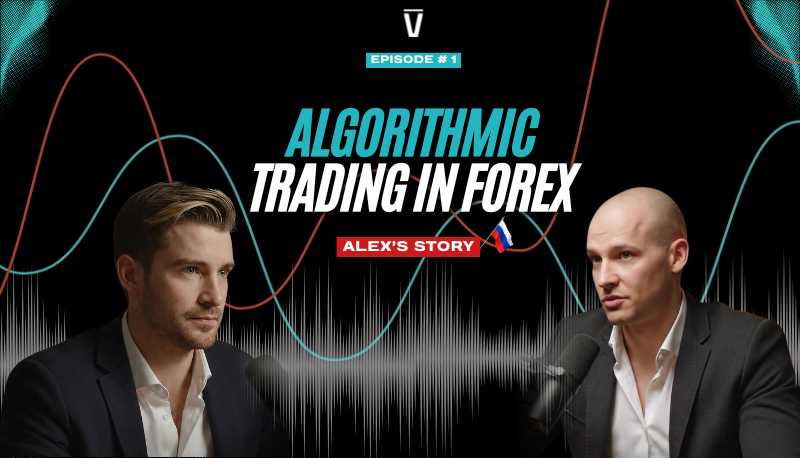




Algorithmic trading systems have emerged as one of the most revolutionary trends in the financial sector in the shifting environment of forex algorithmic trading, that requires milliseconds to make a trade or break it. Fundamentally, it is about logic rather than emotion and none of the traders represent that philosophy better than Alex who is an experienced forex trader with more than 30 years of experience.
To Alex automated forex trading is not about automation, it is about discipline, accuracy and freedom. It is the result of years of learning about the mechanics of markets, the art of execution, and the ability to rely on data, as opposed to intuition.
What Is Algorithmic Trading?
Algorithmic trading (often known as forex trading automation or algo trading) is the process by which computer programs are used to automatically trade in the stock market using a set of trading rules. These rules may rely on time, price movement, technical indicators, or quantitative trading models.
In Alex’s words:
“It’s logic, not luck. If this happens, then do that. The market becomes a data problem and machines are built to handle data better than humans ever could.”
Such type of trading is data driven making it consistent. Upon programming, the automated trading program follows market trends and buys/sells securities immediately when the pre-programmed requirements are satisfied - devoid of hesitation, emotion or exhaustion.
Algorithmic Trading in Action
Alex provides a basic example of a conventional rule based trading setup:
“Buy EUR/USD when the 50-day moving average crosses above the 200-day moving average.
Sell when the 50-day drops below the 200-day.”
Once these parameters have been loaded into the algorithmic trading platform, the system will automatically scan the market, make orders and trade automatically. It does not think too much, it does not deliberate, it simply reflects on logic.
That is the best thing about algorithmic execution. Alex says:
“Machines don’t get tired. They don’t get greedy. They just execute.”
Reasons Why Alex Chose Algorithmic Trading
Similar to several other traders, Alex started with manual charting, price action analysis, and manual trading. However as his strategies grew more complex, he realized the limits of human reaction time as well as emotional control.
“I would sit and watch charts for hours on end waiting to get setups. A single lapse of thought or attention might turn the whole situation the other way,” he recalls.
After witnessing the way institutions were exploiting high-frequency trading (HFT) and automated trading systems to trade more faster and efficiently, Alex hoped to create his own.
He began with MQL5 strategies, testing and benchmarking systems with other quantitative forex analysts in different parts of the world. He gradually created a collection of algorithmic forex strategies - each created, tested and optimized to perform in various market environments.
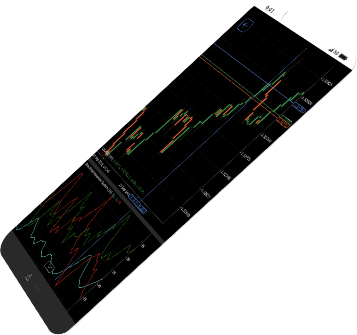
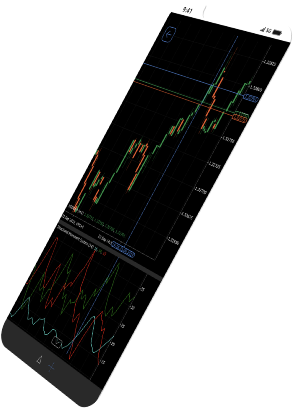
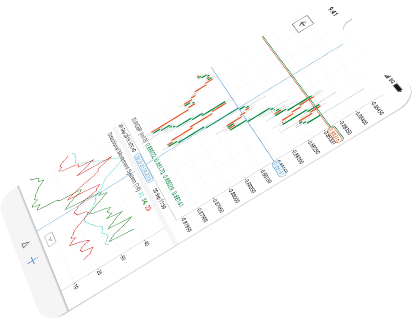
Those systems are currently live with the use of the Varianse trading platform, which Alex claims to be the backbone of his activity.
“Varianse provides me with clean market data feeds, solid execution, and a dashboard which allows me to view live P&L, order flow and alerts in real time. Automation cannot work without a reliable forex infrastructure and it will break down quickly.”
The Benefits of Algorithmic Trading Alex’s Perspective
According to Alex, automated forex trading is essential to all serious traders because of a number of benefits it offers:
- Emotion-free execution: “The system does not panic when the drawdowns take place. It sells the plan as coded only.”
- Speed and precision: The orders are made in milliseconds and this guarantees the trade at the best prices in real-time.
- 24/5 monitoring: The forex markets have no sleep, neither do the algorithms.
- Backtesting and optimization: Before being deployed to live, all forex trading algorithms are tested with backtesting tools.
- Scalability: You can run the same logic on 30 instruments without additional work - assuming that your infrastructure can support it
For Alex, algorithmic forex trading isn’t only efficient, it's also liberating.
As soon as the system is working, I will be able to work on the strategy logic rather than dealing with trades on a case-by-case basis. It is liberty based on orderliness.
Popular Strategies of the Algorithms Trading Strategies Alex Recommends
Alex has tried almost every form of automated trading logic over the years slowly moving from trend-following to mean reversion strategies. These are some of the things that he thinks all aspiring forex algorithmic traders should know:
1. Trend Following Systems
Trend following is among every form of automated trading logic strategies of Alex. The reason is simple: trade with the movement of the wind. Based on moving averages or momentum indicators, his systems detect breakouts and ride patterns provided the conditions are held.
“Don’t try to predict. React. Let the trend tell you what to do.”
2. Arbitrage Models
Arbitrage trading in forex according to Alex is ‘’the art of taking advantage of the inefficiencies’’ His arbitrage bots search for discrepancies in prices across brokers or instruments at any moment and make almost instant trades to grab small and steady returns.
“It is not glamorous, but it is regular, and in the trade game, regularity wins.’’
3. Mean Reversion Strategies
For sideways markets, Alex employs mean reversion strategy forex models that detect the overbought or oversold markets through the Bollinger Bands or RSI.
“Once price has been stretched to its limit, it is likely to rebound like a rubber band”
4. Sentiment-Based Systems
The idea of AI in trading and machine learning trading in particular has started to be incorporated into the systems developed by Alex in more recent times. His models examine the mood of the market by analyzing the sentiment and social media tone of news through natural language processing (NLP).
“AI does not simply read information, but rather reads mood, and in forex, mood moves money.”
This represents the future of AI-assisted forex automation bridging human psychology with quantitative finance.
How to Start Algorithmic Trading in Forex
For beginners wondering how to build an algorithmic trading system in forex, Alex advises starting simple in following points:
- Get familiar with the basic difference between manual and algorithmic trading.
- Formulate a single, rule based approach.
- Backtest forex systems to validate it.
- Automate step by step by MQL5 or Python.
- Select a trusted broker such as Varianse to execute clean and stable trades.
‘’Be serious about it and make it a work of craft. Test hard and start small, continue to improve. That is the way to make achieve consistency.’’
Final Thoughts
From a manual trader glued to screens to a trading system architect running automated strategies across global markets, Alex’s journey is proof that discipline and technology can coexist beautifully.
Algorithmic trading in forex markets has given him not just efficiency, but time, clarity, and freedom.
In present-day algorithmic forex trading where consistency is essential - it is as much about the speed as it is about the structure, the reliability and the trust. The life of Alex demonstrates that the marriage of logic and the appropriate technology lets automated forex trading be more than execution and, in fact, evolution.
Having trading algorithms backed by a solid infrastructure and the availability of trading platforms such as Varianse enables the trading community to forego emotion in favour of performance-based accuracy. Traders no longer have to be emotive, but can gather the precision required through their interactions to have a true advantage in trading.
Frequently Asked Questions
Is algorithmic forex trading profitable?
Yes, when algorithmic forex trading is based on tested, data-driven strategies, it can be very profitable. Successful traders use rule-based trading systems, backtesting, and trusted platforms such as Varianse to trade quickly and accurately. Profitability is not about luck or automation, but is based on the quality of the strategy used, market conditions, and constant optimization.
How risky is algorithmic trading?
Just like any trading approach, Algo trading is risky. Automation will remove emotional mistakes and increase the probability of error in a badly coded strategy. Losses can be caused by network delays, bad data, or overfitting. To reduce risk, forex traders are advised to use robust, powerful back-testing applications, live systems, and ensure that they have a sound forex trading infrastructure that will offer them consistency in their performance.
Can a beginner do algo trading?
Yes, beginners can start with algorithmic trading by learning the fundamentals of forex trading automation. Platforms like MQL5 (MetaTrader) and Python (cTrader Algo) allow new traders to build or copy strategies safely. Start small with a demo account, test your system, and scale gradually. Discipline, patience, and data analysis are key to long-term success in algo trading.
Can ChatGPT write a trading algorithm?
Yes, ChatGPT can assist in writing trading algorithms by writing Python or MQL5 scripts using your strategy logic. However, a trader or a developer should always revise and test the final code. ChatGPT can help in back testing configuration, strategy, and optimization of codes, but live deployment has to be handled manually with testing on platforms such as Varianse.
Which AI tool is best for trading?
The most effective AI trading tools are used in combination of data analysis, automation, and real-time trading. The most popular are MQL5 (MetaTrader) and Python (cTrader Algo), and more professional AI-controlled tools, such as Varianse to execute live forex trades. To build the research and strategy, AI assistants such as ChatGPT or QuantConnect can speed up the development process and testing.
What is the most successful forex bot?
The most effective forex bots are those that apply trend-following, arbitrage or mean reversion algorithms that have survived through a variety of market environments. There is no single bot that can guarantee profits, but those tools that have been tested successfully on backtesting, have real-time data feeds, and low-latency trading (like Varianse) would work best in the long run.
How much do forex bots cost?
The price of Forex bots ranges between free open-source scripts and commercial systems ranging in price between $100 to $10,000 and above. The price is based on complexity, customization and performance in the market. Look out for so-called unrealistic profit claims, always test forex bots, and check their performance to make sure they are used in actual trading.
Can a trading bot make you rich?
Trading robots can be used to increase wealth; however, it is not a quick road to easy money. Strategy design, risk management, and discipline are factors that determine profitability. Effective traders do not search for bots as a magic remedy but as a consistency aid. Human knowledge and automatic forex trading systems provide the most promising results in the long term.
Can ChatGPT make a profitable trading strategy?
Indeed, ChatGPT is capable of assisting in formulating profitable trading strategies through analysis of historical data trends, logic rules proposed, and code generated algorithmic trading. But it can only be truly profitable with backtesting, optimization, and execution using trusted brokers, such as Varianse. AI will be able to guide the process, but human judgment will be the advantage.