


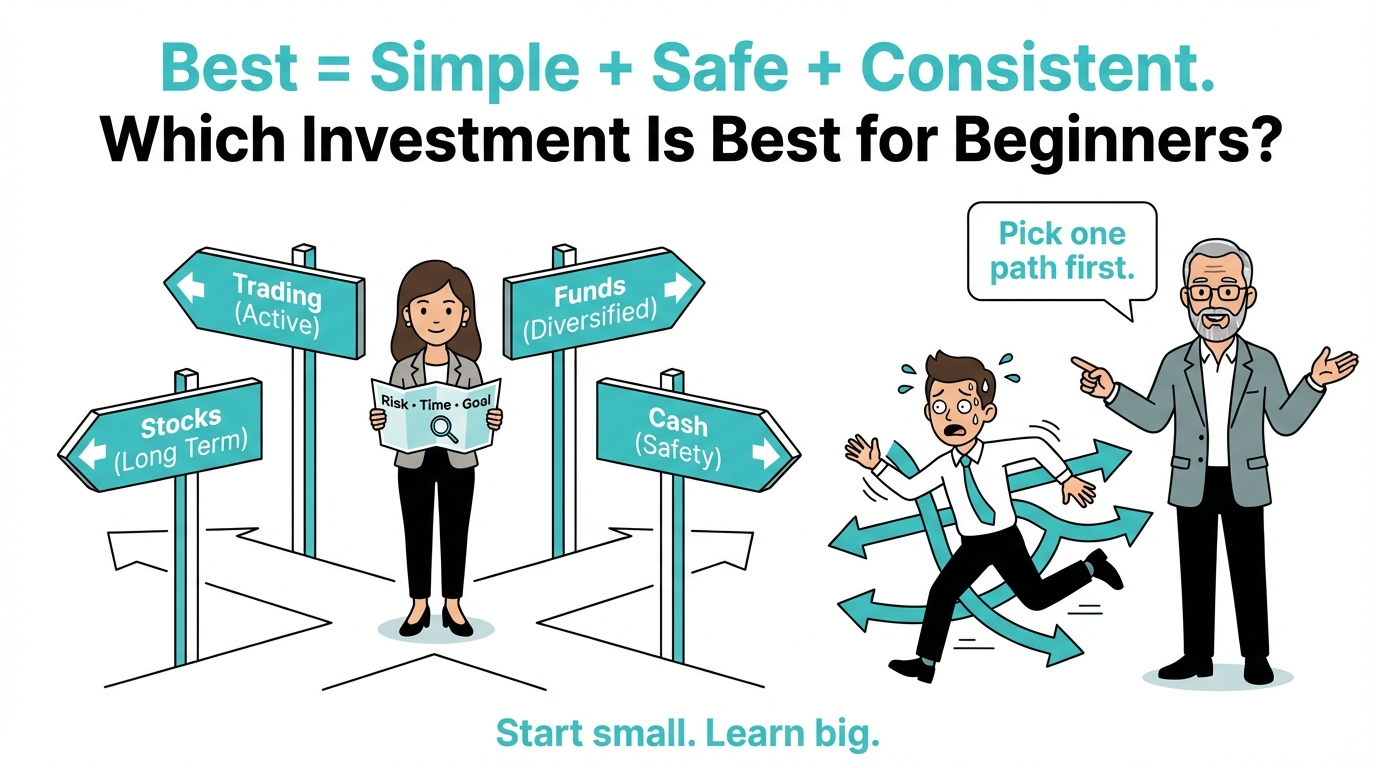
Which investment is best for beginners? When people ask what's the best investment for newbies, they're not really after a "perfect" asset. They're looking for security, clear direction, and confidence. Newbie investors want an investment that teaches them the market fundamentals without exposing them to excessive risk or stress.
In reality, no single investment is optimal for everyone. The smartest move for a newbie investor is to choose something that fits their knowledge, risk tolerance, cash situation, and long-term goals.
Investing should feel like a well-organized plan, not a time crunch or a source of stress. Take your time; even basic investments can build a solid foundation.
This article gives novices guidance on choosing suitable investments, identifying key factors to consider at the start, and building skills before they learn more about the market.
What Best Really Means in Investing for Beginners
For newbies, "best" doesn't mean the most profitable. It's about learning as much as possible while staying in control. The goal is to understand market trends, build discipline, and gain confidence before pursuing rapid capital growth.
This idea connects directly to the definition in What Is Investing?, which describes investing as a structured, long-term skill rather than a short-term opportunity.
A solid start to investing should be easy to grasp, clear in its actions, and forgiving of minor errors.
The Role of Risk in Picking Your First Investment
Not all investments carry equal risks. Newbies can gain an advantage by taking a break and seeing what's what without too much hassle.
Risk should feel manageable, not overwhelming. The CFA Institute lays down the law on risk and reward: the bigger the potential gains, the bigger the risk you take on.
For newbies, it's more important to cut down on emotional ups and downs than to focus on making as much money as possible.
Why Simplicity Trumps Variety
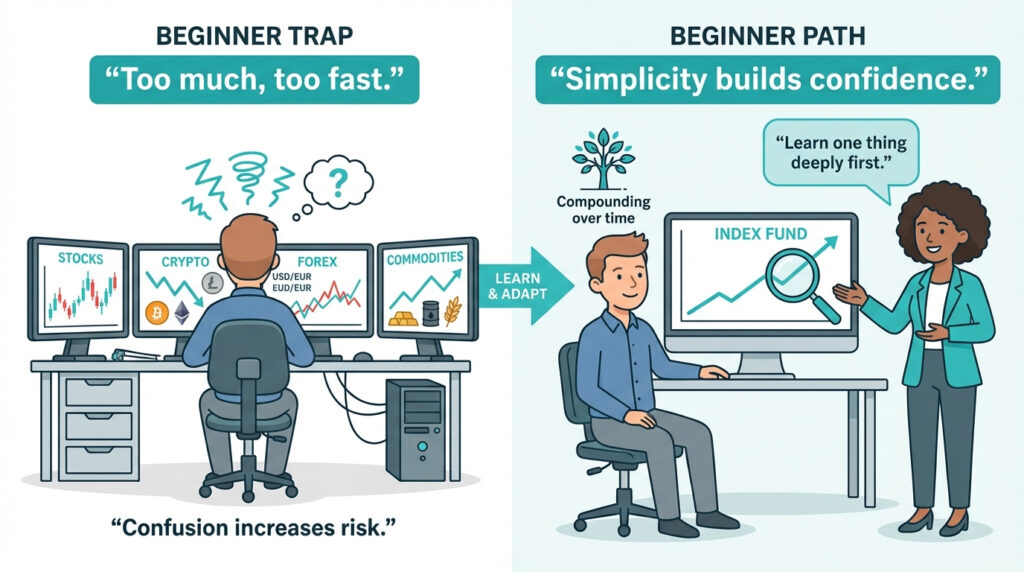
Many newbies think they need to dive into everything right away: stocks, forex, crypto, commodities, and funds. That often leads to confusion.
To truly understand how prices move, how risks unfold, and how emotions can influence decisions, beginners can start with a few basic assets. The Financial Market Foundations breaks down complex market structure into easy-to-grasp pieces. Keeping it simple helps you learn faster than trying to do too much at the beginning.
Long-Term Investing vs Active Trading for Beginners
Long-term investing is usually better for newbies because it focuses on patience and consistency, not on guessing the right time or being super precise. Active trading can really ramp up the pressure to execute trades, add up spread costs, and stir up emotional highs and lows.
This difference becomes clearer in Saving vs investing, where stability and growth are two sides of the same coin, each playing its own part. Trading might be a step we take down the road, but investing is typically the safer way in.
Why Education Must Come Before Capital
Newbies often think capital is the key to success. Understanding really does lead to success. Without education, big money can vanish fast.
That's why we've got these learning paths on the VARIANSE academy website: they build your thinking skills, keep you disciplined, and get you clued into the market before you even think about spending any cash. Knowledge protects capital more effectively than size.
The Best Investment Is One That Matches Your Time Horizon
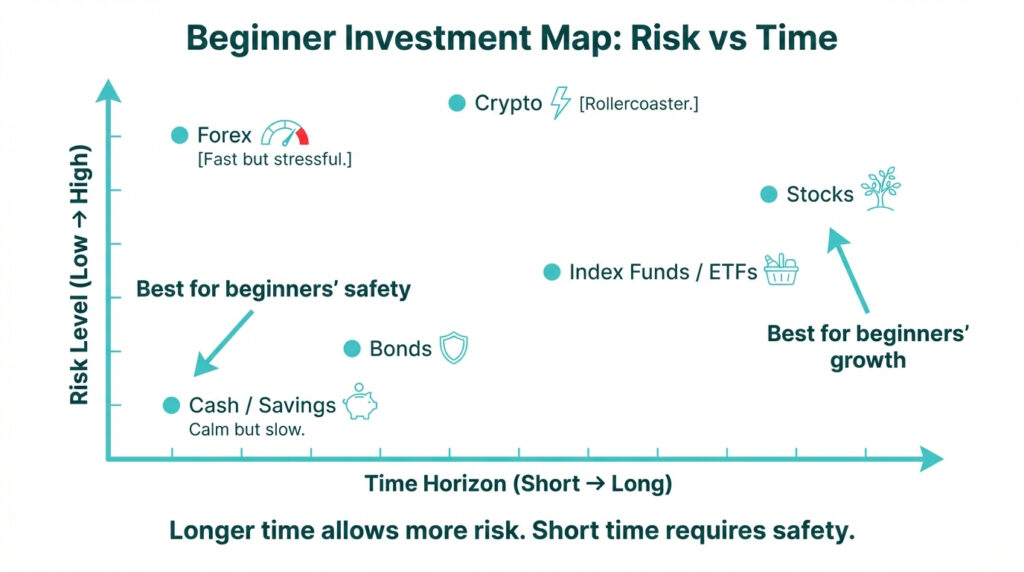
Money has to be kept safe. Long-term investments can handle market ups and downs. Knowing how long you're planning to stick around is vital.
That's why inflation and buying power matter in financial planning; the IMF explains it by showing how money sitting around loses real value over time. Investments should serve future stability, not immediate excitement.
Why Beginners Should Practice Before Investing Real Money
Markets can feel like roller coasters. Reading theory doesn't fully prepare you for the pressure of making quick decisions.
A smart way to gain experience is by using a demo environment on the VARIANSE trading account page. You can test out price movements, see how trades execute, and practice discipline without risking any money. This step helps you manage your emotions before you start trading with real money.
How Myths Distort Beginner Investment Choices
Many newbies choose investments because they're hyped up, fast, or because everyone else is doing it. The article Common Investing Myths Beginners Should Know busts these myths by replacing wishful thinking with discipline and a clear plan.
The most rewarding investment isn't always the one that gets the most attention. It's typically the calmest and most steady.
A Practical Way to Think About “Best” for Beginners
Instead of asking, “Which investment makes the most money?” beginners should ask:
- Which investment helps me learn?
- Which investment lets me control risk?
- Which investment supports long-term thinking?
This mindset turns investing into education, not speculation.
Which Investment Is Best for Beginners Is a Personal Decision
So, which investment is best for beginners? There isn't one universal answer. The top pick for investing is the one that.
- Matches your risk tolerance
- Supports long-term thinking
- Encourages discipline
- Builds market understanding
Investing isn't about shortcuts. Selecting a starting point that naturally fosters confidence, patience, and structure is crucial. When newbies concentrate on the how-to rather than the cash, every dime they put in is like a class.








