


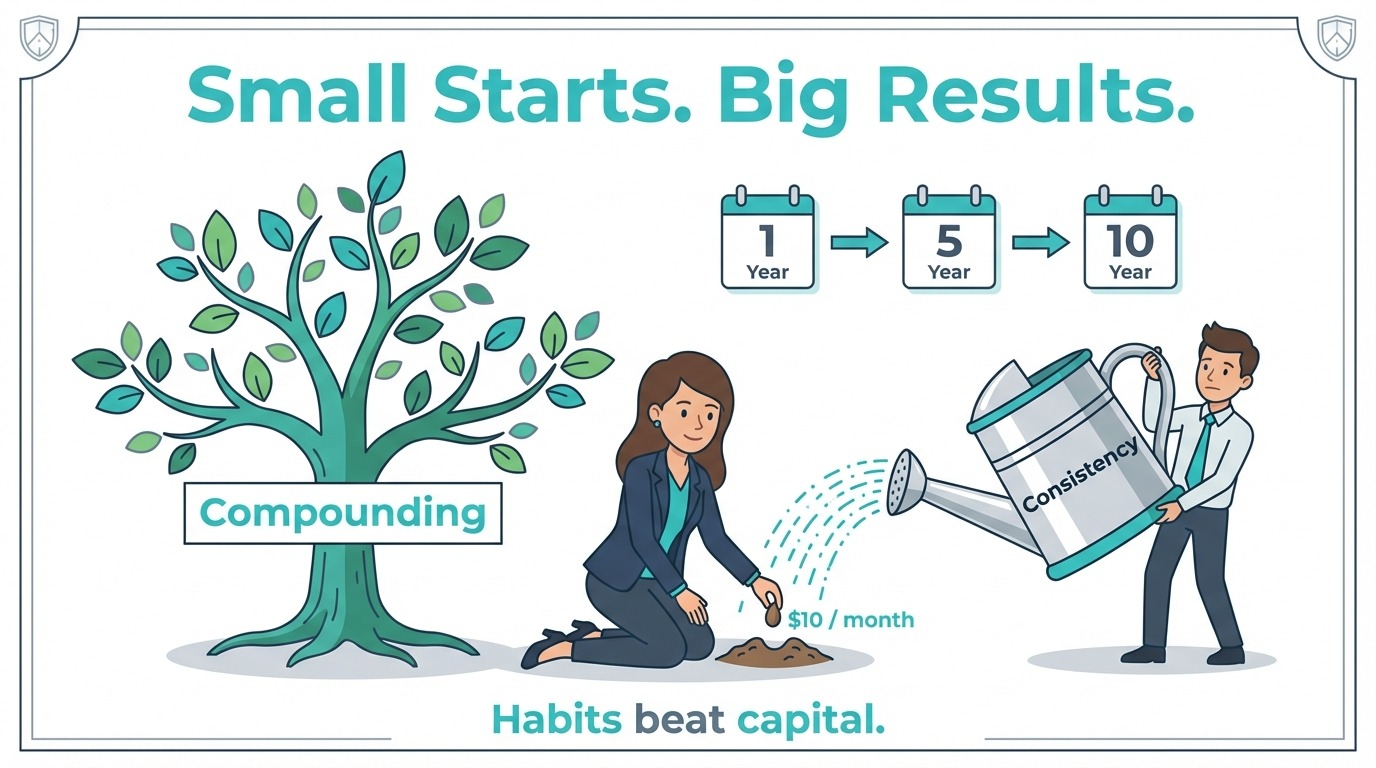
Can beginners invest with small amounts of money? Absolutely, newbies can start investing with just a little cash, and that's often the smartest way to begin. You don't always need a huge pile of cash to invest. Investing is more about sticking to good habits, having a solid plan, and staying consistent than about how much you start with.
When people ask if beginners can invest with just a little cash, they're usually wondering if small investments can still grow. The answer is a solid yes, as long as you set realistic goals and focus on the prize: learning, discipline, and growth that pays off over time, not just quick cash.
Can Beginners Invest With Small Amounts of Money? Why Starting Small Matters
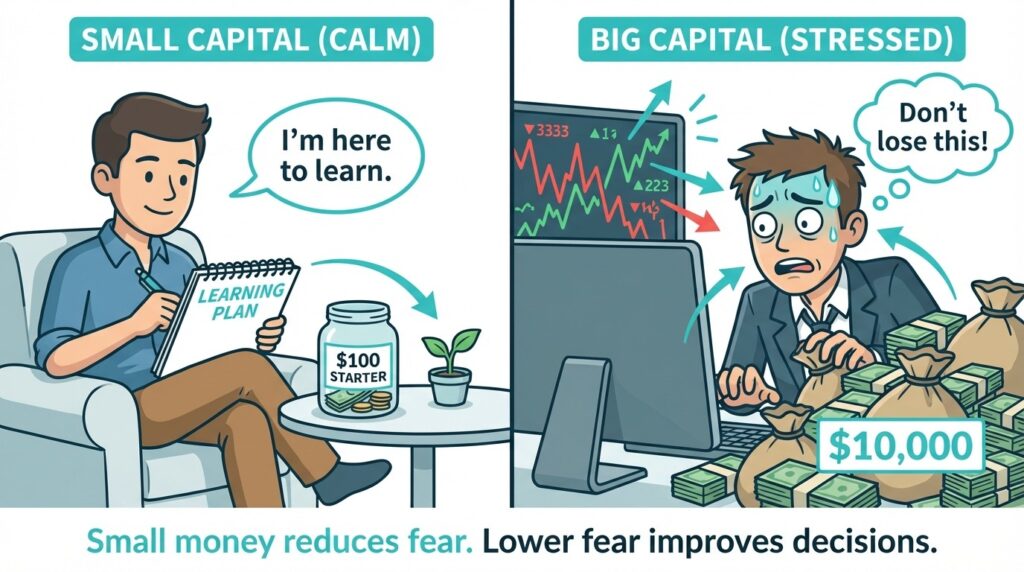
Starting with a small amount of capital can shield newbies from emotional stress and major financial blunders. Limiting risk makes learning easier and more objective.
This aligns with the foundational principles in What Is Investing?, where investing is about growing through smart choices, not just quick gains.
A little nudge can go a long way in improving conduct. It encourages newbies to focus on learning, method, and patience instead of chasing impossible returns.
What Really Matters More Than Capital Size
Success isn't just about how big a city is. Behavior does. Discipline, routine, and risk management matter far more than a good starting point.
Many beginners with substantial funds fail because they lack a strategic plan, while those with limited resources consistently grow their wealth by treating investing as a skill, not just luck.
That's why places like VARIANSE Academy's website focus on teaching the basics first, so you're not winging it when it really counts.
The Power of Compounding, Even With Small Amounts
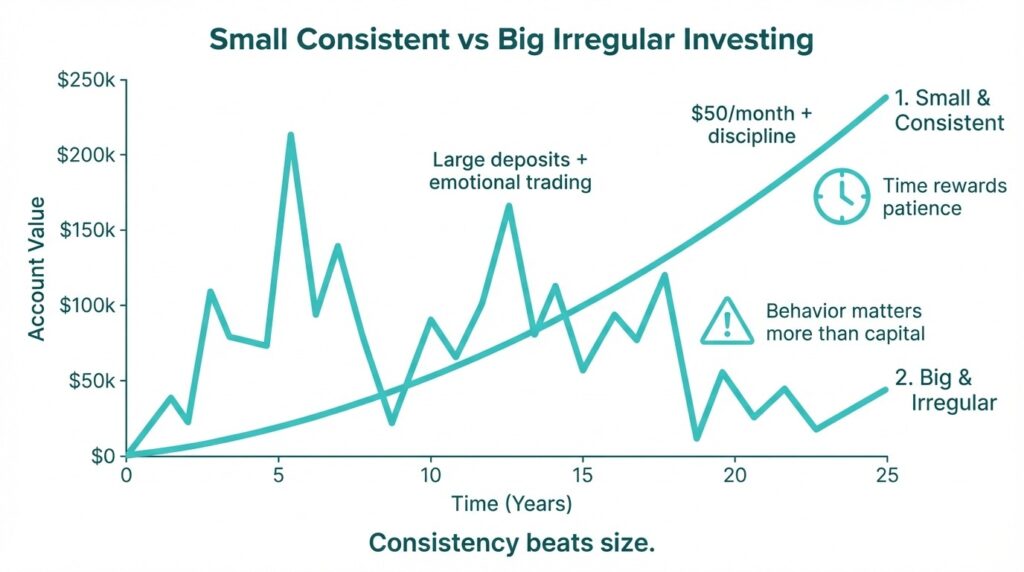
Compounding works whether you start with a lot or a little. It just takes patience and consistent effort.
When you reinvest your earnings, your small investment grows faster. Over time, it becomes increasingly powerful. This principle is what guides retirement funds and institutional portfolios, just on a larger scale.
The idea that piling up money over time and letting it grow is pretty much what the CFA Institute says about building wealth, and they stress that putting cash back into investments is key.
Small Capital Encourages Better Risk Management
When funds are tight, you've got to watch the risks. Newbies tend to get more careful and considerate as they make choices.
This fosters a more balanced approach to loss and keeps emotions in check when making decisions. These are the same habits seasoned traders develop over the years.
Execution discipline and risk management are key components of Trade Mechanics & Execution Basics, which delve into how decisions play out in the real market.
Investing vs Trading With Small Capital
Small capital is a solid choice for long-term investing because it can grow steadily over time. Active trading adds costs, spreads, and volatility, which can complicate things for small accounts.
Beginners don't have to avoid markets completely. They should start by honing their skills and gaining experience in a safe environment before trading real money.
You can safely practice trading in a demo environment through the VARIANSE trading account page, which eliminates financial risk while still giving you real market exposure.
Common Myths About Small Capital Investing
Many newbies think little money means fewer wins. In real life, small capital means learning in a controlled way.
Another misconception is that large profits must come quickly. Sustainable investing is on the rise, but it's a slow and steady climb. The aim is to be steady, not rush.
World Bank's economic studies back up the notion that steady building up of capital and smart saving-investing habits lead to lasting financial health
The Right Mindset for Small-Capital Investors
Small-capital investors should approach things with a student's mindset, not just a gambler's. Every trade or investment is more about learning than just showing off. The goal is to build skills, not just chase profits. Capital grows more easily when discipline becomes a regular part of your life.
How Can Investing Small Amounts Become a Strategic Advantage
Small caps give you the freedom to move around. Mistakes are fixable. Emotional pressure's down. Learning speeds up.
That's why many seasoned traders suggest starting with a smaller stake, even if you've got more cash on hand
Conclusion: Can Beginners Invest With Small Amounts of Money
Can newcomers start investing with just a little cash? Absolutely. Starting small really helps you get the hang of investing. It reduces emotional blunders, builds self-control, and creates room for growth.
Wealth isn't just about how much you start with. It all depends on how you manage your resources, invest, and let time work for you.








