


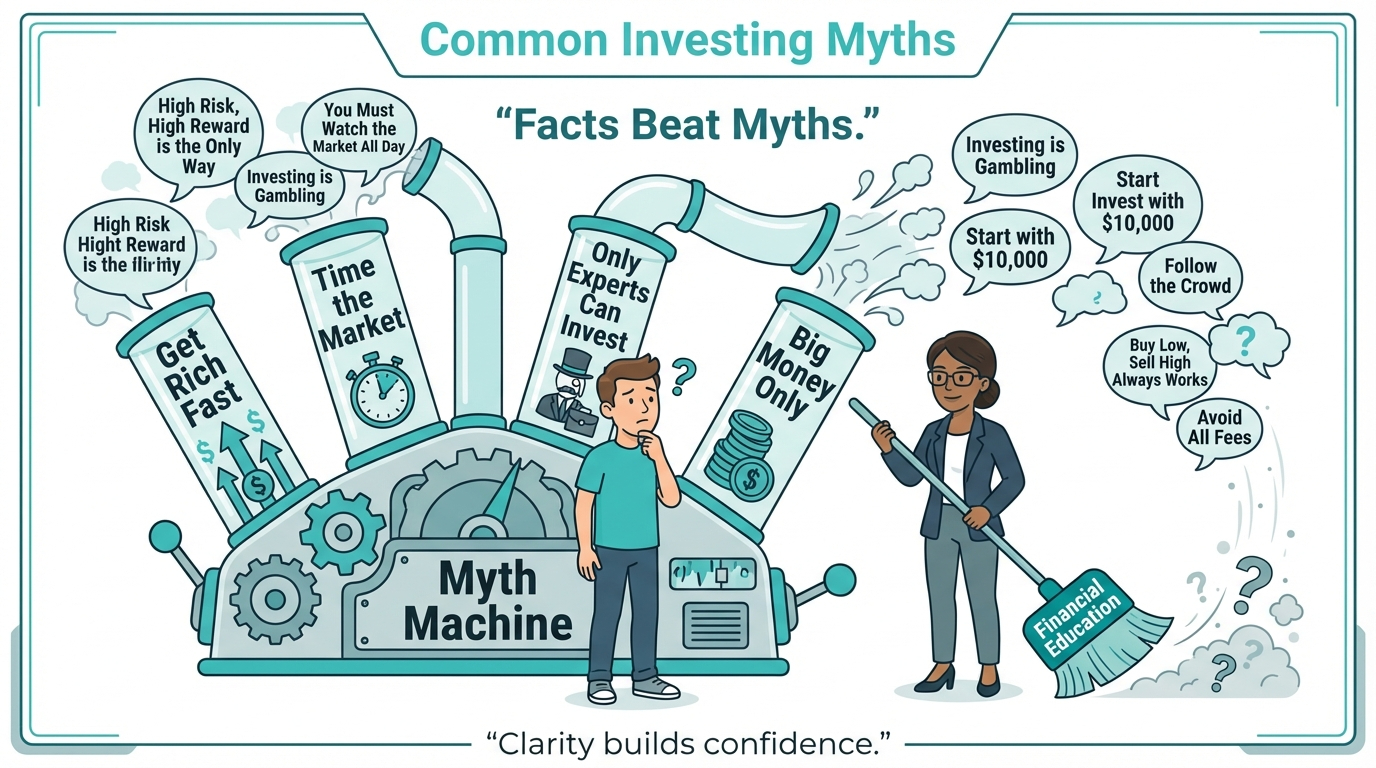
Common investing myths beginners should know often sound smart but are actually misleading. These misconceptions keep many people from investing. Getting to grips with common myths is a quick way to feel more confident and tackle the markets with a realistic mindset, not fear.
Most investment setbacks and disappointments aren't really about the markets themselves; they're about the myths that shape our expectations. Understanding common investment misconceptions can help beginners develop realistic expectations and make more informed financial decisions.
Investing isn't just about being perfect, being quick, or having some hidden wisdom. It's about sticking to a routine, staying disciplined, and being patient. Once you strip away the myths, investing turns into a whole lot easier and more organised.
Myth 1 – Common Investing Myths Beginners Should Know: Do You Need a Lot of Money
You don't need a lot of cash to start investing. Many people think you need a substantial amount of money to start investing. Investing is more about building a habit than about how much money you make. Beginners can learn market behavior without the stress of big decisions.
This aligns with the idea of investing as outlined in What is investing? It's all about growing your money through smart, disciplined moves, not just something for rich people. Even small, steady efforts add up and build experience and confidence over time.
Myth 2 – Investing Is Only for Experts
Investing is just for the pros. Many newbies think you need to be a math whiz or have a fancy job to invest. This idea can hold people back from even trying. Investing isn't just for pros; it's a skill you improve with practice.
Structured learning environments, like the VARIANSE Academy education page, guide beginners step by step, helping them build knowledge without overwhelming complexity.
Myth 3 – High Returns Must Come Quickly

High returns need to happen fast. This myth is seriously risky. Social media and marketing content often make quick cash seem normal. Sustainable investing takes time, but it's definitely on the rise.
While short-term gains can be unpredictable, long-term success largely comes from staying the course and building wealth over time.
The importance of long-term investing: The CFA Institute supports the idea that growing your wealth by reinvesting your earnings is a key strategy, and it stresses that compounding is a major way to build your fortune.
Myth 4 – Investing vs Gambling
Investing and gambling are pretty much two different worlds. Gambling relies heavily on luck, while investing focuses on making wise decisions, calculating odds, and managing risk.
The confusion comes from the fact that both involve uncertainty, but their processes and objectives differ completely.
This distinction becomes clearer when beginners understand market mechanics, execution discipline, and risk control as described in Trade Mechanics & Execution Basics.
Myth 5 – You Must Time the Market Perfectly
Another common belief is that successful investors always buy at the bottom and sell at the top. Market timing is a real challenge, even for the professional. Consistency and patience matter far more than being super precise.
World Bank studies keep showing that sticking with the market game for the long haul beats trying to guess what will happen in the short run.
Myth 6 – Losses Mean You Are Bad at Investing
Losses are not proof of failure. They are part of every investor’s learning process. The difference between professionals and beginners isn't whether they lose, but how they manage and respond to losses.
Practicing in controlled environments helps normalize this experience. You can develop execution discipline safely using a demo environment via the VARIANSE trading account page before risking real capital.
Myth 7 – More Trades Mean More Profit
More trading equals more profit. Many newbies think just doing stuff means you're actually getting it done. In investing, that's usually not the case. Trading too much can make you spend more, lead to emotional mistakes, and hurt your performance.
Well-considered decisions frequently outperform impulsive ones. This principle reinforces the importance of patience and selectivity in financial decision-making.
Myth 8 – You Need Secret Strategies to Succeed
You don't need secret strategies to succeed. No hidden setups promise profit. Sustainable investing requires understanding risk, staying calm, and sticking to your guns. Strategies evolve, but core principles stay the same.
That's why structured learning emphasizes how we act more than the gadgets we use.
Myth 9 – Investing Is Only About Making Money
Investing is all about making money. Investing is also about getting savvy with money, understanding risk, and building a stable future.
Money isn't the only goal; it's just one result. The mindset you gain from investing usually makes you better at making all kinds of money choices.
Myth 10 – Small Mistakes Ruin Everything
Even tiny slip-ups can mess things up. Newbies often worry they'll mess up and lose all their hard work.
In real life, small slip-ups aren't a big deal if you keep things in check. Growth happens when you fix things, not when you're perfect.
Conclusion: Common Investing Myths Beginners Should Know
Understanding common investing myths removes fear, confusion, and unrealistic expectations. Investing becomes clearer when you replace myths with structure, patience, and education. The goal isn't fast success, but sustainable progress.
Once beginners focus on learning instead of shortcuts, investing becomes a powerful long-term skill rather than a stressful gamble.








