


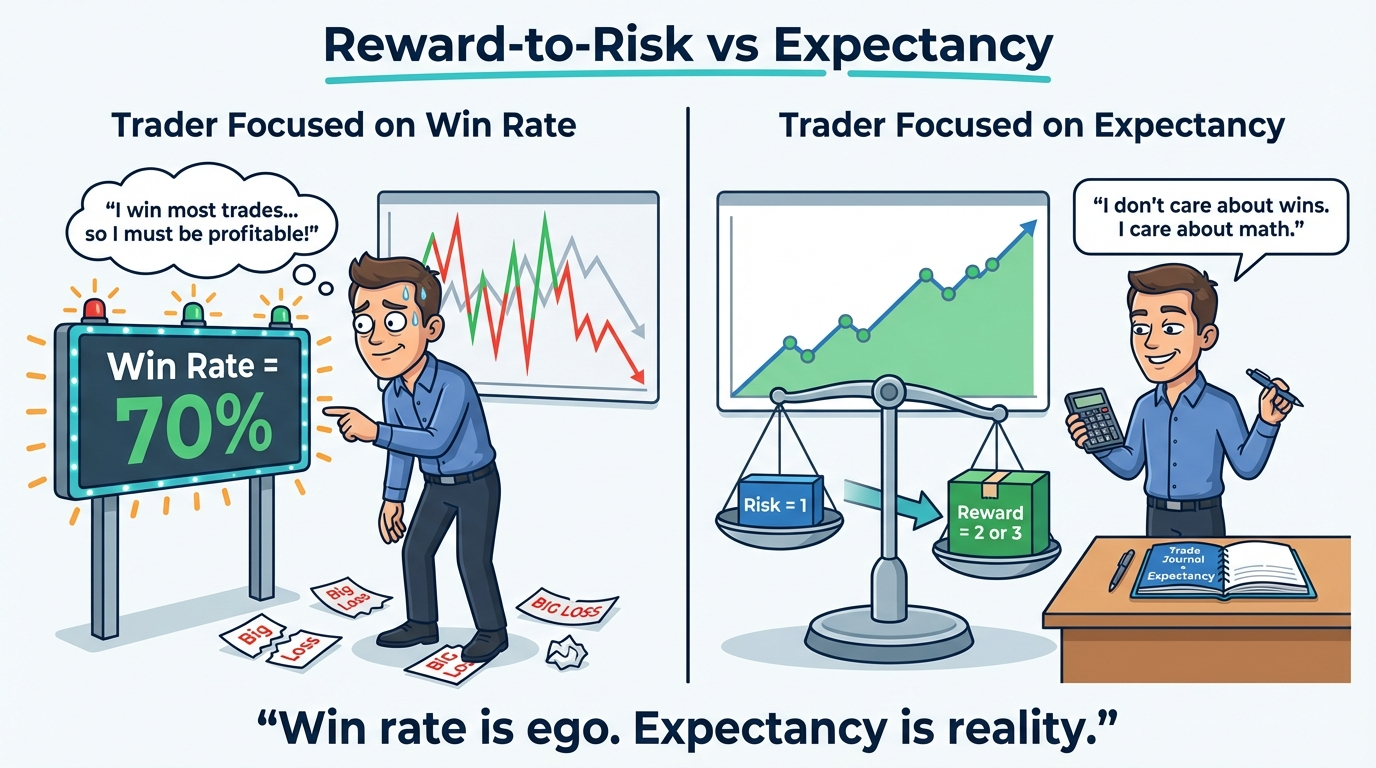
Reward to risk ratio and trade expectancy are two key ideas that set structured traders apart from just anyone throwing darts at the market. Many newbies get hung up on how often they win or their win rate, thinking that just racking up wins will make them rich.
However, profitability in trading is basically dependent on how well you do in terms of the gains versus the losses you make. In trading, specialists have to analyze their trades in order to determine whether they are safe, sensible, and beneficial to them.
This takes the concepts straight from Risk Per Trade Explained, where you set your risk before you even start trading, and Position Sizing Explained Without Confusion, where you tweak your exposure to keep your money safe
Without the concept of reward-to-risk, as one is well aware of risks and always watching out for expectations, trading becomes a little chaotic and emotional.
What Is the Reward-to-Risk Ratio?
The risk/reward ratio is the comparison of the potential gain to the potential loss on any trade. To work out the risk/reward ratio you need to look at the distance from the entry point to the profit target and from the entry point to the stop loss. The risk/reward ratio is established prior to you commencing the trade once you've thought through where you would exit.
How Reward to Risk Is Defined
If a trader puts $100 on the line for a chance to make $200, they're looking at a reward-to-risk ratio of 1 to 2. If you're looking at a potential gain of $300 with a risk of $100, you're looking at a 1-to-3 gain-to-risk ratio.
These levels are set up with a clear exit strategy, as detailed in Take Profit & Stop Loss Explained, where stop losses focus on risk management and take profits on potential reward. Reward-to-risk reflects trade structure, not confidence.
Why Reward-to-Risk Matters More Than Win Rate
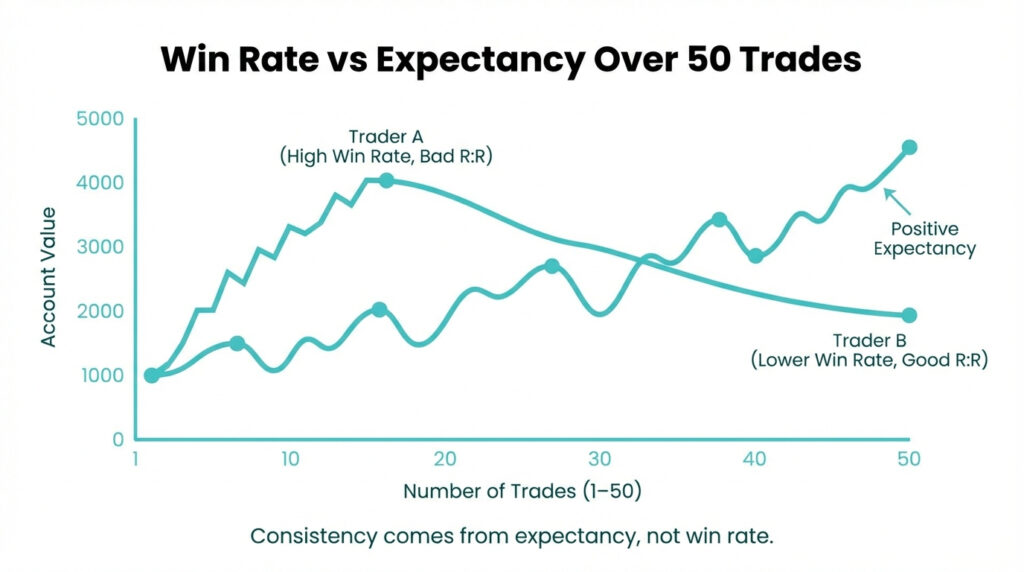
The success rate doesn't in any way reflect the true financial performance. The smart trader can be absolutely successful in terms of trade outcomes and yet still be in the red due to the losses incurred.
To make a profit the gains have to be big enough to offset the losses. That's why professionals look at how the wins are achieved and how big the wins and losses are, not just the % success.
Example: Profitable With a Lower Win Rate
A trader using a 1:3 reward-to-risk ratio can still be profitable if less than half of the trades make the cut. Big wins make up for the smaller, managed losses. This idea supports the need for a clear risk control plan, as outlined in Trade Lifecycle Explained: From idea to Exit , which means you've got your trades set up with clear-cut exits before you even start.
Profitability comes from asymmetry, not perfection.
Common Misunderstanding About Reward-to-Risk
It's presumed that a better reward to risk ratio in itself can lead to gains for the trader. The problem arises when the objectives are unrealistic and the probability of hitting them becomes very low.
When the profit objective is simply out of reach in the market the prospect of making a profit can be very low even if the reward is high. The reward-to-risk ratio has to be realistic and achievable.
What Is Trade Expectancy?
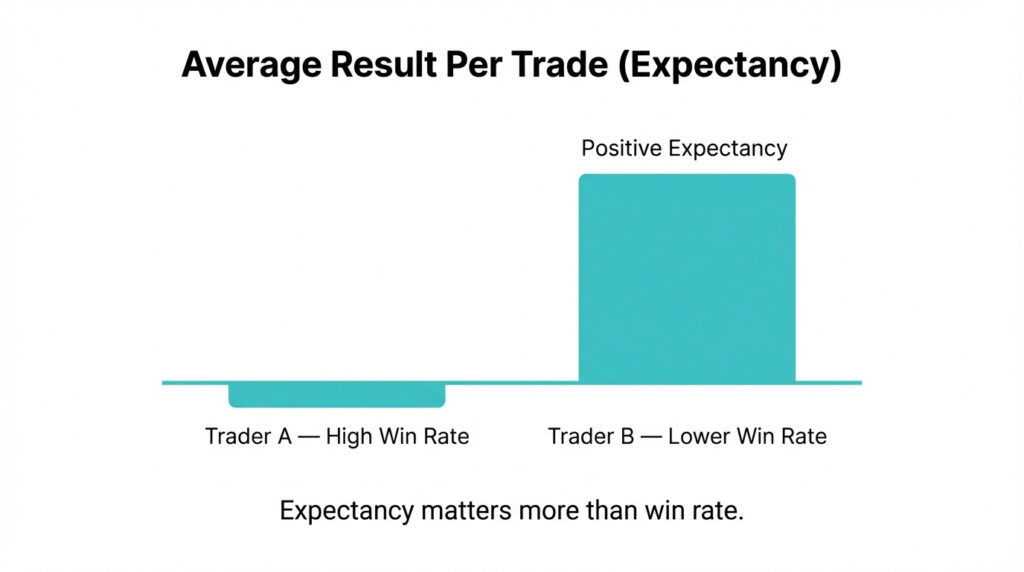
Trade expectancy is a measure of how profitable a trading system will be when it's actually used to trade. It's a measure of how much you'll win each time you win and how much you'll lose each time you lose.
Trade expectancy answers the question: will your money go up, down or stay the same if you do the same trade over and over again?
Expectancy looks at the process not the trades.
Expectancy Explained in Practical Terms
In case there are more wins than losses on average and the losses are not too big, then this is called a positive expectation. Positive expectation means that in the long run, the whole system still makes money even though not every trade does.
This underscores the significance of sticking to a set risk per trade, as detailed in Risk Per Trade Explained, where setting a fixed risk amount helps keep trade results more predictable.
Consistency creates a mathematical advantage.
How Reward-to-Risk and Expectancy Work Together
Reward per risk has a direct bearing on the expectancy value. If you have a positive ratio of wins to losses you're going to have better odds. Once you start suffering losses that you can't get your head around though, it's as if you're running out of luck.
Ultimately it's a question of matching rewards to risk and the odds of success. You can't look at those two things in isolation. A low reward to risk ratio can in fact produce positive expectancy if you're applying it consistently.
Numerical Expectancy Example
A trader is risking $100 on each trade, aiming for a 1:2 reward-to-risk ratio. Each win nets $200, but each loss costs $100. If the trader nails 45% of their trades over the long run, they'll come out ahead because the winners offset the losers.
This shows that a solid risk-management plan can help a company grow over time, even if it doesn't always win.
Why Beginners Struggle With Expectancy
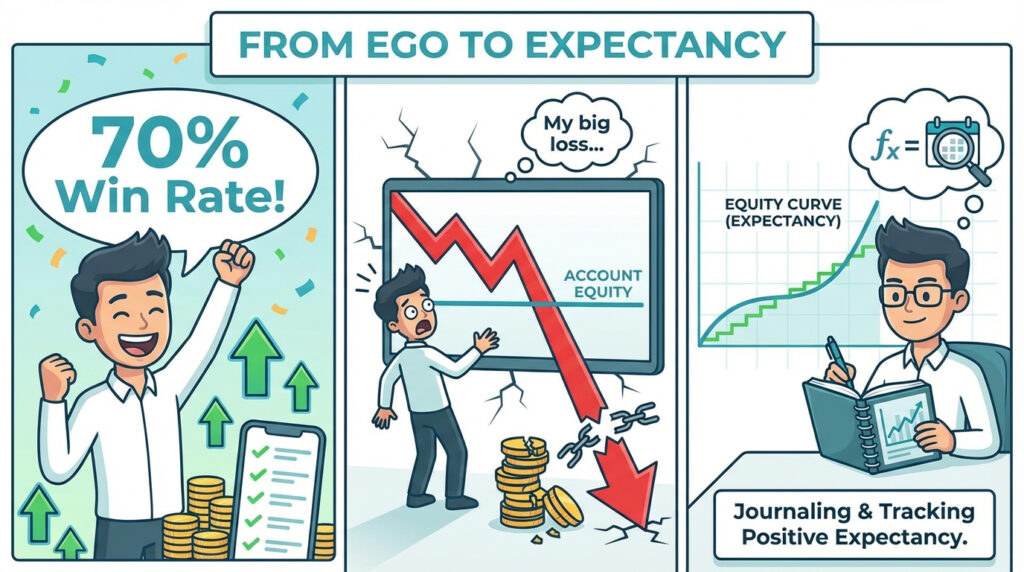
Expectancy isn't something you see right away; it takes many trades to become clear. Typically, novice traders quickly judge others' performance, leading them to act on emotion and change their plans.
This behavior ties closely to the emotional reactions laid out in Trading Psychology Explained, where quick wins or losses can mess with your long-term strategy. Expectancy rewards patience, not reaction.
How Trade Management Influences
Expectancy is all about consistency of action. A lot of traders will change their stop losses and close their winning positions too early which will of course reduce Expectancy and create a situation where the gains are not in line with the losses.
These habits will drag Expectancy down regardless of the quality of the strategy. Discipline in execution is one way of keeping Expectancy flat.
The Role of Stop Loss and Take Profit Discipline
Stick to your initial trade strategy when setting stop losses and take profits. Emotional changes can make things less predictable and may hurt your performance over time.
Structured exit planning is detailed in Take Profit & Stop Loss Explained, ensuring our reward-to-risk assumptions stay on track. Discipline protects mathematical advantage.
Reward-to-Risk Should Follow Market Structure
The risk/reward ratio will emerge in the normal way when you look at the market on the level of support, resistance and trends.
Unattainable objectives reduce the probability of success (in terms of the trade and future expectations). What matters is realistic results not very high ratios. The trader needs consistency, not objectives.
Applying Reward-to-Risk and Expectancy in Practice
Smart traders start by assessing risk, then size positions accordingly, and make sure profit goals fit the market's structure. Over time, they monitor results across markets to assess expectations fairly.
This well-organized method is consistently reinforced in Trade Lifecycle Explained: From Idea to Exit, where planning, execution, and review all play their parts.
You can practice structured risk-reward planning safely in a demo environment using a VARIANSE trading account and keep building your skills with VARIANSE Academy's education resources.
Conclusion: Expectancy Defines Long-Term Trading Success
Reward to risk is relevant in the individual deal, but expectancy will ultimately determine the result. The person who thinks about risk management, sets realistic rewards and gets on and does something will end up with a positive attitude.
Trading isn't about trying to predict everything that's going to happen. It's all about ensuring that your gains are greater than your losses when you're trading on a number of deals at the same time.








