


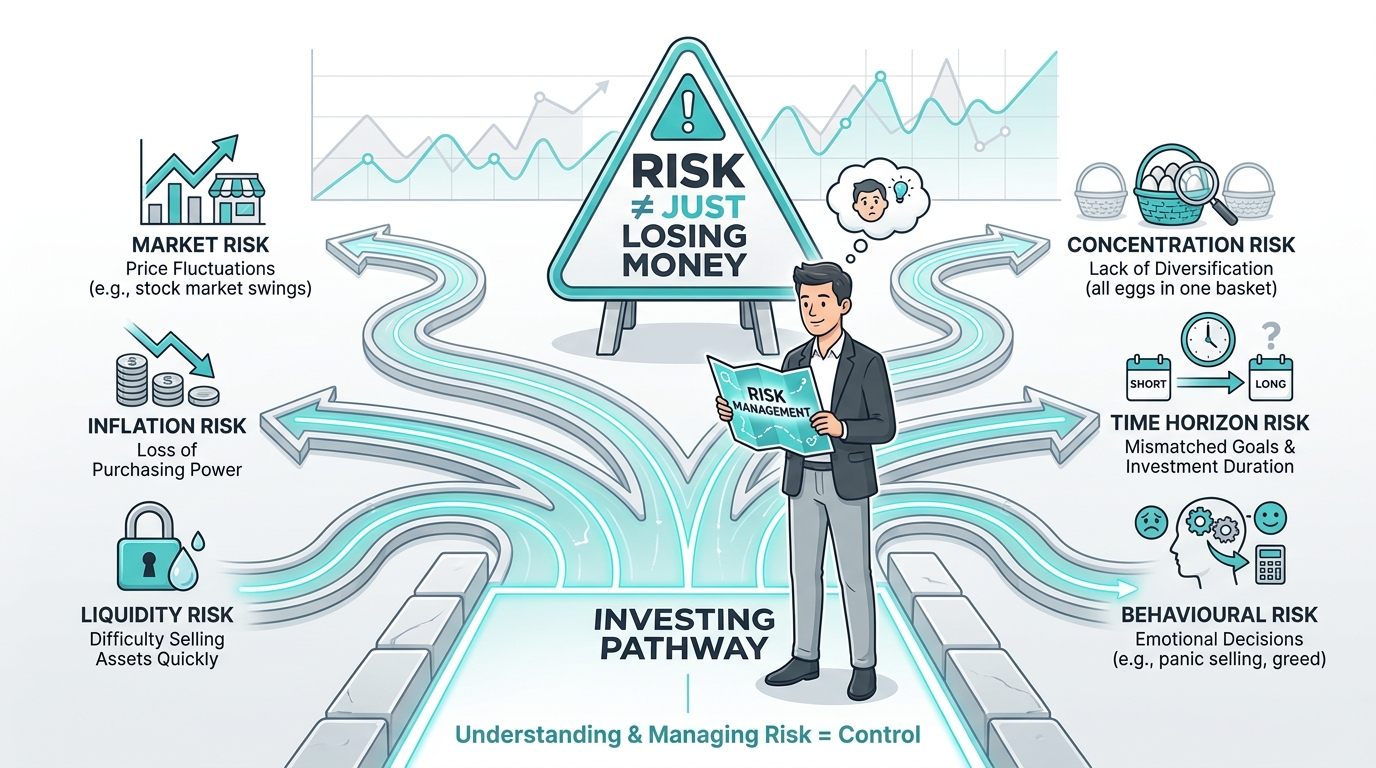
What are the risks involved with investing? This is one of the most important questions beginners should ask before entering financial markets. Investing risk isn't just about losing cash. Investing involves uncertainty; unexpected events can occur, and prices may not match your expectations. The goal is to understand, assess, and manage investment risk so it doesn't dictate your choices.
This article provides a straightforward overview of the key risks of investing, explains why they arise, shows how they can lead to real money losses, and teaches you how to reduce their impact with smart planning.
What is Investment Risk
Investment risk is the possibility that your returns will differ from your expectations, whether higher, lower, or negative. This includes losing money, earning less than you hoped, facing bigger price swings than expected, or being unable to access your cash when you need it.
Check out this link for a deep dive into what investment risk really means: What Does Investment Risk Really Mean?
Why Every Investment Carries Risk
Risk exists because the future is uncertain. Economies shift, policies change, businesses thrive or tank, and global events can quickly flip market prices.
Even choices we think are safe carry hidden risks, such as inflation risk, which quietly erodes what we can buy over time. To understand why risk is inevitable, read Why All Investments Carry Some Risk?
What Are the Risks Involved With Investing? Six Key Types Explained
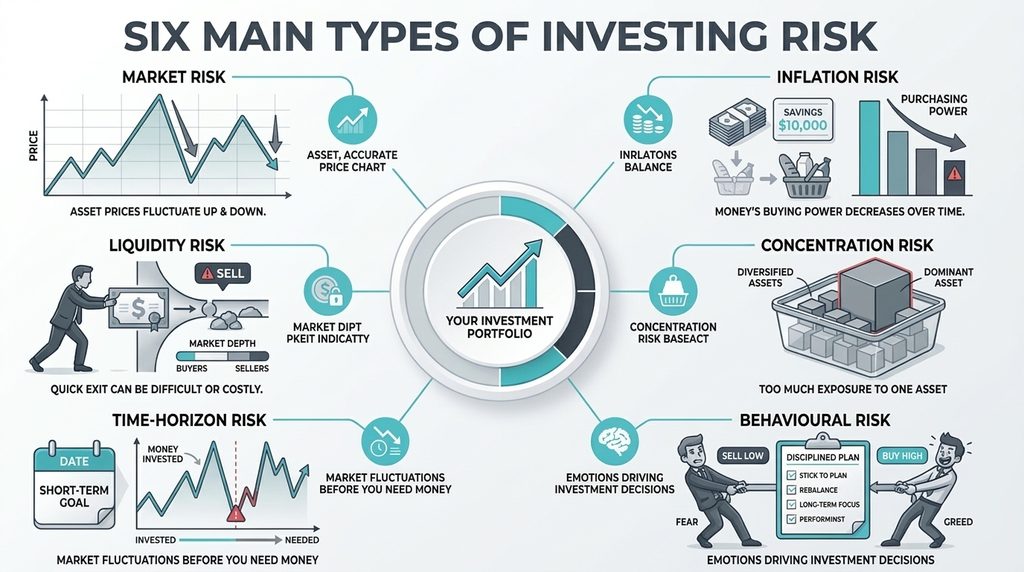
To understand investing risks, recognize the factors that can affect investment performance. Here are six key types of investment risk every beginner should understand.
Market Risk
Market risk involves fluctuations in prices. Stocks, funds, commodities, and currencies can rise or fall based on investor sentiment, economic conditions, and supply-and-demand shifts. Market risk is one of the most common types of investment risk, and it's pretty standard.
Inflation Risk
Inflation risk refers to the possibility that rising prices will reduce money's purchasing power. Money just sitting there doesn't keep its value, even if your bank account's balance hasn't changed. That's why choosing not to invest still has its outcomes.
According to the International Monetary Fund (IMF), inflation measures changes in prices across goods and services, making it an important consideration when planning savings and investments.
Liquidity Risk
Liquidity risk is the risk that you cannot sell an asset quickly at a reasonable price. Some assets are hard to sell without losing value, especially when conditions are unpredictable.
Concentration Risk
Concentration risk is when too much of your invested capital is exposed to a single asset, sector, or idea. Poor performance from a single investment could significantly affect the overall portfolio.
Time Horizon Risk
Time-horizon risk is investing money you need in the short term in assets that require a longer investment horizon. If you need the money soon, market volatility could push you to sell at a bad time.
Emotional and Behavioral Risk
Making choices based on fear, greed, impatience, or just following the crowd can be pretty risky. That's a major reason for preventable setbacks.
Check out this link for a deep dive into how emotions can sway investment decisions: Why Emotions Affect Investment Decisions?
How People Lose Money in Investing
Investment losses can result from market conditions, poor financial decisions, and inadequate risk management. People lose money for many reasons, such as being swayed by hype, entering the market without a clear strategy, panicking during market fluctuations, investing in unaffordable assets, or exiting too early.
To understand the common causes of financial losses, read our article How People Lose Money in Investing?
Common Beginner Mistakes That Increase Risk
Investment risk can increase when investors fail to manage their exposure effectively. Sometimes, novices unknowingly increase their risk exposure by chasing immediate returns, confusing saving with investing, skipping education, investing too early, or getting overly anxious about market swings.
Check out this link for a rundown on the top investing blunders newbies often trip over: Common Investing Mistakes Beginners Make.
How to Manage and Reduce Investment Risk
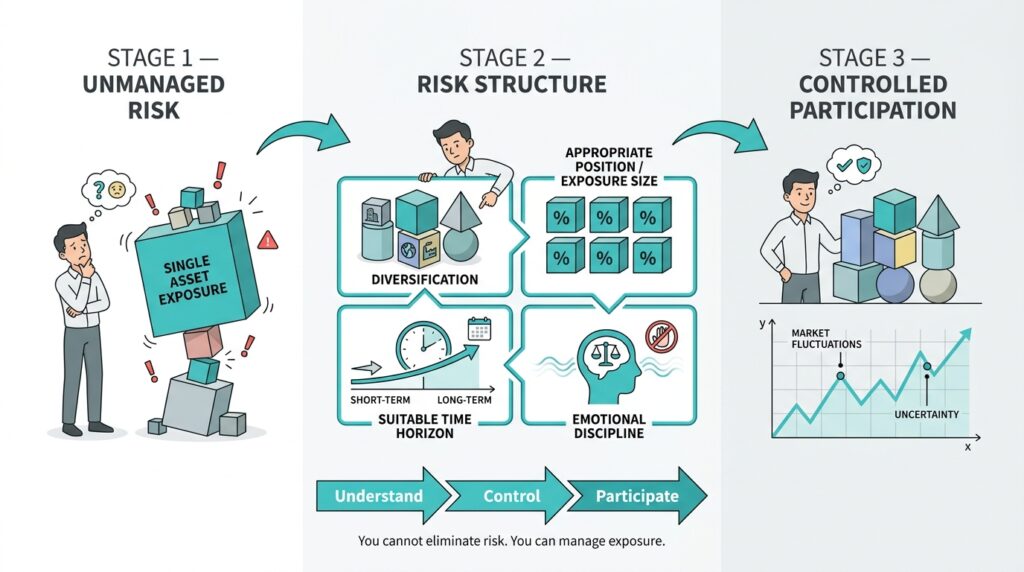
You can't eliminate risk, but you can manage how much risk you're willing to take and how vulnerable you are to a specific outcome.
To manage risk, diversify your investments, size positions appropriately, focus on the long term by aligning your time horizon, and stay composed under pressure through emotional discipline.
The goal isn't to avoid losing. It's about staying steady and safeguarding your investments so you can keep playing long enough for gains to compound and growth to occur over time.
For a step-by-step risk control playbook, link to: How to Manage and Reduce Investment Risk Safely and Effectively?
A Simple Risk Ladder for Beginners
Start with a solid foundation, then gradually increase exposure.
Step 1: Keep Savings Separate
Keep your savings separate from your investment capital. Keep cash for bills, unexpected expenses, or short-term plans out of the stock market's ups and downs. This approach can reduce panic-selling and alleviate emotional stress.
Step 2: Start Small and Develop Good Habits
Starting small helps beginners gain experience while limiting the capital at risk. Focus on developing good investment habits rather than chasing immediate profits.
Step 3: Build Structure Before Scaling
A straightforward strategy, clear guidelines, and solid risk boundaries matter more than choosing the "ideal" investment.
How This Connects to Trading Risk
Trading adds risks: execution speed, tighter timing, greater emotional load, and more frequent decision points.
Are you eager to understand trading mechanics? Start in a demo setup. A demo account lets you practice without risking real capital through simulated trades, but it doesn't fully replicate live trading conditions or emotional pressure.
Conclusion: Investing Risk Is Normal; Unmanaged Risk Is the Problem
Every investment involves uncertainty, but understanding the different types of risk can help beginners make more informed financial decisions.
Market risk, inflation risk, liquidity risk, concentration risk, and behavioral risk can affect investment outcomes in different ways. Recognizing these risks is an important first step towards managing them effectively.
Through diversification, appropriate position sizing, realistic time horizons, and disciplined decision-making, investors can reduce avoidable mistakes and manage their exposure more effectively.
Investors cannot eliminate investment risk, but understanding and managing it can help them make decisions that align with their financial circumstances and long-term goals.








