


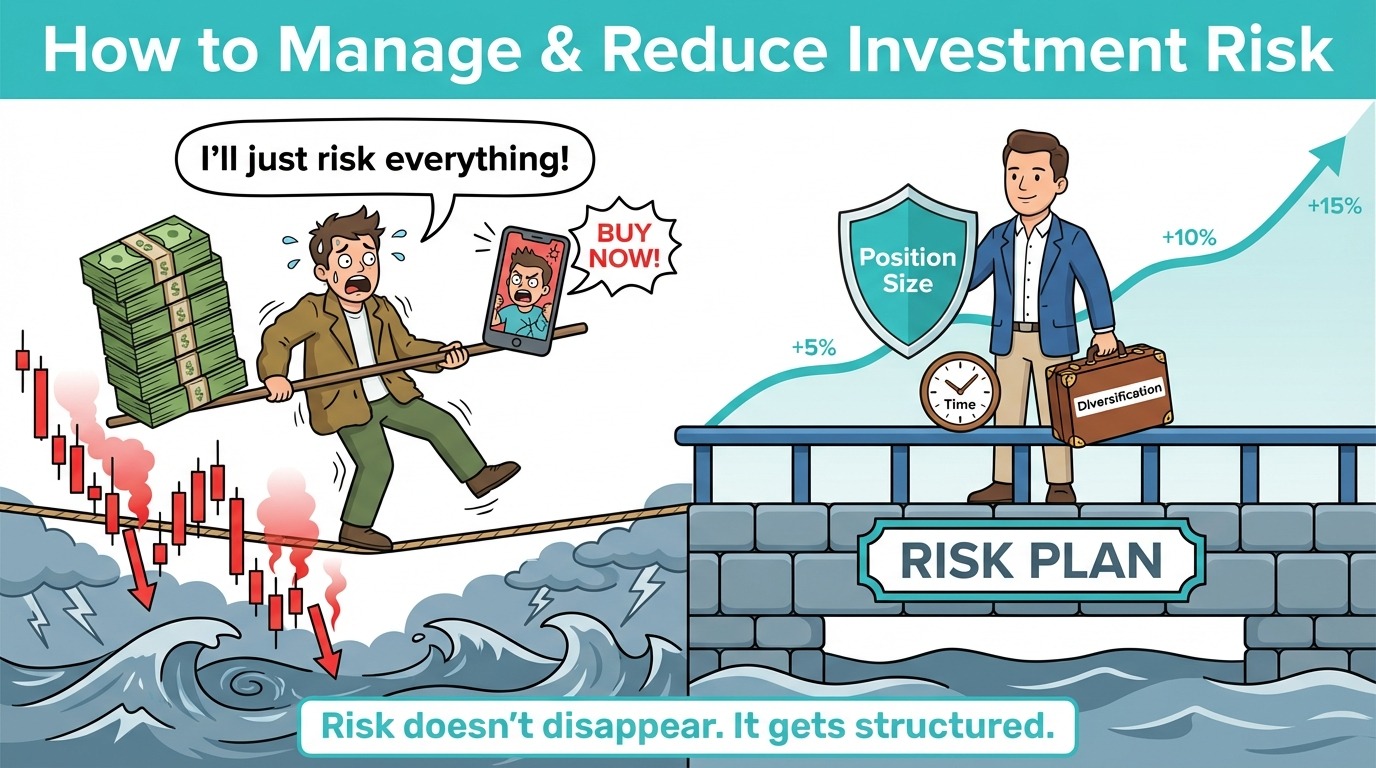
To manage and reduce investment risk, first know that you can't eliminate it. Risk is something to control. Investing always comes with a bit of a gamble, but the real winners are the ones who don't shy away from it; they know how to play it smart.
Most people lose money not because risk exists, but because they ignore it, underestimate it, or react emotionally. When you understand and manage risk properly, investing becomes predictable, disciplined, and sustainable rather than stressful and chaotic.
What Investment Risk Really Means
Investment risk is the possibility that actual results differ from expectations. This includes losing money, underperforming, or dealing with unforeseen fluctuations. Risk isn't just about losing something. It's all about uncertainty.
The article What Does Investment Risk Really Mean? explores this concept in depth, framing risk as an unavoidable part of market participation rather than a sign of failure. As you become accustomed to risk, managing it relies more on logic than emotion.
Why Risk Can Never Be Fully Removed
Many newbies think safety means no risk at all. In reality, risk is always present in finance. Holding cash can still lead to inflation risk.
This topic is laid out in the article Why All Investments Carry Some Risk?, which makes it clear that uncertainty is part of the economic movement. The aim isn't to eliminate risk but to reduce its impact on your financial security.
Risk Starts With Position Size
Keeping a tight grip on the cash tied up in a single large bet is key to managing risk effectively. Major roles can make emotional and financial issues hit harder, leading to impulsive decisions that can jeopardize one's financial stability, especially when individuals feel pressured to recover losses quickly or maintain their status.
Smaller positions, which refer to investing less money in each trade, protect your capital and your mindset. They turn mistakes into learning experiences rather than disasters, helping individuals build resilience and improve decision-making in future trading scenarios. This principle is part of the execution discipline described in Trade Mechanics & Execution Basics, which emphasizes exposure control over prediction.
Diversification as Risk Control
Spreading your investments across different areas reduces your reliance on a single asset. It ensures that a single loss doesn't overshadow the whole investment mix.
Diversifying doesn't eliminate risk, but it helps make results more even and easier to forecast. The CFA Institute outlines the principles for allocating investments across different assets to enhance stability over time.
Time Horizon Reduces Risk Naturally
Short-term investing tends to be more volatile. Long-term investing lets the market handle ups and downs over time. Wealth tends to build up more steadily when you give it time to grow.
How Investing Helps Grow Wealth Over Time? Discusses the importance of time in reducing risk and how patience helps manage it.
Emotional Control Is Risk Management
Fear and greed significantly increase risk. Panic selling can lock in losses. Greed-driven shopping boosts exposure. Risk isn't just about money. It's all in the mind. Emotional discipline turns investing from reacting into planning.
This link between how we think and how we act is part of the Trade Mechanics & Execution Basics course, where it's clear that making positive decisions hinges on managing our emotions.
Separating Saving From Investing
Using money meant for emergencies or living expenses creates emotional pressure. This forces bad decisions.
The link Saving vs Investing outlines the difference: setting money aside offers security, while putting it to work creates opportunities for growth. Blending these roles can significantly increase risk.
Starting Small to Reduce Risk
Learning can be more manageable without getting too emotionally overwhelmed. This fosters self-control and guards against permanent errors, leading to more informed decision-making and ultimately better financial outcomes, especially when individuals begin with a small budget that allows for gradual learning and adjustment in their investment strategies.
The smart move of starting with a small budget is outlined in Can Beginners Invest With Small Amounts of Money? Keeping things confidential can improve your choices in the long run by letting you reflect on your decisions without external pressure or influence.
Education Is the Core Risk Reducer
The more you get the hang of something, the less risky it becomes. Education helps us find comfort in order and routine.
That's why clear learning paths on the VARIANSE academy website matter. They make sure to tackle risks with planning rather than just winging it, which helps learners build confidence and make informed decisions in their trading practices by providing structured guidance and resources that prepare them for real-world trading scenarios, ultimately leading to more successful and less stressful trading experiences.
Practice Before Risking Capital
Markets stir up feelings that you can't just pick up from books. Practice executing trades safely. A VARIANSE trading account lets you simulate real market conditions without risking your cash, turning errors into skills rather than just losses.
Inflation as a Hidden Risk
Investing in something is usually best. Inflation gradually reduces how much you can buy with idle cash, underscoring the importance of investing rather than letting it sit idle.
The International Monetary Fund has documented how inflation can erode stagnant capital, reducing purchasing power and potentially eroding investment value over time. Risk management is about protecting your cash from doing nothing, which can erode purchasing power through inflation and missed investment opportunities.
Risk Is Reduced Through Structure, Not Prediction
Attempting to predict the stock market increases the risk, while simplifying choices reduces it. A structured approach allows investors to make better-informed decisions and minimize potential losses.
Professional investors focus on:
- Capital protection
- Position sizing
- Time horizon
- Discipline
- Education
Risk management is about consistency, not accuracy.
Conclusion: How to Manage and Reduce Investment Risk Is About Control
Managing and reducing investment risk means replacing emotion with structure, including systematic strategies and frameworks to guide decision-making and mitigate potential losses. Risk isn't dangerous if you respect it. It's risky business when you look the other way.
When you learn the ropes, stay patient, and stick to the plan, investing becomes a steady way to grow your money over time, not just a roll of the dice. Risk doesn't just vanish; we can handle it and keep it in check through careful analysis, diversification, and risk management strategies.








