


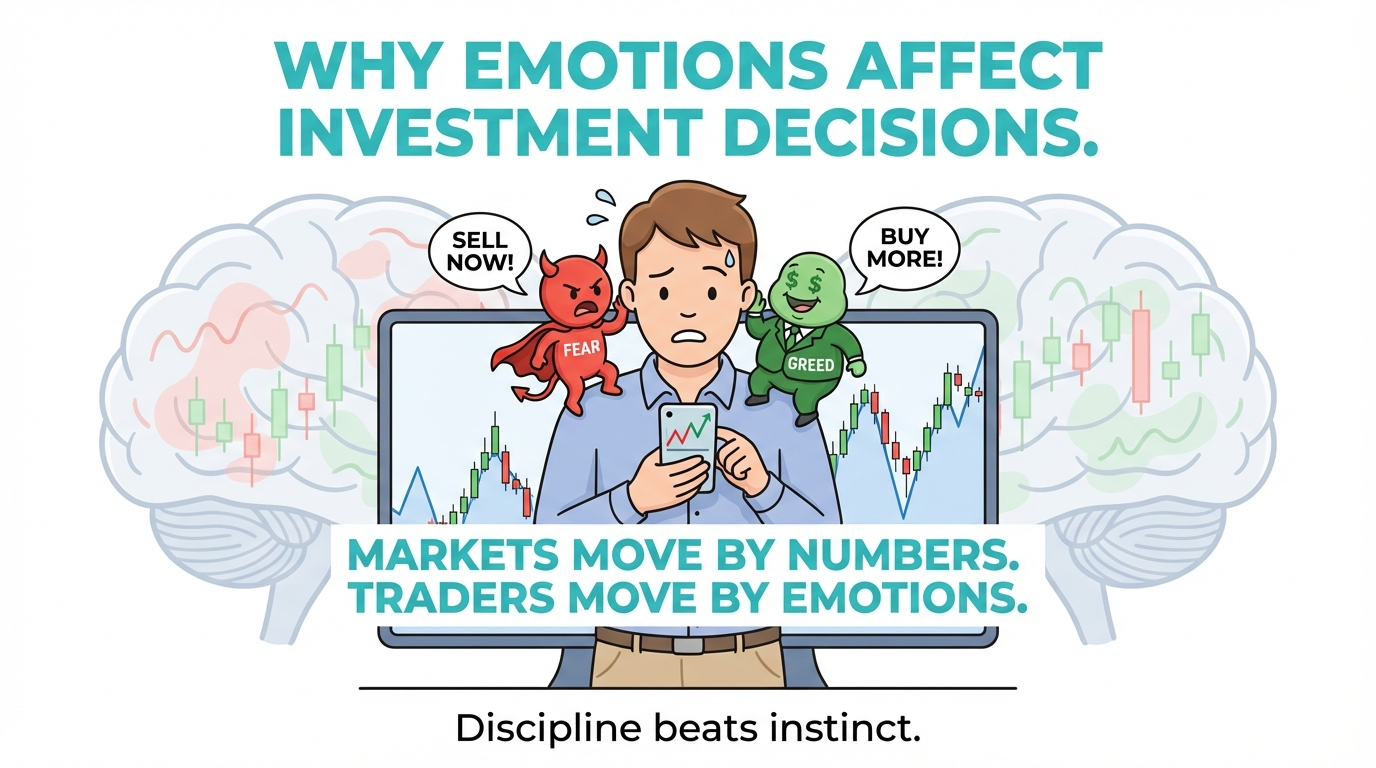
Understanding why emotions affect investment decisions starts with recognizing the role of human psychology in financial markets: investing is about people before it's about money. Data, prices, and probabilities build markets, but people make the decisions. People feel uncertainty, hope, fear, and excitement, and those emotions shape how they react to risk and opportunity.
Even the smartest investor feels emotions. One key difference between disciplined and impulsive investors is how they manage emotional reactions, not whether they feel them. When feelings lead the way, we tend to make more mistakes. Following a structured investment plan can support more consistent decision-making, although returns remain uncertain. Grasping this emotional aspect is key before you put your money on the line, which is why knowing your feelings is considered a cornerstone of smart investing.
Investing Is Psychological Before It Is Technical
Investing involves a significant degree of unpredictability. Prices fluctuate, but you can't always predict what will happen, and investment outcomes are uncertain. leading investors to make emotional decisions. The human brain prefers knowing what's going on, so it gets all emotional when it doesn't.
This phenomenon is why investment decisions often reflect emotional comfort rather than logical evaluation. Without recognizing these influences, investors may let fear and greed drive their decisions. What Investing? is all about sticking to a plan, not just guessing what's going to happen next. Until we understand emotions, technical knowledge isn't enough.
Fear: The Emotion That Forces Early Exits
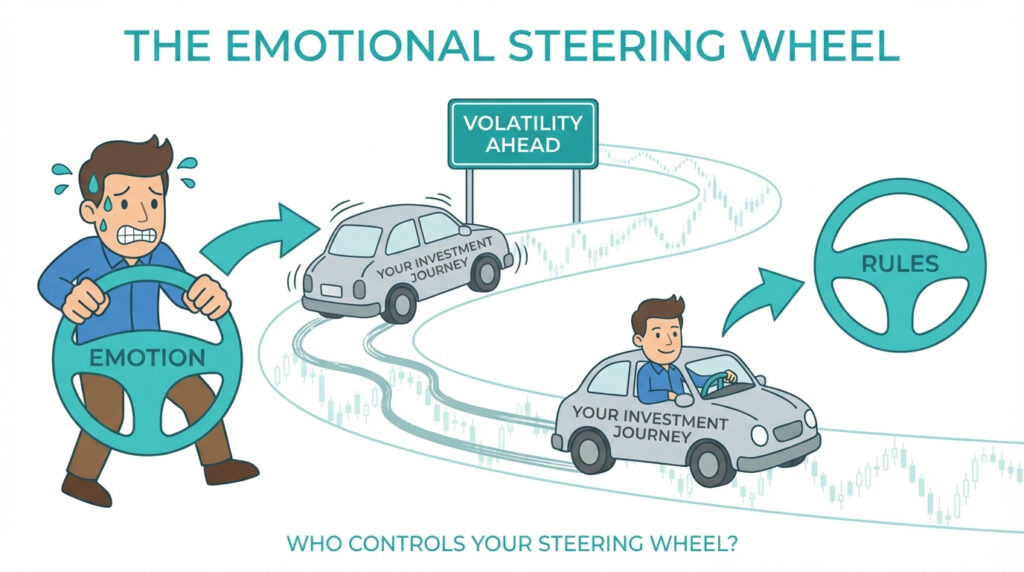
Fear often emerges when asset prices decline, investments lose value, market uncertainty increases, we start losing money, or things get more unpredictable. Although fear is a natural protective response, it can sometimes lead to poor investment decisions. Fear makes investors sell at the wrong time just to avoid the stress.
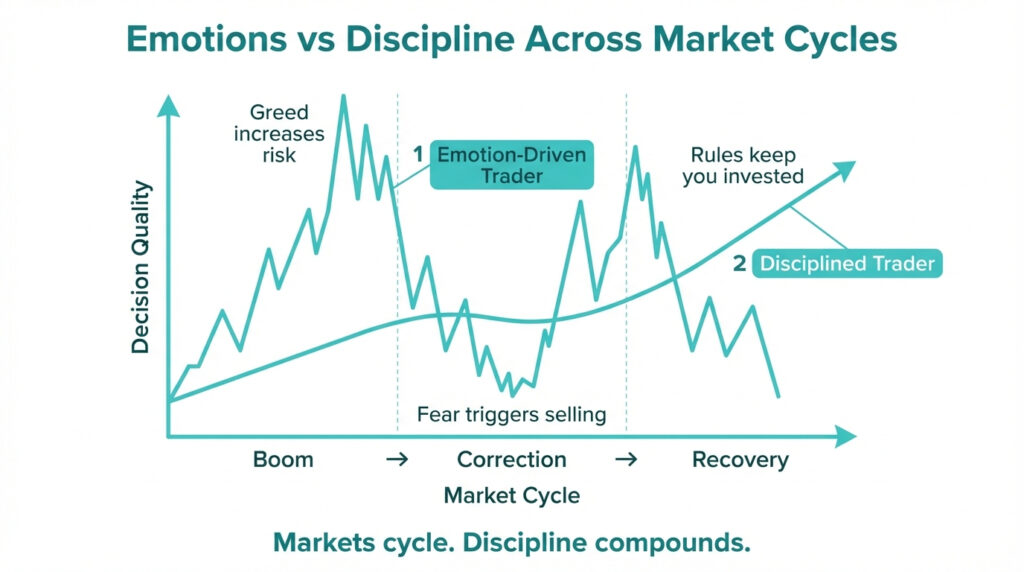
Such behavior leads to selling during market downturns, missing potential recoveries, and incurring unnecessary losses. Many investors end up losing cash, not because emotional reactions influenced their decisions, but because they let fear take over and rush things.
This behavior is explored further in the article How People Lose Money in Investing?, where feelings trump smart thinking.
Greed: The Emotion That Destroys Risk Control
Greed can become more influential when asset prices rise rapidly. It creates the illusion that opportunity has no limits and risk no longer matters. When greed takes over, investors tend to overinvest in stocks, neglect diversification, and disregard discipline.
The desire for higher returns can overshadow disciplined risk management. Emotional highs can be riskier than emotional lows. Investors may abandon caution when careful risk assessment matters most, often leading to poor decisions and a higher risk of negative outcomes, such as financial losses or damaged relationships.
Loss Aversion and Emotional Bias
Psychological research suggests we feel the sting of losing something more than we enjoy the thrill of gaining something equally valuable. This is called loss aversion. A financial loss may feel more painful than the satisfaction gained from an equivalent profit.
Because of this, investors tend to hold losing stocks too long and cash out winners too soon. Emotional discomfort can influence the timing of investment decisions.
This pattern of behavior gets a lot of attention in behavioral finance. You'll find it in studies by the American Psychological Association, which show how our feelings can sway our choices when we're unsure what's going on.
Why Uncertainty Activates Emotional Survival Mode
Financial markets involve uncertainty, while people naturally prefer predictable outcomes. This clash creates significant emotional tension. When we don't know what will happen, uncertainty can trigger stronger emotional responses and impulsive decision-making.
This dynamic is why volatility intensifies emotional decision-making. Understanding market volatility is key to Financial Market foundations, where we see uncertainty as a built-in part of markets, not a sign they're broken.
Emotional Decisions vs Structured Decisions
Emotional decisions are reactive. Structured decisions are planned. Emotions tend to follow stock price swings, the latest news, and other market participants' behavior. Structured behaviors follow rules, risk limits, and predefined processes, helping traders stay disciplined and avoid emotional decision-making in volatile market conditions, especially when sudden market shifts or unexpected news could trigger impulsive reactions.
In Trade Mechanics & Execution Basics, we learn how to turn our reactions into solid skills, developing practical execution discipline and more structured decision-making habits.
Small Capital Helps Control Emotional Pressure
Investing larger amounts of capital can increase emotional pressure, particularly for beginners. Starting with smaller amounts may help beginners learn without exposing substantial capital to market risk. Starting with modest investments lets people focus on habits, not just results. This idea is discussed in: Can Beginners Invest With Small Amounts of Money? The article highlights the hidden benefit of staying calm while limiting financial exposure as you build investment experience.
Practice Reduces Emotional Influence
Regular practice can improve familiarity with trading processes and may help reduce uncertainty. That's why we can safely learn execution behavior in a demo setting through the VARIANSE trading account, where we can watch our emotional reactions without risking any money.
Education Is the Strongest Emotional Stabilizer
Financial education can improve confidence by helping investors understand market behavior and investment risks. Structured learning reduces guesswork, which naturally reduces emotional volatility and leads to more stable decision-making and improved risk management skills. At VARIANSE Academy, our learning paths are crafted to help you replace impulsive reactions with more informed and disciplined decision-making, disciplined thinking, ultimately leading to better decision-making in risk management and emotional control.
Risk Management Is Emotional Management Risk
Management strategies like spreading investments, adjusting position size, and considering the time frame are more than financial tools. They act as psychological anchors.
These strategies can help investors manage emotional pressure and stay disciplined, which is crucial for making rational investment decisions and avoiding impulsive reactions to market fluctuations. Visit this link to learn How To Manage and Reduce Investment Risk?, where maintaining composure and managing your finances go hand in hand.
Why Professionals Are Emotionally Trained, Not Emotionless
Even seasoned investors get emotional sometimes. They aim to prevent emotional reactions from determining their investment decisions. They accept uncertainty, follow established strategies, and evaluate decisions objectively; they stick to the plan, respect the odds, and keep their identity separate from what happens. Emotional discipline is woven into their professional personas.
Conclusion: Why Emotions Affect Investment Decisions Comes Down to Human Nature
Therefore, it is not a mystery why emotions affect investment decisions. When faced with uncertainty, risk, and opportunity, our brains naturally react.
Financial markets are influenced by economic conditions, investor behavior, and uncertainty. We're all about emotions. Without structure, feelings dominate. When investors recognize and manage emotional reactions, they can make more balanced financial decisions. Success in investing isn't about getting rid of feelings. The key is to master them.








