


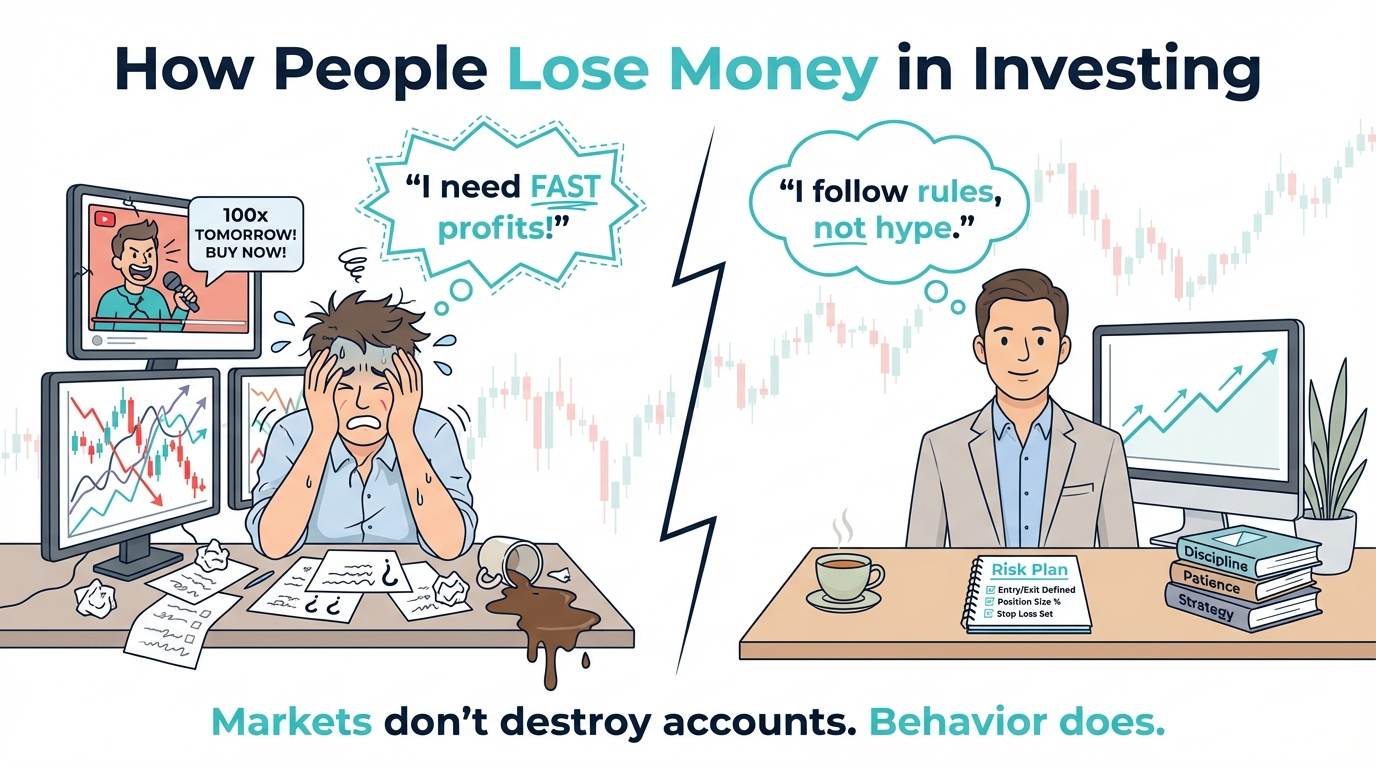
How people lose money in investing is a common concern among beginners, especially those trying to understand why investors experience losses even when stock markets are rising.
Investment losses can result from market conditions, poor decisions, and inadequate preparation. Investor behavior, inadequate preparation, and unrealistic expectations can contribute to losses through impulsive trading, insufficient research, and poor financial planning, including failure to set realistic financial goals.
Investing can be challenging for beginners, particularly without sufficient preparation. Investing always involves risk, but poor planning and limited risk awareness can increase the likelihood of avoidable losses. Understanding why things go wrong is key to preventing them, because knowing common pitfalls and misconceptions can help newbies make informed decisions and avoid costly mistakes.
Losing Money Starts With Misunderstanding What Investing Is
Many people lose money because they see investing as a gamble or as a quick cash grab. They focus on immediate profits rather than potential long-term financial growth. This mindset can cause stress and impulsive choices, ultimately leading to poor investment decisions and financial losses.
The article What Is Investing? explains the fundamental principles of investing. It's all about growing your money over time, not just quick wins. Without this understanding, every market move can feel like a threat, leading to impulsive decisions and significant financial losses because people lack knowledge of market trends and investment strategies.
Ignoring the Foundation of Financial Markets
Some beginners invest in the stock market without fully understanding how financial markets operate. They dive into charts without knowing what influences prices, how liquidity works, or why markets become volatile.
In Financial Market Foundations, they cover how large institutions move prices, what drives supply and demand, and how investor expectations shape future economic conditions. Without this foundation, decisions become reactive rather than informed, leading to poor investment choices that can jeopardize financial stability.
Confusing Saving With Investing
People sometimes invest money they should be saving. Keep your emergency funds, rent, and everyday cash out of the stock market's ups and downs.
The link Saving vs Investing outlines the balance between safety and growth: saving provides security, while investing unlocks new opportunities. Mixing these roles can lead to emotional stress and unintentional errors.
Expecting Fast Results
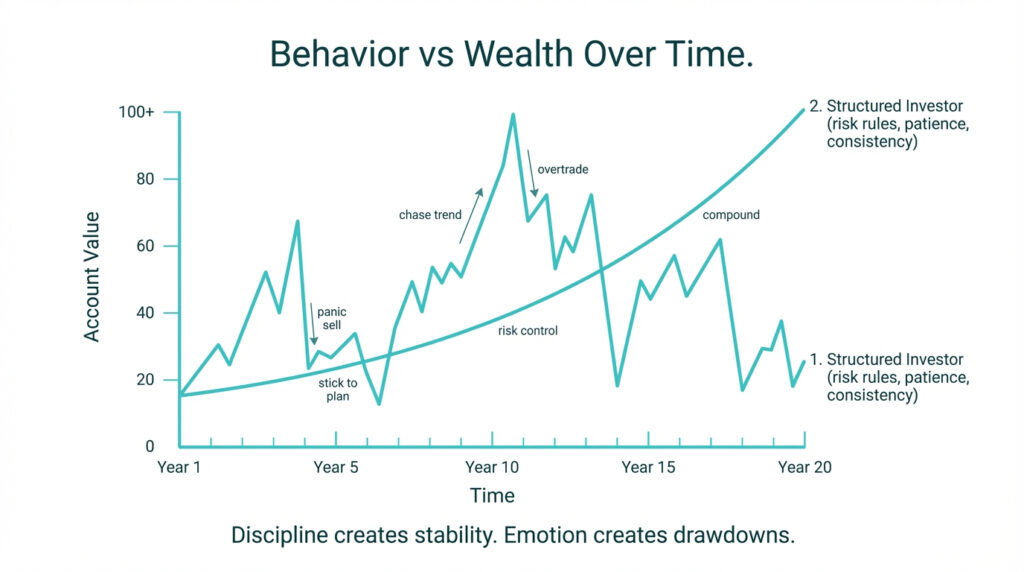
Many investment mistakes result from impatience and unrealistic expectations. Newbie investors often think they should see cash from their investments right away. When results do not appear quickly, they overtrade, chase trends, or abandon their plan.
Growing wealth takes patience and can benefit from compounding, as explained in the link How Investing Helps Grow Wealth Over Time?, where time and compounding can support long-term investment growth, although returns are not guaranteed.
Ignoring Risk and Position Control
People lose money when they focus only on profit and ignore risk. They may allocate too much capital to a single investment or take excessive risks.
Investing means taking risks. The key is to understand and manage investment risk. This concept is laid out in the link Why All Investments Carry Some Risk?, which makes it clear that uncertainty is a given but can be managed.
Overtrading and Emotional Reactions
More action doesn't always lead to better outcomes. Trading too much can increase costs and stress. Panic selling after losses and chasing prices after gains are two of the quickest ways to wipe out your investment.
In Trade Mechanics & Execution Basics, we prioritize decision quality over frequency.
Chasing Hype Instead of Structure
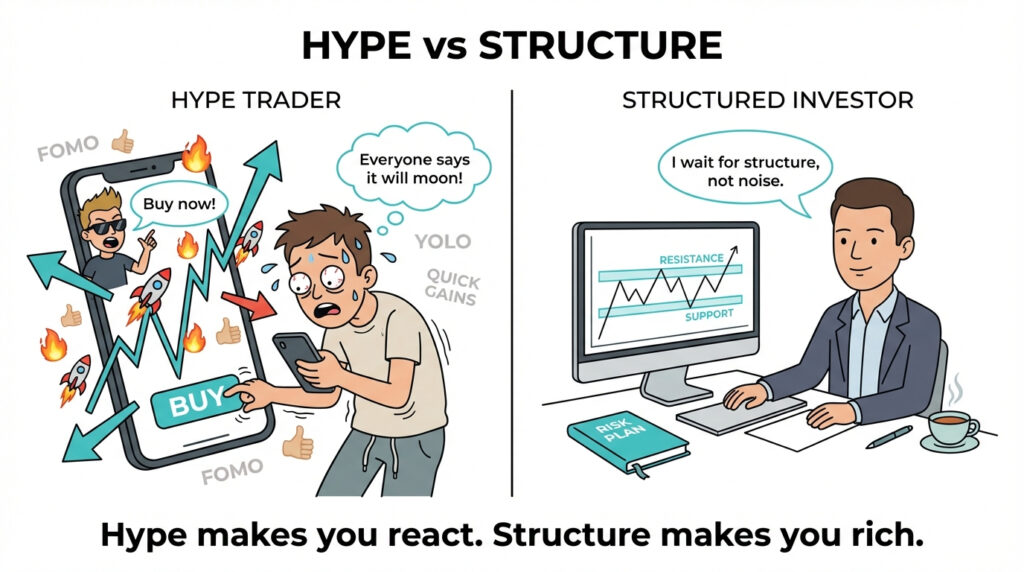
Many people lose money by following social media trends, influencers, or market hype. This can lead investors to rely on external opinions instead of doing their own research.
Successful investors depend on a solid plan, not just what's trending. A structured investment approach can help investors avoid impulsive decisions driven by market hype.
Starting With Too Much Capital
Starting with a large amount of capital does not protect beginners from investment losses. In many situations, it accelerates losses, as inexperienced investors may take greater risks or make impulsive decisions with more capital at their disposal. Without proper risk management, investing larger amounts can increase the financial consequences of mistakes.
The perks of starting small are laid out in Can Beginners Invest with Small Amounts of Money? where it's clear that having a smaller stake can help beginners develop investment knowledge and practical experience.
Avoiding Education
People often lose money because they avoid learning. Without learning, we keep making the same mistakes, which can lead to repeated financial losses and missed growth opportunities. Markets appear chaotic rather than logical.
VARIANSE academy offers structured learning on its website, where financial ideas are taught step by step instead of just felt, helping individuals understand the underlying principles and avoid repeating past mistakes in chaotic markets.
Learning With Real Money First
People sometimes lose money because they're playing with real cash. Emotional pressure can negatively affect judgment and decision-making. Losses hit you hard, more like a personal blow than just a lesson learned.
You can practice market behavior and execution discipline safely in a demo environment through the VARIANSE trading account page. Here, slip-ups become learning moments, not a hit to your wallet.
Inflation and Opportunity Cost
Holding cash for extended periods can expose savings to inflation risk. Keeping cash without letting it grow lets inflation chip away at what you can buy.
The International Monetary Fund explains that inflation can significantly reduce the value of idle money. Skipping investments still carries significant risks.
Conclusion: How People Lose Money in Investing Is About Behavior, Not Markets
So, it's not just bad luck when people lose money on investments. Insufficient preparation can contribute to avoidable investment losses. Mistakes happen when you don't invest, ignore risks, chase quick wins, and skip learning.
When structure takes over, investing becomes a numbers game, with decisions based on data analysis and strategic planning rather than impulse. A disciplined approach may support more consistent investment decisions over time. Reducing impulsive decisions can help investors manage avoidable risks, although market risk remains.








