


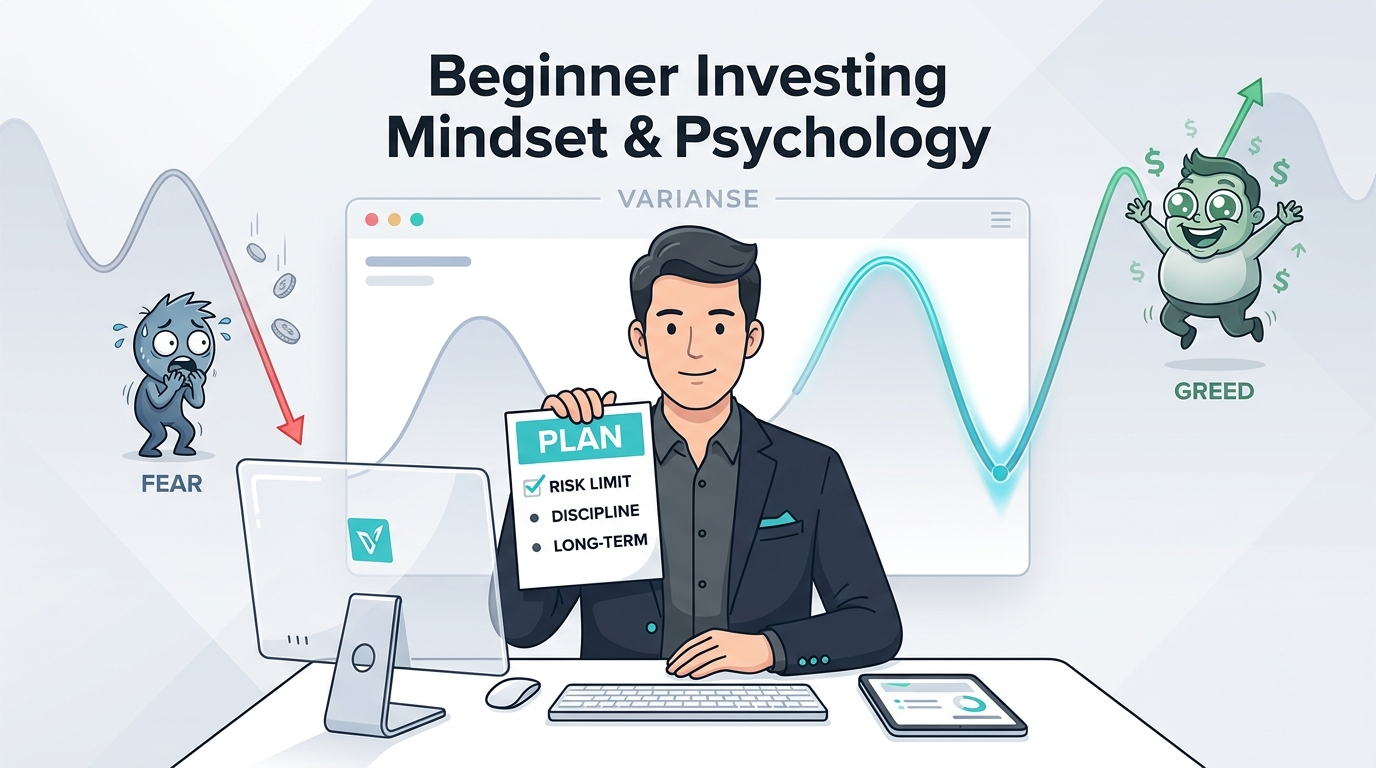
Beginner investing mindset and psychology involve understanding how emotions, habits and cognitive biases can influence financial decisions.
You’re usually trying to answer one practical question:
“How do I stop sabotaging my decisions when money and uncertainty are involved?”
Most beginners lose not because they are inexperienced, but because they lack sufficient information. They lose because feelings take over the game plan, leading to impulsive decisions that deviate from their original strategy.
Markets are intentionally set up to create pressure, which can lead to emotional responses that further disrupt a trader's strategy, such as panic selling or overtrading in response to short-term market movements. Prices fluctuate, results differ, and our brains crave predictability in a world full of surprises.
Your long-term advantage isn't about guessing the future. It's all about emotional discipline, risk awareness, and sticking to repeatable behaviours that help investors navigate market volatility and make informed decisions over time.
Beginner Investing Mindset and Psychology: What Beginners Need to Know
An investing mindset refers to the attitudes, habits and decision-making principles that influence how someone approaches financial markets.
It involves more than motivation or confidence. Investors also need to understand uncertainty, assess potential risks and recognise how emotions may affect their choices.
For beginners, developing an investing mindset may involve learning to:
- Remain patient when there is no clear reason to act.
- Evaluate losses without making impulsive decisions.
- Avoid excessive confidence following profitable outcomes.
- Follow a financial plan while reviewing it when circumstances change.
These habits can support more thoughtful decision-making, although they cannot guarantee favourable investment results. This foundation is explored in Why Mindset Matters in Investing?
Why Psychology Influences Investment Decisions
Understanding financial markets is important, but knowledge alone does not prevent emotional decision-making. Investors may understand a strategy yet struggle to follow it during periods of volatility or uncertainty.
A newbie can memorize but still ends up broke. That's when emotions such as fear, hope, or haste cause trades to go awry. Psychology shows up as behavior: entries, exits, position sizes, and adherence to rules.
For example, fear may encourage someone to sell prematurely, while overconfidence may lead to taking greater risks than originally planned. Psychological factors can influence investment timing, position sizes, risk tolerance and reactions to market movements.
Recognising these influences helps beginners understand the difference between making a financial plan and following it consistently. However, disciplined behaviour does not guarantee that an investment strategy will be profitable.
Fear and Greed in Beginner Investing Psychology
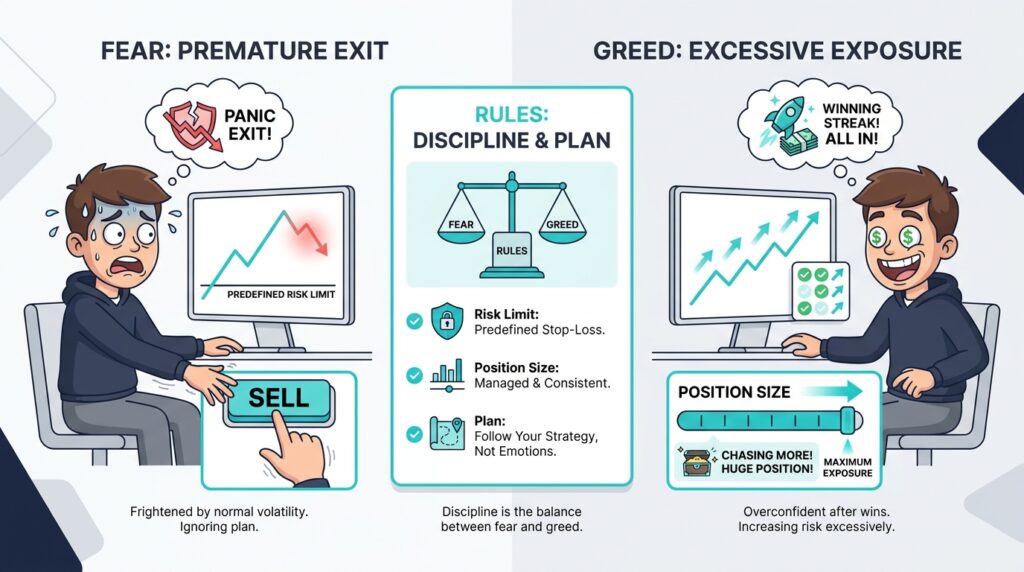
Fear and greed are commonly discussed emotions in investing because they can influence how individuals respond to uncertainty and potential rewards.
How Fear Affects Decisions
Fear may cause investors to sell during market declines, avoid decisions they previously considered appropriate or focus excessively on short-term losses.
However, caution is not always irrational. Reassessing an investment may be appropriate when financial circumstances or underlying risks change.
How Greed Affects Decisions
The desire for higher returns may encourage excessive risk-taking, overconfidence or unrealistic expectations. After profitable outcomes, some investors may increase their exposure without adequately considering potential losses.
Recognising these emotional influences can help investors assess whether their decisions reflect a considered plan or a reaction to recent market movements.
Check out this link for a more in-depth look at how fear and greed can mess with timing and risk in trading: How Fear and Greed affect Investments?
Common Emotional Mistakes in Trading and Investing
Emotions can influence investment decisions in several ways, particularly when markets become volatile or outcomes differ from expectations.
Impatience and Overtrading
Some beginners may trade frequently because they feel pressure to remain active.
However, additional trades can increase transaction costs and financial exposure without necessarily improving results.
Holding Losing Positions to Avoid Accepting a Loss
Investors may become reluctant to close an unsuccessful position because doing so would mean recognising a loss.
This behaviour can be associated with loss aversion, although holding an investment is not automatically a mistake if its underlying rationale remains valid.
Revenge Trading After a Loss
Revenge trading occurs when someone enters additional trades primarily to recover previous losses. Such decisions may involve larger positions, reduced planning or increased financial exposure. Recognising these patterns can help beginners evaluate their behaviour and make more deliberate decisions.
These patterns are mapped clearly in Common Emotional Mistakes Beginners Make in Trading and Investing.
Why Platforms and Charts Intensify Emotion
Newbies usually think the issue is just "the market," but more often, it's the feedback loop: charts + P&L + uncertainty, which can lead to emotional decision-making and impulsive trading behaviors.
Real-time Price Movement Creates Urgency
Watching the price move tick by tick makes the brain feel like it must act. That pressure's more about mindset than a game plan, as it can lead to impulsive decisions rather than well-thought-out strategies, which may result in missed opportunities or increased risk in trading.
Charts Can Feel Like Signals When They Are Only Information
A chart shows how things have been doing, not a guarantee of what's to come. When beginners treat charts as tools of certainty, emotions spike faster, leading to impulsive trading decisions that can result in significant financial losses.
If you're looking to understand charts without going overboard, check out this link: What Is a Price Chart?
A Beginner's Framework for Investment Discipline
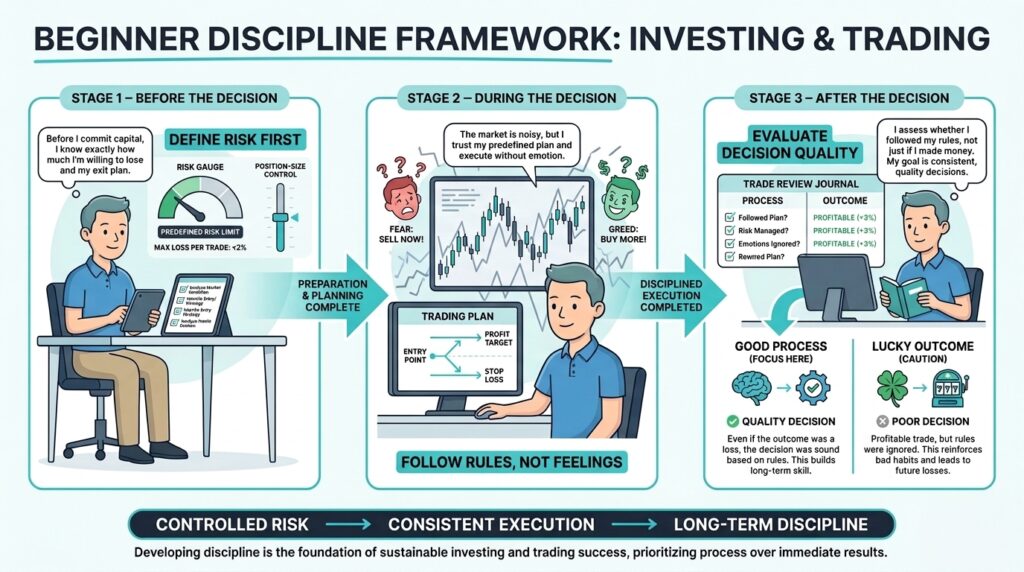
Discipline isn't just about sheer willpower. Structure limits spontaneous creativity.
Before Making a Decision
Consider your financial objectives, risk tolerance, investment timeframe and the potential consequences of losses. Avoid making decisions based solely on recent price movements or emotional reactions.
During the Decision
Review whether the investment or trade remains consistent with your original plan and current circumstances.
A predefined plan can provide useful guidance, but it should not prevent reassessment when new information materially changes the situation.
After the Decision
Evaluate both the outcome and the reasoning behind the decision.
A profitable result does not necessarily mean that the original decision was well informed. Similarly, a financial loss does not automatically mean that the decision-making process was poor. Regular reviews can help identify recurring behavioural patterns and areas for improvement.
Check out this link to see how top investors think: How Successful Investors Think?
Why Patience Is a Skill, Not a Personality Trait
Most newbies don't have trouble with charts. They find waiting to be a real challenge. Staying patient means not jumping into trades that don't fit your strategy, even when things are changing fast
Maintaining your strategy is crucial, even when your emotions become overwhelming. This skill set is honed through practice and setting boundaries, not just hype.
For a step-by-step guide, look at this guide on How to Stay Patient and Disciplined in Trading and Investing?
How Demo Trading Can Support Psychological Learning
If you solely practise with real money, each mistake can have significant financial and emotional consequences, which can lead to increased anxiety and poor decision-making in future trades. A safer path is structured practice first, where you can observe your reactions without damage.
However, demo trading does not fully reproduce the emotional pressure of risking real money. Simulated execution conditions may also differ from live markets.
As a result, successful demo trading does not guarantee psychological readiness, effective risk management or profitable outcomes in real-money trading.
A controlled practice environment can begin via What Is a Demo Trading Account? The purpose is not to “win” demo trades but to build calm execution, realistic sizing, and rule-following habits.
What to Consider Before Trading With Real Money
There is no fixed point at which someone becomes psychologically ready to trade with real money.
Before considering live trading, beginners should evaluate their financial circumstances, understanding of market risks and ability to withstand potential losses.
Useful considerations include:
- Understanding how position sizing and leverage affect financial exposure.
- Recognising that stop-loss orders do not guarantee execution at the intended price.
- Having a structured approach to planning and reviewing decisions.
- Understanding the differences between simulated and live trading conditions.
- Being financially prepared for the possibility of losing trading capital.
Psychological discipline is only one consideration. Consistent demo results or confidence in a trading plan do not establish that live trading is appropriate.
Check out this link for a handy checklist to see if you're ready to dive into real money trading: When to Switch to Real Money Trading?
Conclusion: Building a Disciplined Investing Mindset
Developing an investing mindset involves understanding how emotions, habits and cognitive biases influence financial decisions.
Fear, greed, impatience and overconfidence can affect how beginners respond to market movements, particularly during periods of uncertainty. By improving financial knowledge, establishing clear decision-making principles and reviewing past decisions, investors can develop greater awareness of their behaviour.
However, emotional discipline cannot eliminate market risk or guarantee positive investment outcomes.
For beginners, the objective is to make informed decisions, recognise psychological influences and approach investing with realistic expectations.








