
Learning how to stay patient and disciplined in trading and investing involves more than simply resisting the urge to buy or sell.
Financial markets involve uncertainty, changing prices and the possibility of financial losses. These conditions can create emotional pressure, particularly when investors face unexpected market movements or opportunities they fear missing.
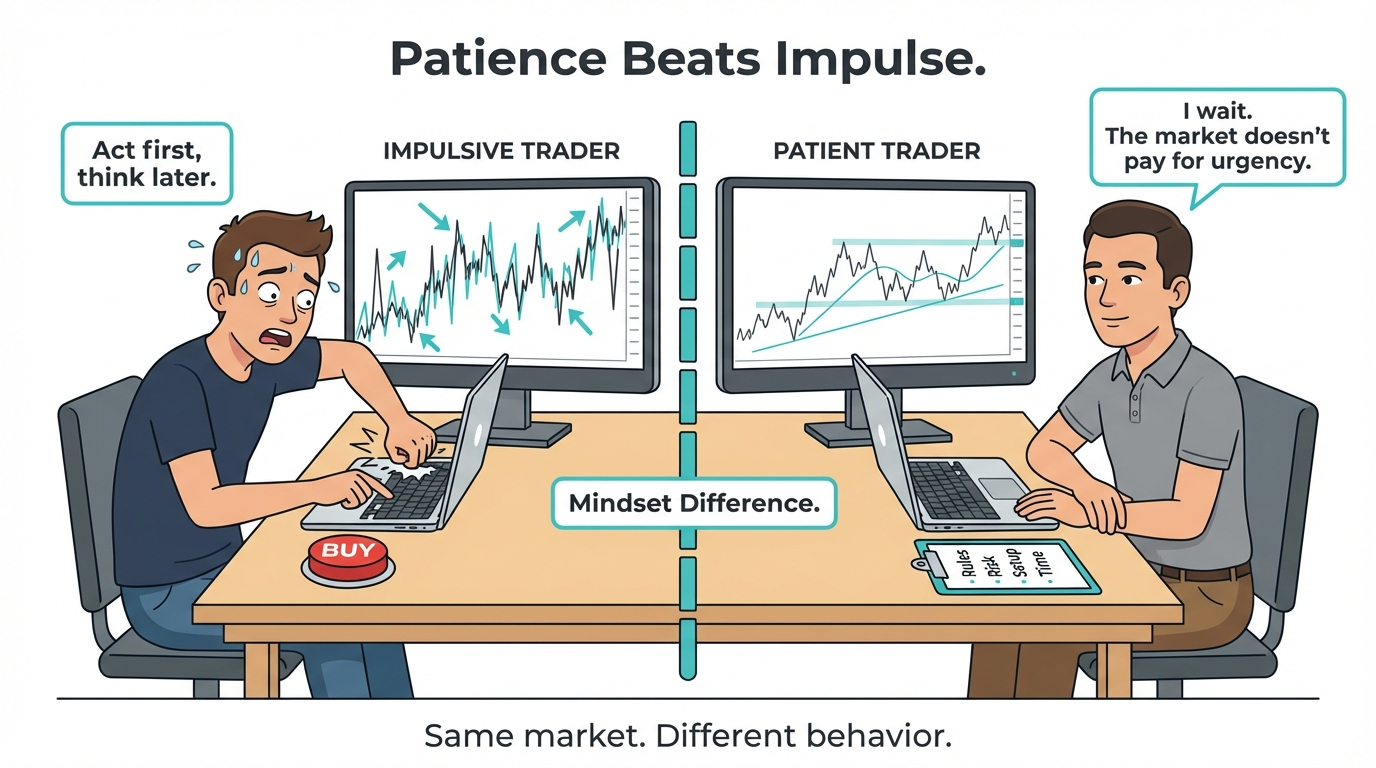
Patience involves recognising when to wait, while discipline means making decisions according to a considered investment or trading plan.
Both can be developed through education, practical experience and regular reflection. However, neither guarantees profitable outcomes.
This article explores how beginners can develop patience, recognise emotional triggers and use structured decision-making to approach financial markets more thoughtfully.
Why Patience and Discipline Matter in Trading and Investing
An investment or trading strategy provides a framework for making decisions, while patience and discipline can help individuals apply that framework consistently.
Patience may involve waiting for sufficient information before making an investment decision or avoiding unnecessary transactions during uncertain market conditions.
Discipline involves considering financial objectives, risk tolerance and predefined decision-making criteria rather than reacting impulsively to short-term price movements.
However, following a strategy consistently does not guarantee that the strategy is appropriate or profitable. Investment plans should be reviewed when circumstances or relevant information change.
This idea aligns with the approach outlined in the link, What Is Investing? where making thoughtful choices is more important than going with your gut.
The Difference Between Being Busy and Being Patient
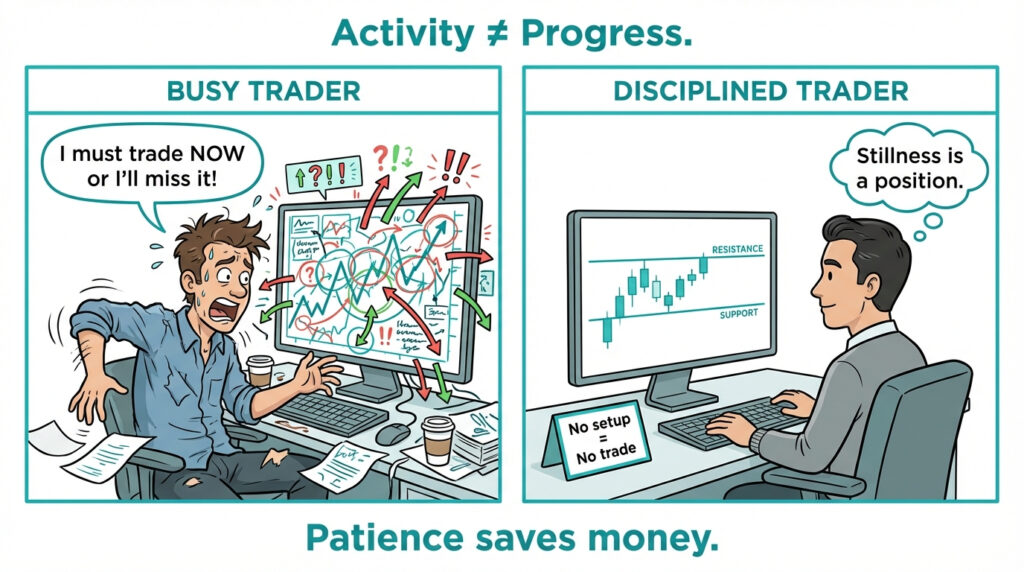
Beginners sometimes associate frequent trading activity with progress or experience.
However, making more transactions does not necessarily improve investment outcomes. Frequent trading can increase transaction costs and financial exposure.
Patience involves evaluating whether a decision is supported by relevant information rather than acting simply because market prices are moving.
For long-term investors, this may mean reviewing investments at appropriate intervals instead of reacting to every short-term fluctuation.
For active traders, it may mean waiting until predefined conditions are met before considering an entry.
This concept matches up with the execution framework outlined in Trade Mechanics & Execution Basics, where orders are meant to show what you want, not how fast you want it.
Why Market Uncertainty Tests Your Discipline
Financial markets are influenced by economic developments, investor expectations, liquidity and other changing conditions.
Because future prices are uncertain, investors may encounter periods when market movements differ from their expectations.
Unexpected losses, rapid price changes or missed opportunities can create pressure to abandon an investment plan.
Patience and discipline can help individuals assess these situations without immediately reacting to emotional discomfort.
In the article What Does Investment Risk Really Mean?, they lay out how uncertainty isn't just vague; it's all about probabilities guiding our choices.
How Emotional Triggers Can Affect Patience
Fear, greed, frustration and overconfidence can influence financial decisions.
For example, fear may encourage investors to sell during a market decline without fully reassessing their long-term objectives.
Greed or fear of missing out may encourage someone to enter a position without adequately evaluating the potential risks.
After experiencing a loss, frustration may also lead some traders to increase their activity in an attempt to recover money quickly.
These reactions are not inevitable, and emotional responses do not automatically make a decision incorrect.
Recognising emotional triggers can help investors distinguish between a reasoned decision and an impulsive reaction.
This psychological cycle is explored in Why Emotions Affect Investment Decisions?, where emotional response is shown to override logic under pressure.
Discipline Begins With Having Clear Rules
Clear investment guidelines can reduce the need to make every decision in response to immediate market movements.
For long-term investors, these guidelines may include financial objectives, asset allocation, diversification and periodic portfolio reviews.
For active traders, they may include entry and exit conditions, position sizing and risk-management considerations.
Predefined rules can support more consistent decision-making, but they should remain open to reassessment when new information or changing circumstances justify it.
Without rules, every decision becomes reactive. Choices become routine procedures when there are rules.
Why Patience Requires Understanding Time
Investment and trading decisions involve different time horizons.
Long-term investors may focus on financial objectives that extend over several years, while active traders may evaluate opportunities over much shorter periods.
Patience involves recognising the timeframe relevant to a particular decision and avoiding unnecessary reactions to market movements.
However, waiting is not always the correct choice. Changing economic conditions, personal circumstances or investment fundamentals may justify taking action.
This viewpoint is supported by the patterns in the book How People Lose Money in Investing?, which show that impatience often leads to investment blunders, such as buying high during market euphoria or selling low during panic, ultimately resulting in significant financial losses.
How Risk Management Can Support Discipline
Risk management can provide a structured way to evaluate financial exposure before making investment or trading decisions.
For active traders, this may involve considering position size, leverage, potential losses and the limitations of protective orders.
For long-term investors, it may involve diversification, asset allocation and choosing investments appropriate to their financial circumstances.
Smaller positions may reduce the monetary impact of a given price movement, but they do not eliminate risk or guarantee emotional comfort.
Similarly, stop-loss orders may help manage exits, but execution prices can differ from the specified stop level during volatile market conditions.
Risk management supports informed decision-making, but it cannot guarantee profits or prevent every loss.
Understanding investment risk is an important part of developing patience and discipline. The Financial Conduct Authority (FCA) provides guidance on investment risks and returns, helping beginners understand why potential rewards should be considered alongside possible financial losses.
The Role of a Trading Account in Discipline
A trading account provides information that can help individuals monitor positions, account equity, available funds and financial exposure.
Reviewing this information may support risk awareness and more informed trading decisions.
For beginners interested in active trading, demo environments may offer opportunities to practise placing orders and exploring platform features using simulated funds.
The best way to observe this behavior is to use a simulated setup on the VARIANSE trading account, where you can learn patience and discipline without risking your money.
Why Patience Can Feel Uncomfortable at First
Waiting can feel difficult when market prices are changing and other participants appear to be taking advantage of opportunities.
Some beginners may experience fear of missing out, uncertainty or frustration when they are not actively trading.
These feelings can encourage unnecessary decisions, particularly when individuals lack clear investment objectives or trading criteria.
Developing patience may involve recognising these reactions, reviewing the reasons behind a decision and accepting that not every market movement requires action.
How Experienced Investors Approach Patience and Discipline
Experienced investors may recognise several important principles:
- Outcomes are uncertain: No investment decision guarantees a particular return.
- Risk can be managed, not eliminated: Investors can assess and adjust financial exposure, but some risks remain outside their control.
- Time horizons matter: Investment decisions should reflect relevant financial objectives and circumstances.
- Plans require review: Discipline includes reassessing decisions when new information becomes available.
These principles can help beginners understand why thoughtful preparation and ongoing evaluation matter more than simply remaining active in the market.
Discipline Develops Through Practice and Reflection
Motivation can change over time, but structured learning and regular reflection may help individuals develop more consistent decision-making habits.
Beginners can review past decisions, identify emotional triggers and evaluate whether their actions aligned with their financial objectives.
For active traders, simulated practice may also help develop familiarity with trading platforms and order-management processes.
However, repeated practice does not guarantee improved investment returns, and market outcomes remain uncertain.
That's why we've got these neat, organized learning tracks at VARIANSE Academy's website, where we're all about teaching habits, not just sparking inspiration.
Conclusion: How to Stay Patient and Disciplined in Trading and Investing
Learning how to stay patient and disciplined in trading and investing involves developing realistic expectations, understanding financial risks and making decisions through a structured process.
Patience helps investors recognise when further consideration may be appropriate, while discipline supports the consistent application of well-reasoned guidelines.
Both skills can develop through education, practice and reflection.
However, patience does not always mean waiting, and discipline does not mean following a plan regardless of changing circumstances.
Financial markets remain uncertain, and neither approach guarantees favourable investment outcomes.