


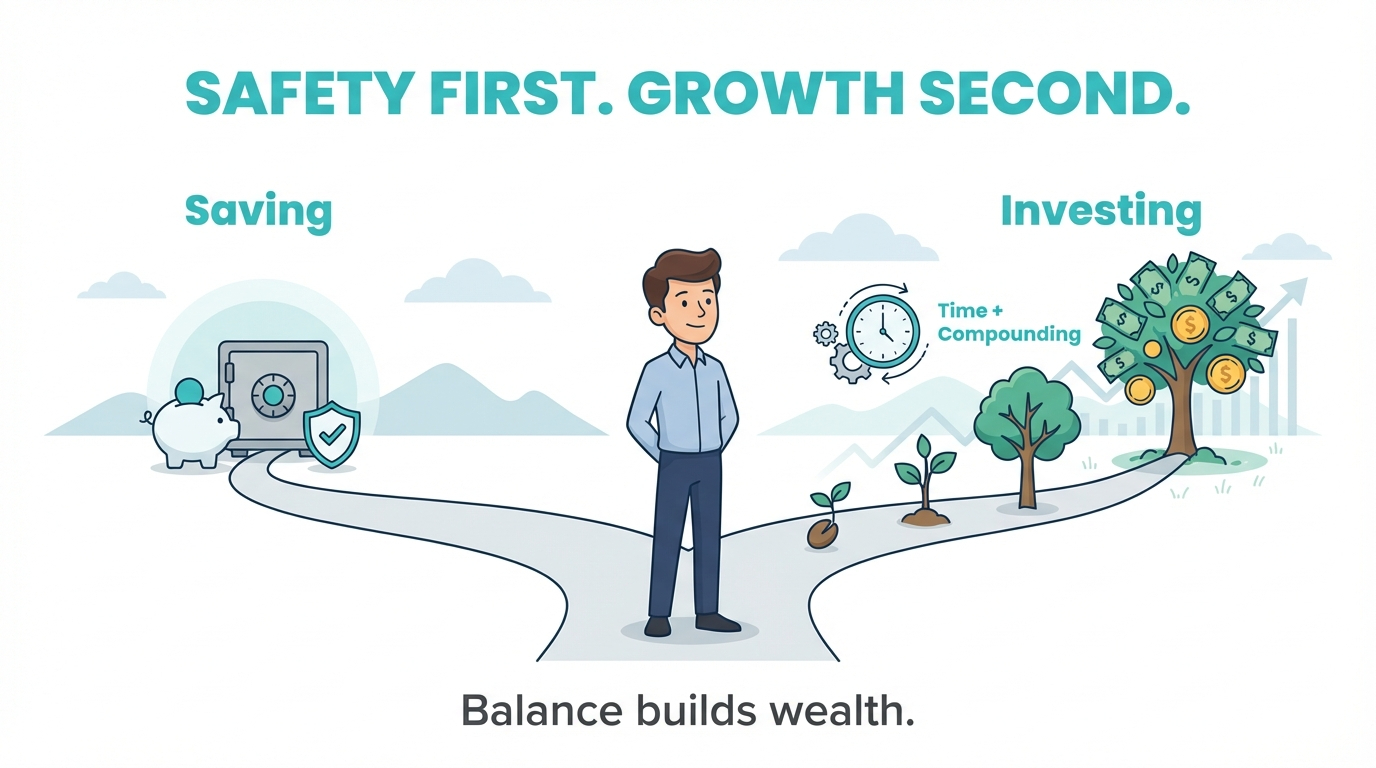
This decision significantly influences your financial future. When people consider saving vs. investing, they usually want to manage their cash with more confidence. This question lays the groundwork for learning about money matters. Saving and investing aren't competitors. They're complementary tools, each serving a unique purpose, and both matter at different points in your financial journey.
Many newbies either play it too safe and miss out on future growth, or jump in before they have a solid financial cushion.
Building a stable, confident, long-term growth foundation means balancing saving and investing.
What Does Saving Mean in Practical Terms?
Saving means setting money aside in a secure and easily accessible place. Its main job is to keep you safe, not to grow it. Savings act like a safety net, helping you handle surprise bills, short-term needs, and sudden income drops without freaking out.
In simpler terms, saving means keeping your money safe, accessible, and secure. It helps you avoid gambling on the market when things get unpredictable.
Saving money gives you more control and breathing room in your financial choices.
What is Investing?
Investing means putting your cash into things like stocks or real estate that could increase in value or make you some dough over the long run. These assets might be stocks, funds, commodities, or other market-based instruments. The goal isn't quick cash; it's building long-term wealth.
Investing means growing your money, letting it multiply over time, and maintaining financial stability.
This is a methodical approach to letting your cash earn for you. The main point of investing is laid out in detail in the link What Is Investing? It's a disciplined, long-term strategy, not a quick win.
Saving vs Investing in Simple Terms
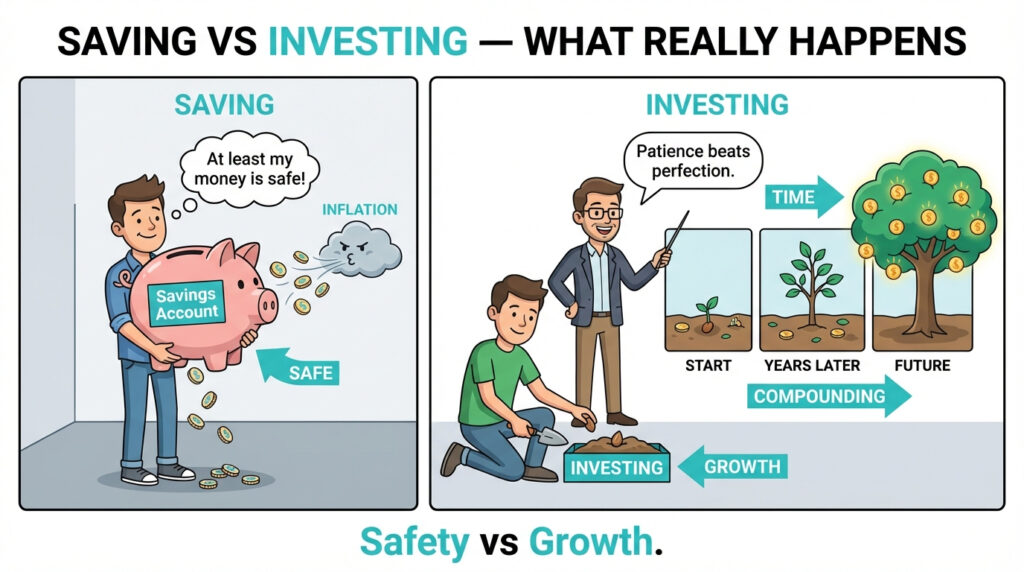
Saving protects your money. Investing grows your money. Saving helps you stay safe and steady. Investing prepares you for opportunity and long-term wealth.
Both are crucial. Investing simply serves to limit growth. Investing solely increases your risk. A well-rounded strategy builds a more robust financial foundation.
Risk Difference: Why Saving Feels Safer Than Investing
Saving carries a small risk. Your balance stays steady and consistent. You've got a clear idea of your cash flow and when you can dip into it.
Investing carries the risk of market fluctuations. Prices rise and fall with the economy, sentiment, and supply. Embracing unpredictability is part of aiming for growth.
This risk-reward link is well known in finance and detailed by the CFA Institute. Greater rewards usually mean more risk, so managing that risk is super important.
Time Horizon: Short-Term vs Long-Term Purpose
Saving is designed for short-term financial needs, such as an emergency fund, planned purchases, and steady income. It bolsters your current safety.
Investing is designed for long-term goals, such as retirement planning, building wealth, and achieving financial freedom. It backs up your future independence. Your time horizon determines whether to save or invest.
How Inflation Changes the Equation
Inflation gradually erodes the purchasing power of our cash. Even if your savings balance stays the same, its real value goes down over time.
Investing can help beat inflation because investments can grow faster than prices rise. Investing is key to safeguarding your money for the future.
The IMF explains how inflation can erode your buying power, making it clear that stashing cash alone isn't enough to keep your finances in check over time.
How Saving and Investing Work Together
Saving and investing are two separate paths, not interchangeable. These are different levels of financial growth.
Saving money helps keep things steady. They help shield you from being pushed into selling, making emotional choices, and dealing with financial worries when the market is volatile or you face a personal crisis.
Investing money into something can help it grow. When things are steady, investing is like taking a careful step toward growing your wealth and securing your future.
This bond reflects the organized, money-savvy lessons from the Financial Market Foundations, where staying steady matters more than taking chances.
Saving vs Investing for Future Traders
Before diving into trading, it's crucial to understand why saving matters. Trading without a financial safety net can increase stress and force you to rely on intuition.
Before putting actual cash on the line, you can safely hone your trading skills and stay disciplined in a demo setup through the VARIANSE trading account page link.
Structured education that ties up financial basics with how to trade in the market is on offer at VARIANSE Academy's website, making sure we're ready for risk, not rushing into it.
Common Beginner Mistakes
Many novices invest before they have substantial savings, chase quick gains, and neglect to build a solid foundation. These errors aren't due to a lack of smarts; they come from poor financial preparation and risk management.
Good financial results start with patience and organization, not rushing.
Saving vs Investing as a Lifestyle Decision
Your ability to save and invest depends on your income stability, risk tolerance, personal objectives, and ability to stay emotionally in control.
There is no universal formula. Finding the right balance comes from making smart choices and honestly looking at your finances.
How This Connects to Trading Education
Trading takes investing ideas and adds more emotion and risk. While investing means waiting for the right opportunity and letting your money grow over time, trading means making quick decisions and staying disciplined.
This connection fits in the Trade Mechanics & Execution Basics section, where precision and emotional control matter most.
Conclusion: Saving vs Investing Is About Balance, Not Choice
Saving and investing are about finding the right balance, not choosing one over the other. Saving and investing aren't really a fight. It's a system. Saving builds safety. Investing builds opportunity.
Together, they build financial confidence, pave the way for long-term growth, and keep emotions in check. This balance sets organized money management apart from spontaneous spending habits.








