


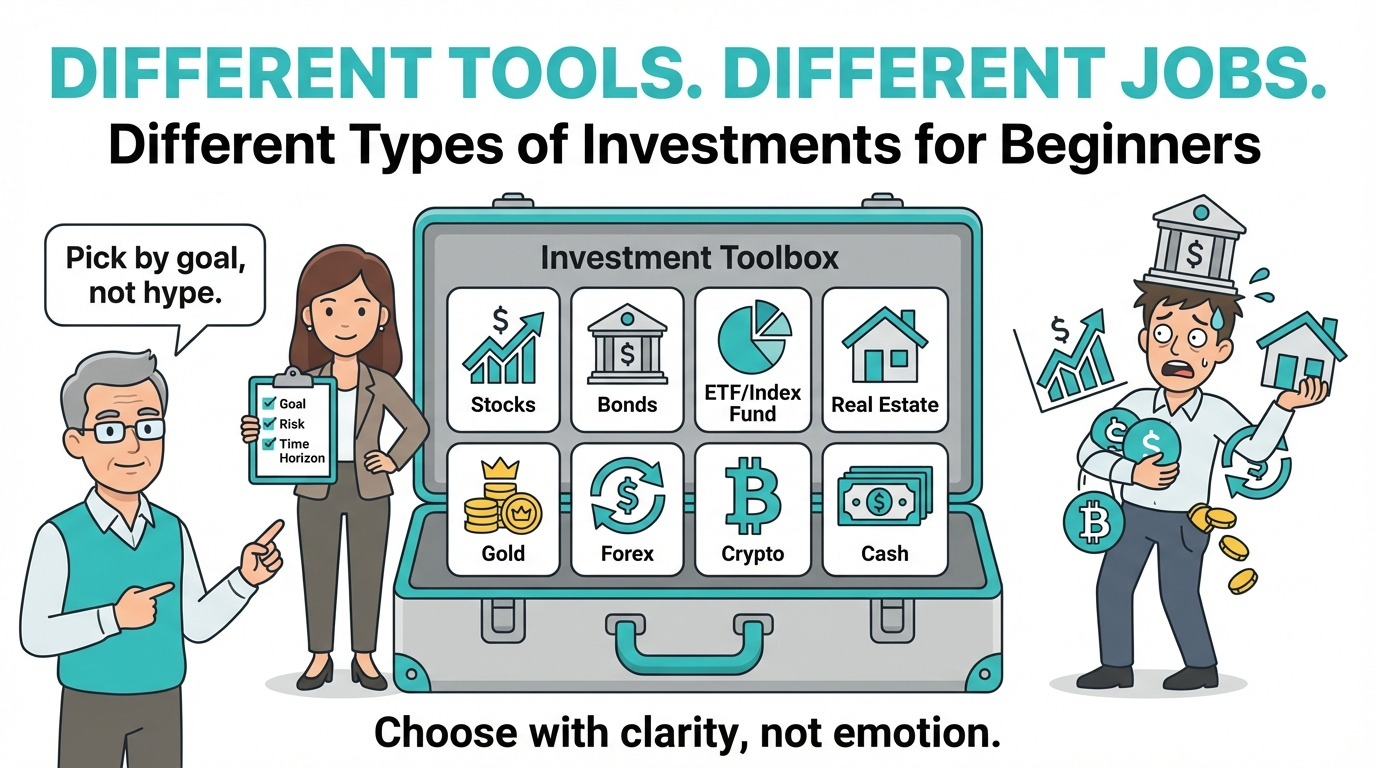
If you’re looking for different types of investments for beginners, you’re usually trying to answer one practical question: “Where should I start without making a costly mistake?” The right starting point is not a “hot asset”.
It’s about understanding what each investment type is designed to do, the risks it carries, and how it fits your time horizon and personality.
This guide simplifies the usual investment types, then helps you pick a smart combination based on your goals, how much risk you can handle, and where you are in your learning curve.
What Exactly Is an Investment
Investing means putting money into something with the hope it will pay off later, whether through capital growth, generating cash, or simply holding its value over time.
The primary distinction between investing and simply holding cash is that investments are part of the market, so their value can fluctuate. If you want to understand the basics of investing myths before choosing your options, this info is laid out clearly What Is Investing?
The Main Types Of Investments Beginners Will See Most Often
Newbie people usually bump into the same few categories over and over. Everyone acts differently because they're in different market structures, with participants and risks. That broader "why markets behave differently" context is explained in the Financial Market Foundations.
Stocks (Equities)
Stocks are like owning a piece of a company. When companies make more money and investors want more shares, stock prices tend to rise. Some stocks also pay dividends, offering a bit of cash flow as they grow.
Stocks can be volatile in the short term, especially around news and earnings. For novice investors, it's crucial to understand that market fluctuations are inherent, and maintaining composure depends on your investment horizon and how you spread your bets, rather than trying to predict every detail.
Bonds (Fixed Income)
Bonds are basically like loans to governments or businesses. The bond issuer pays interest and returns the principal at maturity. Bonds are usually considered less volatile than stocks. Still, they carry risks, including interest-rate risk, the risk of issuer default, and the risk that inflation could eat into your returns.
Bonds are often the go-to for keeping a portfolio steady and delivering more consistent returns, rather than just chasing the highest growth.
Funds (Index Funds, Mutual Funds, ETFs)
Funds (index funds, mutual funds, and ETFs) combine various investments into a single package. This can make it easier for newbies to diversify their portfolios without buying each asset separately. Index funds and many ETFs try to mirror a market index, while mutual funds may offer a bit more hands-on management.
Newbies often find this category appealing because it reduces the risk of investing in a single asset and simplifies the selection process. The trade-off is that you'll still feel the market's ups and downs, but it's spread out across a basket of assets instead of just one.
Cash And Cash Equivalents
Cash, savings accounts, and short-term instruments focus on liquidity and stability.
These are useful for unexpected expenses and short-term goals, but they typically struggle to keep pace with rising prices in the long run. This is why the “safety vs growth” relationship is central to Saving vs Investing. The IMF provides a clear educational context for understanding how inflation erodes purchasing power over time.
Real Estate
Real estate investing can mean owning property outright or getting into the game through things like real estate funds.
Real estate is often seen as a solid investment that can provide rental income and appreciate over time. Still, it's not as simple to sell quickly, and it can be a bigger financial commitment with ongoing expenses and a bit of a wait.
For beginners, the key idea is that investing in real estate can pay off, but it's not a guaranteed "safety bet." It comes with its own risks and cash-flow considerations.
Commodities (e.g., Gold, Oil)
Commodities are tangible goods whose prices fluctuate with supply and demand, global politics, economic cycles, and inflation expectations. People often view gold as a reliable investment during uncertain times, but it's not always a straightforward journey.
Commodities often behave differently from stocks and bonds, so people sometimes choose them as diversifiers rather than beginner-friendly main investments.
Forex (currencies)
Forex is trading one currency for another. This stuff is super fluid and works worldwide, so it's easy to get to, but that doesn't mean it's simple.
Forex trading is more common than holding it long term, so it's crucial to monitor costs, determine your borrowing capacity, and manage risk effectively. If you're diving into
For Forex, kick things off with a market overview in Financial Markets Explained, then link it up with execution learning in Trade Mechanics & Execution Basics.
Cryptocurrency
Crypto assets can be highly volatile, meaning their prices can change rapidly and unpredictably, and they can move in response to sentiment (investor feelings), liquidity shifts (changes in how easily assets can be bought or sold), regulation (government rules), and macro conditions (broad economic factors).
Some people use crypto as a speculative allocation, while others view parts of the space as long-term technology exposure.
For novice investors, the best guidance is to assess the situation, set realistic expectations, accept the inherent volatility, and avoid investing emergency funds in high-risk ventures.
How To Choose The Right Investment Type As A Beginner
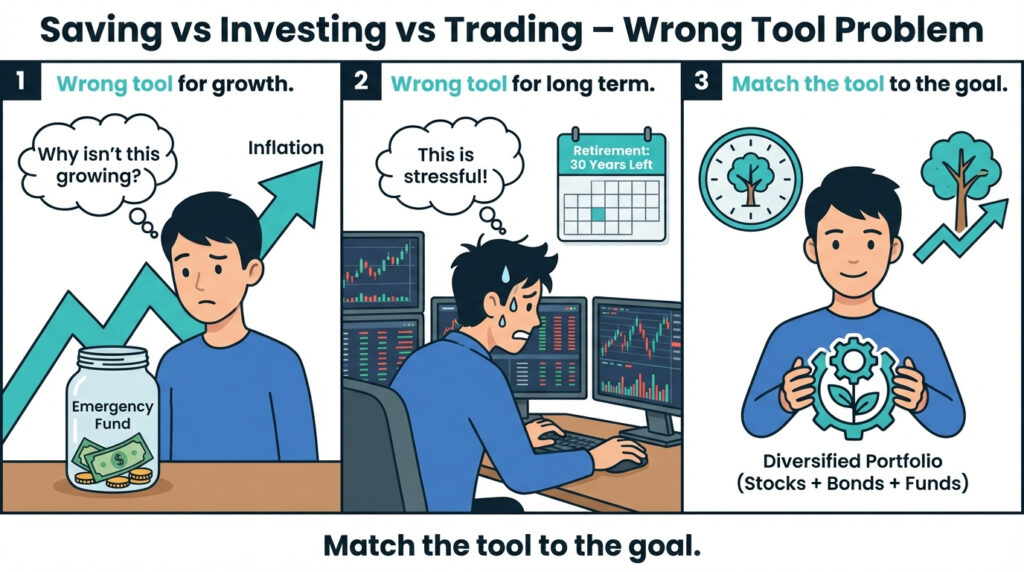
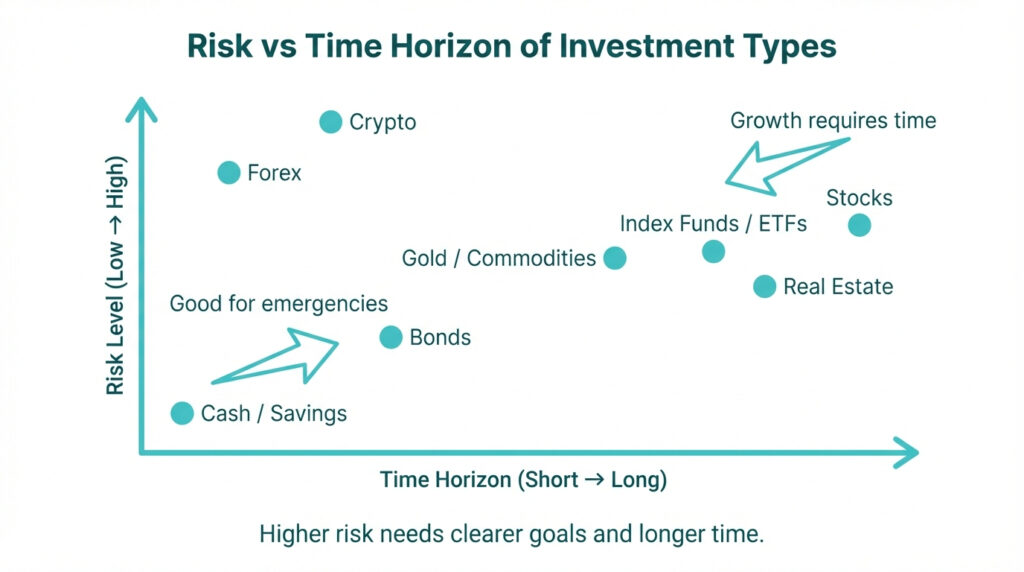
Most people mess up when they pick an investment before figuring out what they're saving for. Start by identifying your goal, time frame, and risk tolerance, then select an investment that aligns with them. If you're aiming for stability and need to handle emergencies, cash-like options matter more.
It is usually more advantageous to spread your funds across multiple markets if your aim is long-term growth.
If you're aiming for a steady stream of trading profits, honing your skills and sticking to a disciplined approach matter far more than the type of investments you're dealing with. Exploring the real reasons behind why people put their money into investments, check out Why People Invest Money?
Investing Vs Trading: Choosing The Wrong Tool Creates Pressure
Picking the wrong tool can really add some stress. Typically, newbies either try to trade their way to long-term wealth or invest long-term to meet short-term cash needs. They are different tools with different requirements.
If you're thinking about trading, learn the basics first: how markets work, risk, and why newbies often lose money.
Next, explain the details of spreads, order types, and stops. Check out VARIANSE Academy for a safe way to learn market trends. It's all laid out in a clear, step-by-step guide on their education page.
Different Types Of Investments For Beginners
The best investment fits your goals, how long you're willing to wait, how much risk you can handle, and what you can maintain over time.
Once you get the hang of what each investment type (stocks, bonds, funds, cash, real estate, commodities, Forex, and crypto) does, you stop obsessing over finding the "best" and start crafting a strategy that works in the real world.
If you tackle this structure with a solid plan, a focus on learning, and realistic goals, your choices will be more chill, and the outcomes will stick around longer.








