


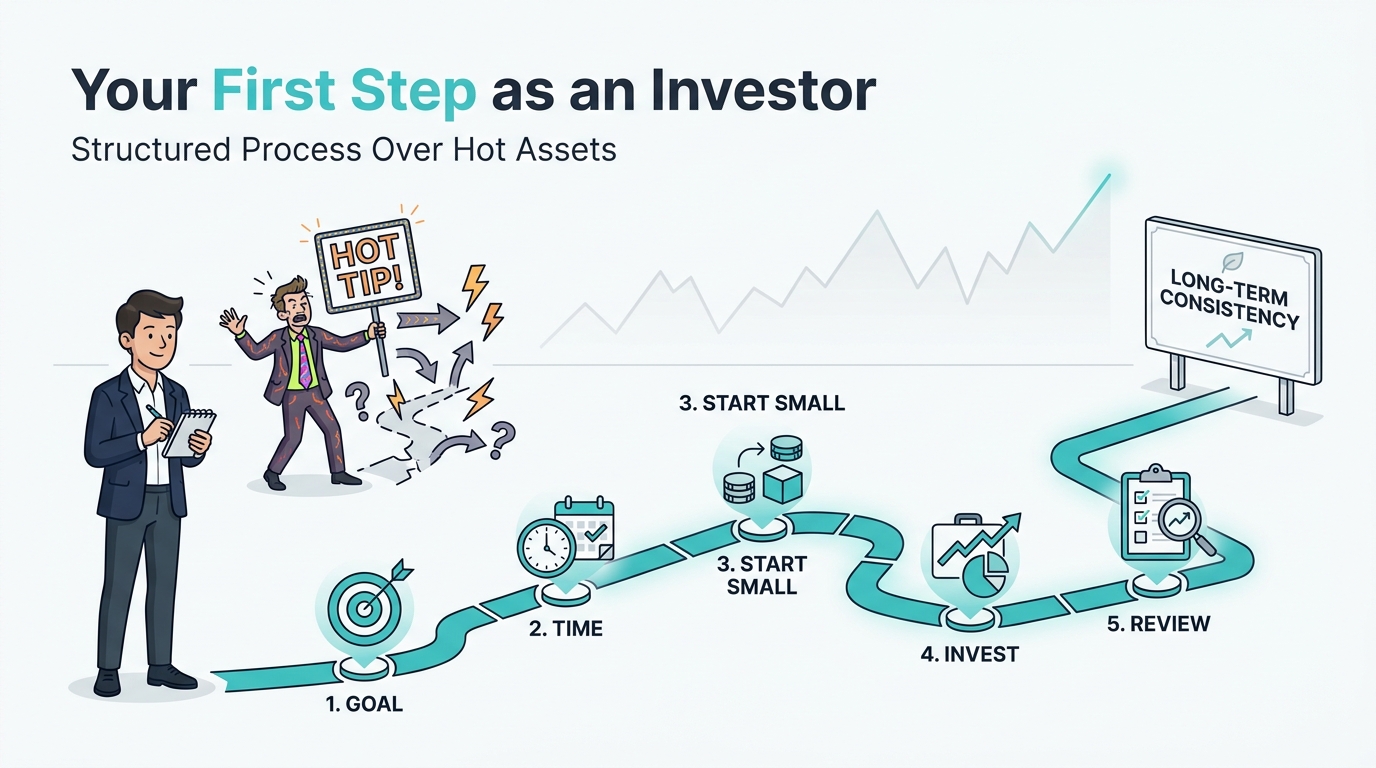
Your first step as an investor begins with understanding how to make informed decisions before putting your money into the market.
If you're new to investing, you're probably trying to avoid the usual beginner mistake: letting your first choice turn into a huge emotional moment. The best first step isn't choosing a trending investment. It's developing a simple, structured approach.
Your first investment should be guided by preparation, not excitement. A structured approach can help beginners manage risk, reduce emotional pressure, and get a feel for the market without getting caught up in the hype.
What “First Step” Actually Means (It’s Not Just Buying Something)
Taking the first step means developing a plan: determining why you're investing, how long you plan to remain invested, how much risk you're comfortable with, and how you will respond if market conditions change.
This definition aligns with the concept in What Is Investing?, which views investing as a planned activity rather than guessing or reacting.
Step 1 — Choose Your “Why” Before You Choose an Asset
Beginners often start with, “What should I buy?” A smarter first question is, “What is this investment for?”
If your goal is long-term financial growth, patience and a realistic investment horizon are essential. If you're aiming to learn quickly, focus on fundamental investment concepts before committing significant capital, and set clear guidelines to help you avoid rash emotional errors, such as focusing on specific topics or skills you can master quickly.
The Financial Conduct Authority (FCA) also encourages investors to understand their financial goals, assess investment risks and make informed decisions before committing their money.
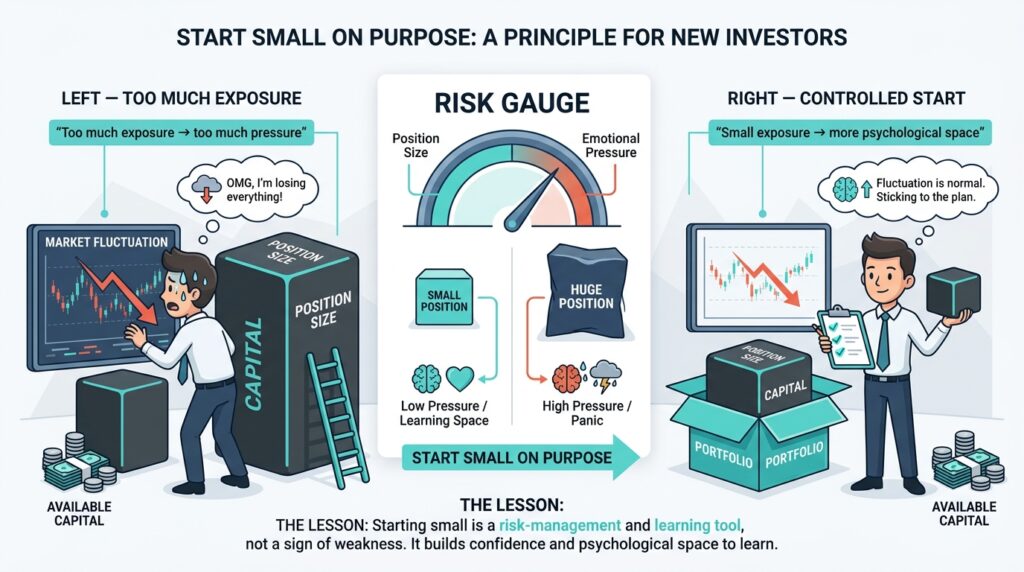
Step 2—Start Small on Purpose 3 (Small Is Not Weak)
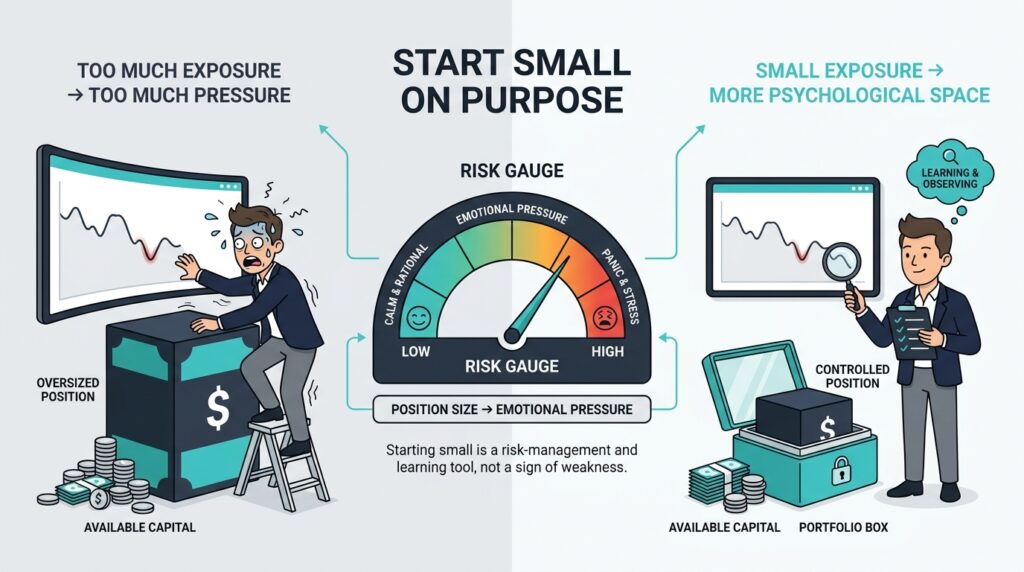
Starting with a smaller investment may help reduce financial and emotional pressure. Pressure makes beginners abandon rules. When the risk is something you can handle, you may find it easier to remain disciplined and make informed decisions instead of reacting.
This idea comes from the article Why Starting Small is Smart?, which views controlled sizing as a way to guide behavior rather than merely restrict it.
The MoneyHelper website also provides independent guidance on investing, including understanding investment risks and deciding how much money you can afford to invest.
Step 3—Make Your First Investment as a Process, Not a Bet
Your first investment shouldn't focus solely on immediate profits. It's about figuring out how you act when market outcomes are uncertain.
The article How to Make Your First Investment? provides a practical guide How to Make Your First Investment?, the guide lays out a step-by-step approach, focusing on setting clear goals, understanding your time frame, being aware of risks, and keeping things simple, rather than obsessing over finding the "perfect" investment.
Step 4 — Expect Your First Trades to Feel Different Than You Imagined
Market charts may look straightforward when you're not financially exposed. Executing a trade with real money can feel very different from observing market movements. Even a tiny price change can trigger excitement, uncertainty, or second-guessing. That doesn’t mean you’re failing. You're starting to experience the psychological challenges of investing.
This reality is laid out in the article What Beginners Should Expect from First Trades?, which sees early trades as practice, not just for show.
Step 5 — Learn While You Invest (Without Turning the Market Into Tuition Fees)
Learning while investing works when exposure stays small, and rules stay consistent. The goal is to build repeatable behavior: entry and exit logic and defined risk limits before emotion arises.
In How to Learn While Investing?, a structured method is laid out, showing that learning and gaining experience are two sides of the same coin, not just different steps in the journey.
Step 6 — After the First Investment, Your Job Is Review (Not Revenge)
After your first investment, the next step isn't just jumping into another trade. It's about taking a moment to look back at what went down and what you did.
The post-trade routine in What to Do After Your First Investment? prioritizes reviewing investment behavior over short-term outcomes.
A Simple “First-Step-by-Step" Checklist You Can Repeat
Use this simple checklist to develop a consistent investment routine:
Before investing
Define your financial goals and investment time horizon.
During the investment
Monitor investment performance, transaction costs, and risk exposure. Use market information to evaluate your investment rather than reacting impulsively to every price movement.
After the investment
Record what happened, review your decisions, and stay steady until you're confident it's reliable.
Conclusion: Your First Step as an Investor
Your first step as an investor is not picking the “best” asset. It's about building a repeatable process: define the goal, start small, keep it simple, anticipate emotions, learn with purpose, and review your actions.
When you lay down a solid foundation, you can approach future investment decisions with greater confidence and discipline, and staying on track gets easier.








