


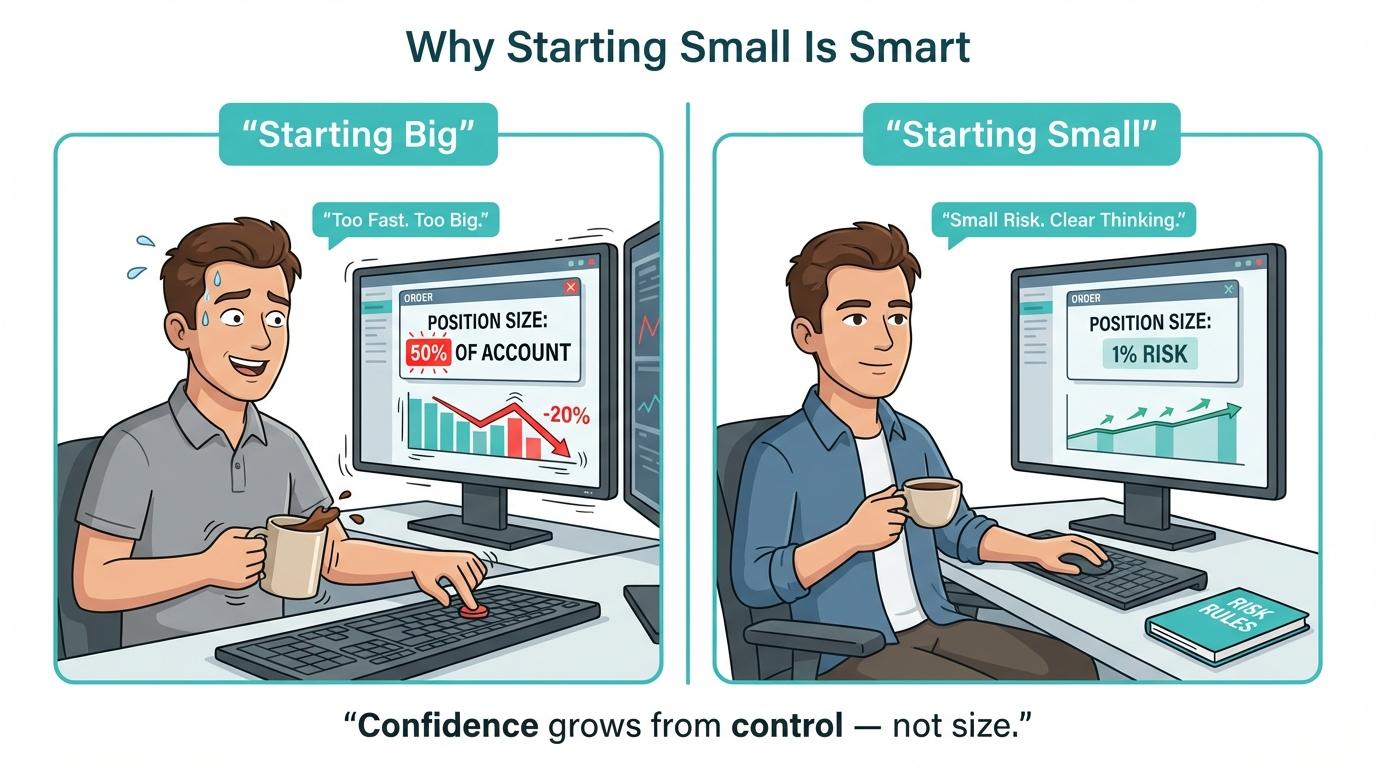
Starting small in trading and investing makes sense because it helps beginners manage risk, build confidence, and develop financial discipline.
If you're new to trading or investing, starting small can help you develop experience without committing significant capital; you're approaching it like a disciplined investor. Most novice investors believe they must make a significant investment quickly to succeed. In practice, long-term progress requires discipline, informed decision-making, and a structured approach to learning, making decisions without stress, and learning in an organized way.
Starting small is not hesitation. It's a smart move. Starting small can help you gain experience, build confidence, and develop emotional discipline while limiting the financial impact of mistakes.
Starting Small Protects You From Emotional Overload
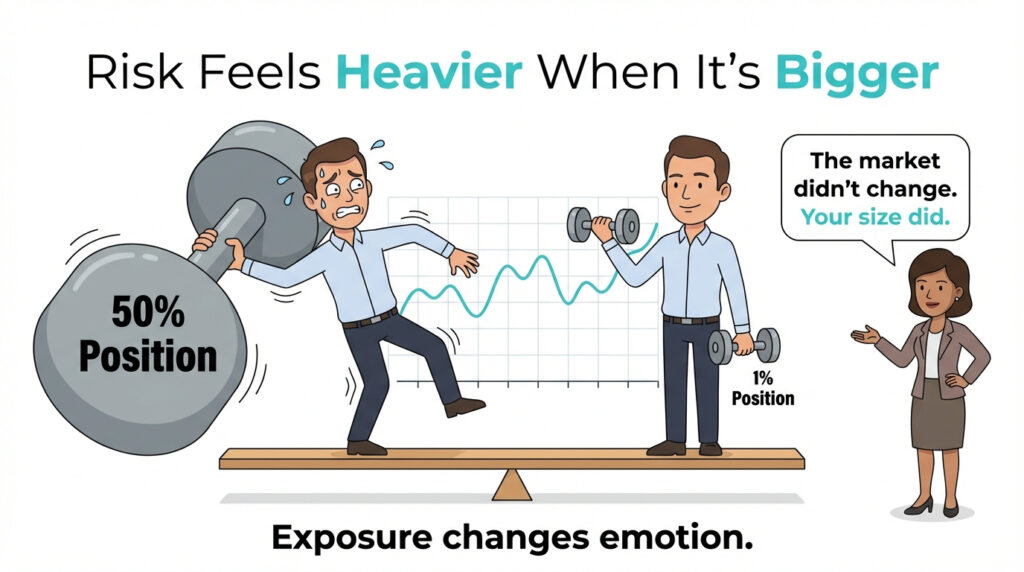
Larger trading positions can increase financial and emotional pressure. Keeping position sizes manageable can help you evaluate market movements more objectively. When the risk is something you can handle, you may find it easier to remain disciplined rather than reacting impulsively
The article Why Emotions Affect Investment Decisions? lays out this emotional rollercoaster, showing that fear and greed intensify the more you're exposed to them.
Starting Small Builds Skill Before It Tests Capital
Successful trading and investing require more than confidence; they also depend on knowledge, preparation, and disciplined execution. Investment skills develop through consistent practice, structured learning, and careful evaluation.
This reflects an important principle of the beginner investing mindset: discipline is a skill you develop through practice, not an ability you're born with.
Starting Small Makes Risk Measurable
Smaller positions make financial exposure easier to monitor and control, although they don't eliminate investment risk. When you're overwhelmed, fear can stop you from learning.
In the article What Does Investment Risk Really Mean?, the article explains investment risk as uncertainty surrounding financial outcomes, including the possibility of losing capital and what's going to happen with your investments, and it's all about handling that uncertainty, not just trying to dodge it
Small Positions Improve Decision Quality
Lower financial exposure may reduce emotional pressure and encourage more considered investment decisions. This lets you practice patience, timing, and sticking to your rules.
Execution discipline ties into Trade Mechanics & Execution Basics, where trade execution is explained as a structured process rather than a series of impulsive decisions.
Starting Small Reduces the Cost of Mistakes
Beginners may make mistakes as they build investment knowledge and experience. The amount of capital exposed can influence the financial impact of those mistakes.
In the article How People Lose Money in Investing and How to Avoid It?, it's clear that diving in too deep, too fast, can quickly increase your losses before you get the hang of things.
Small Size Builds Consistency Before Ambition
Building consistent investment habits matters before increasing financial exposure. A little practice builds patience and steadiness before you're expected to perform at a higher level.
This concept reflects the system. The article How to Manage and Reduce Investment Risk Safely and Effectively? discusses a strategy for managing risks before you start growing your investments.
Starting Small Helps You Respect Market Costs
When you're dealing with bigger positions, spreads, fees, and commissions have a bigger impact on your results. Smaller trades can help beginners understand transaction costs while limiting their initial capital exposure.
The link titled What Are Spreads, Fees, and Commissions in Trading? breaks down trading costs. Transaction costs can affect trading performance and should be considered when evaluating potential returns.
Starting Small Makes Your Trading Account a Learning Tool
A trading account allows investors to monitor account balances, trading activity, and financial exposure. A small exposure can make it a learning experience rather than a source of emotional conflict.
The link What Is a Trading Account? explains trading account details, where account balance, equity, and margin levels provide information about available funds and trading risk, not just profit guarantees.
Why Starting Small Is Smarter Than Starting Fast
Rushing investment decisions can increase emotional pressure, while a structured approach supports more disciplined financial planning.
This distinction mirrors how What Is Investing? defines investing: participation is a disciplined process, not instant results.
Practicing Small in a Risk-Free Environment
One way to develop trading discipline is to practice in a simulated environment before committing real capital.
The VARIANSE trading account page gives you a safe space to practice managing trades, decide how much to invest, and keep your cool with virtual funds without exposing real capital to market losses.
Conclusion
Why starting small is smart in trading and investing: it can help limit initial capital exposure, reduce emotional pressure, strengthen discipline, and support gradual learning.
Starting small won't prevent you from achieving success. It can build a foundation for more informed, disciplined investment habits. Growth only thrives when it's built on small, manageable milestones.
Although starting small does not eliminate financial risk or guarantee investment success, it can support a more structured approach to learning and long-term financial planning.
Building strong investment habits starts with understanding risk, making informed decisions, and progressing at a pace that fits your financial circumstances.








