


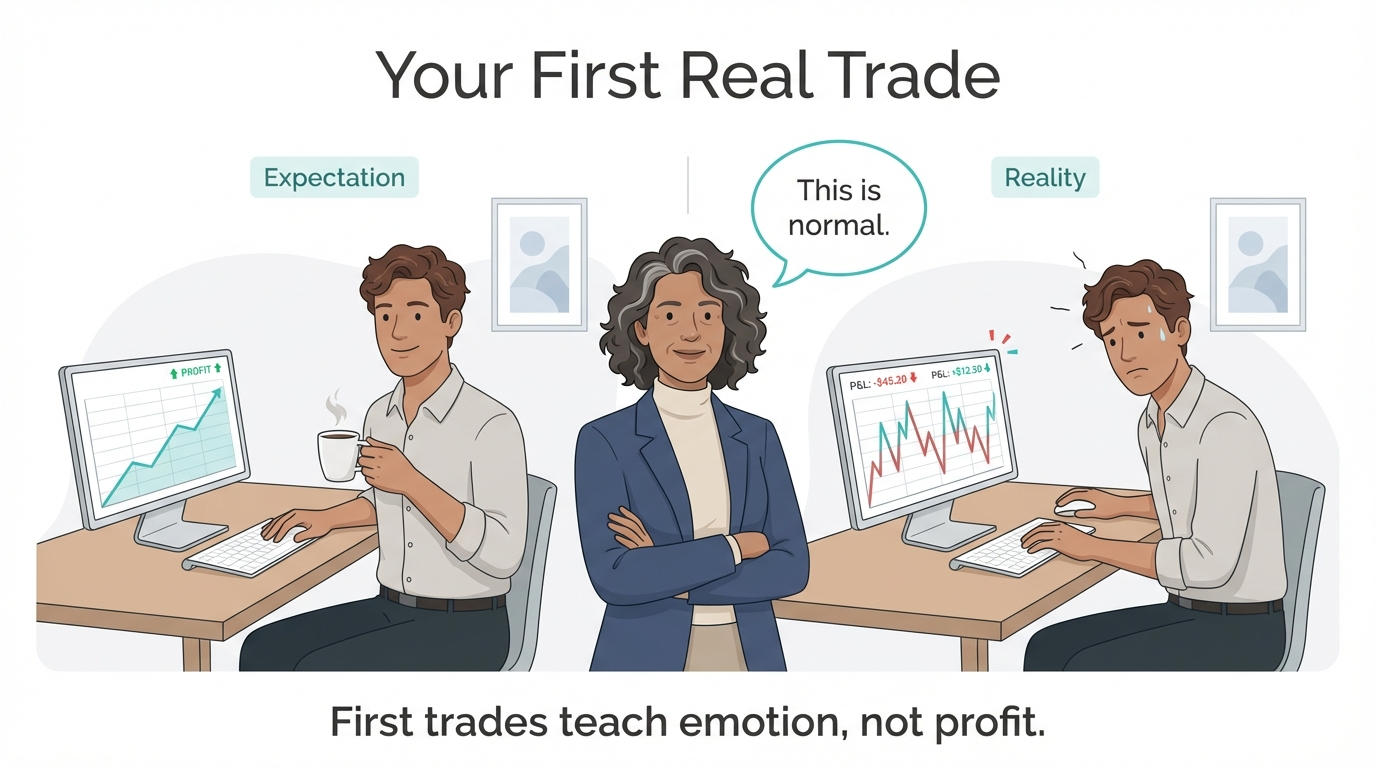
Understanding what beginners should expect from their first trades provides practical insight beyond textbook knowledge. Your first trades should focus on learning, not just making money. They offer an opportunity to understand how markets operate, how our emotions respond, and how discipline holds up in unpredictable environments.
Many beginners expect to feel confident and in control. They usually feel a mix of hesitation, excitement, confusion, and pressure. Such an experience isn't a failure. It's a normal part of learning to trade.
First Trades Are About Learning, Not Winning
Treat your first trades as learning experiences, not tests of success. Their goal is to show you how things get done, when they happen, and how you feel.
This view aligns with the idea in What Is Investing? that getting involved is more about following a set plan than chasing quick returns.
Expect Emotional Reactions You Didn’t Anticipate
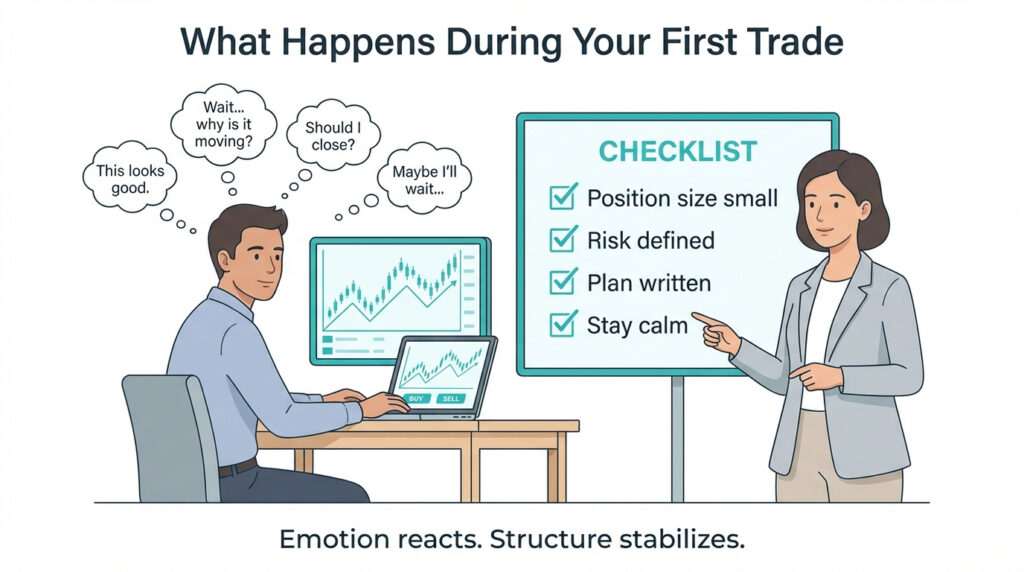
When real money is at risk, emotions can influence decisions before careful analysis. Even small deals can trigger fear, excitement, or panic. This psychological reaction is outlined in the article Why Emotions Affect Investment Decisions?, which shows that uncertainty triggers gut reactions before we even think about making a sound decision.
For further insight into how emotions and behavioral biases influence financial decisions, explore Investor.gov's introduction to behavioral patterns in investing.
Expect Trade Execution to Feel Different from Watching Charts
Charts may appear straightforward when you're simply observing market movements. Execution appears to occur quickly. Once you place an order, market movements can directly affect your trading position.
This shift from just watching to getting involved is made clear in the Trade Mechanics & Execution Basics article, which shows placing orders as something you do in real time, not just guessing what will happen.
Expect Small Mistakes and Learn from Them
You might get in a bit early, or get out a bit late. You might hesitate when it's time to take action. These aren't strategic failures. These mistakes can reveal weaknesses and help you improve your approach.
This learning curve is part of the behavioral patterns described in How People Lose Money in Investing and How to Avoid It?, where unmanaged mistakes can really hit you hard when you've got too much on the line.
Expect Your First Trades to Feel Slow and Uncertain
Beginners often expect trading decisions to be straightforward and immediate. They often encounter uncertainty and hesitation.
It's totally normal to feel a bit unsure, and that's how the article What Does Investment Risk Really Mean? frames risk. It's all about opportunities, not guarantees.
Expect Your Trading Account to Trigger Emotional Reactions
A trading account displays your gains and losses as they happen. Seeing profits and losses change in real time can create emotional pressure, even when trading small positions.
The breakdown and purpose of a trading account are laid out in What Is a Trading Account?, where balance and equity are seen as signs of exposure, not just success points.
Expect Trading Costs to Affect Your Results
It's hard to grasp how spreads and fees affect outcomes until you see them in action. Early trading experiences can demonstrate how transaction costs affect potential returns.
This link breaks down spreads, fees, and commissions in trading. Trading costs are seen as built-in, not just unfair.
Expect Discipline to Be as Important as Strategy
Even a basic plan won't work without staying calm, as emotional reactions can lead to impulsive decisions that violate established trading rules. Your first trades reveal whether you are truly following your rules.
This behavioral base ties into the beginner investing mindset and psychology: consistency comes from a solid structure, not just motivation.
Expect Small Position Sizes to Feel Powerful
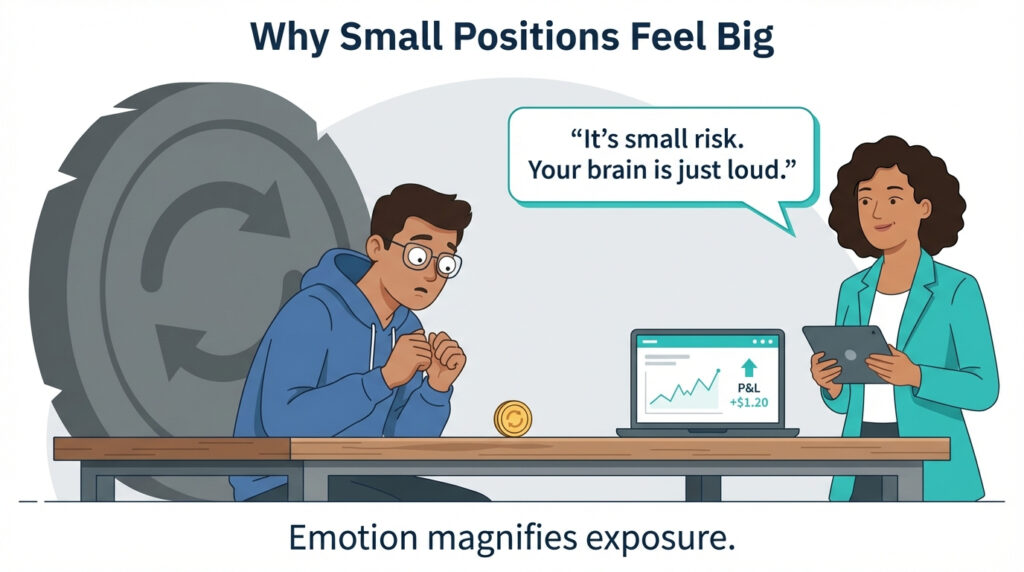
Small trades can help you avoid getting too emotionally overwhelmed. Smaller positions may help reduce emotional pressure and encourage more considered decisions.
This idea aligns with the concept in Why Starting Small Is Smart?, which shows that gradual exposure can accelerate learning and keep you on track.
Expect Your Trading Platform to Influence Emotions
Time is ticking, and prices are moving, so let's get on it. Watching prices change in real time can create pressure to act impulsively. Platforms act as bridges, not just tactics, in How Online Trading Platforms Work?, showing how they can build your skills and amplify your mistakes.
Practicing Your First Trades in a Demo Environment
The best way to get into trading for the first time is in a simulated environment where you can practice trading without risking real capital
A practical learning environment is found on the VARIANSE trading account page, and you can follow a structured progression through the VARIANSE Academy education page, where you'll learn about execution, psychology, and risk all in one place.
Conclusion: What Beginners Should Expect from Their First Trades
Beginners should approach their first trades without expecting guaranteed profits, immediate mastery, or predictable outcomes. They should anticipate finding something new. First, trading shows how you think, react, hesitate, and learn. They prioritize mental growth over profits.
When you do it right, your first trades teach you discipline, awareness, and confidence that last far longer than a single win or loss.








