


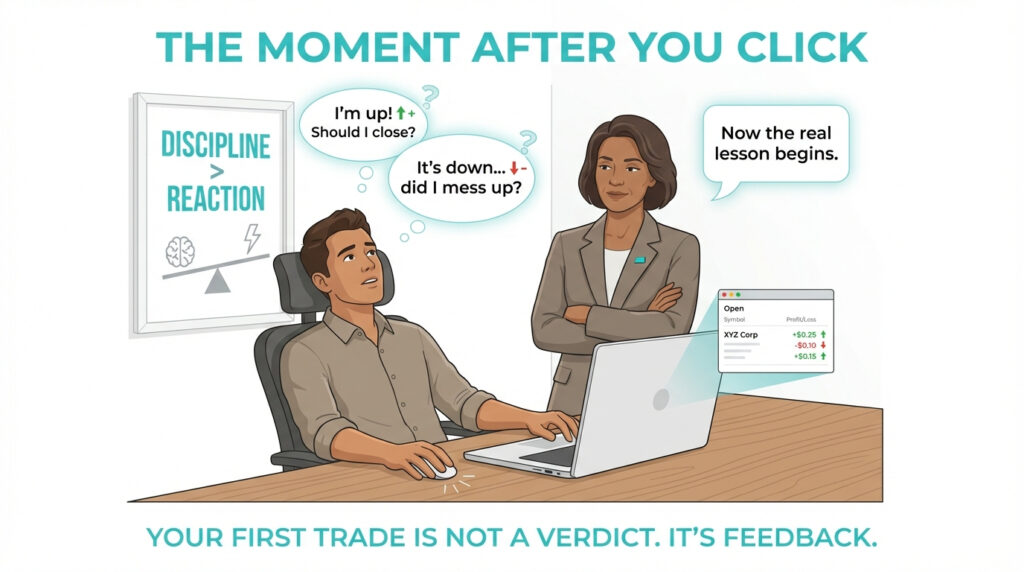
Looking for tips on what to do after your first investment? You're likely trying to avoid letting emotions disrupt a solid start. Once you make your first trade or investment, the market goes from being just theory to something you're personally involved in.
Your first investment doesn't measure your intelligence. It is an opportunity to develop self-control, patience, and self-awareness. What you do right after matters more than whether the trade makes money or loses money.
What to Do After Your First Investment: Pause Before Making Another Decision
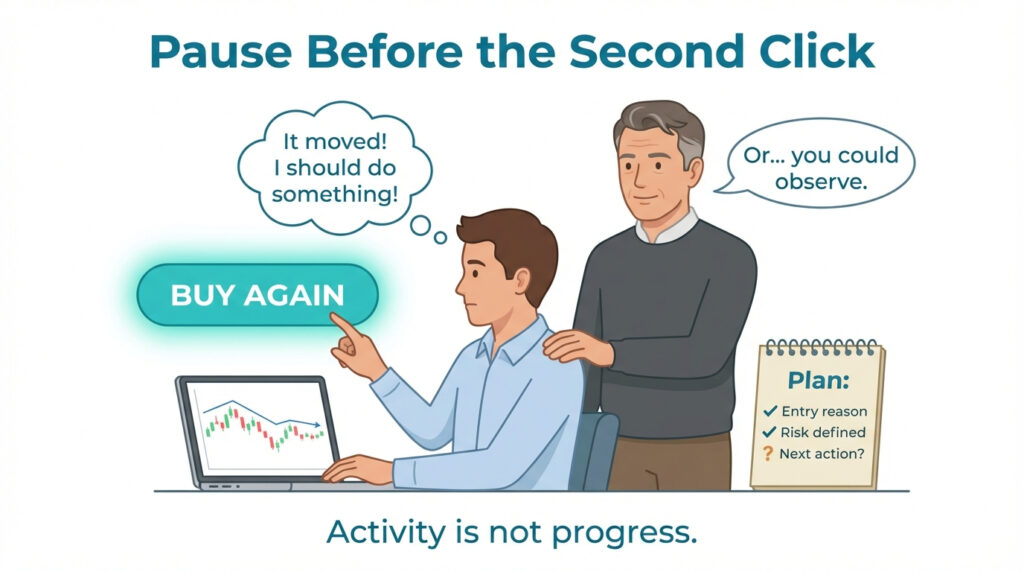
The smartest thing to do after your first investment is to take a break. Don't jump into another deal too quickly. Take a moment to notice where you are and how you feel. This pause can help you distinguish deliberate decisions from impulsive reactions.
Separate Outcome from Process
Many beginners judge success solely by how much money they've gained or lost. That's not quite right.
- A good process can lose money.
- A flawed process can make money.
In the section What Is Profit and Loss?, outcomes are feedback, not approval.
Observe Your Emotional Reaction
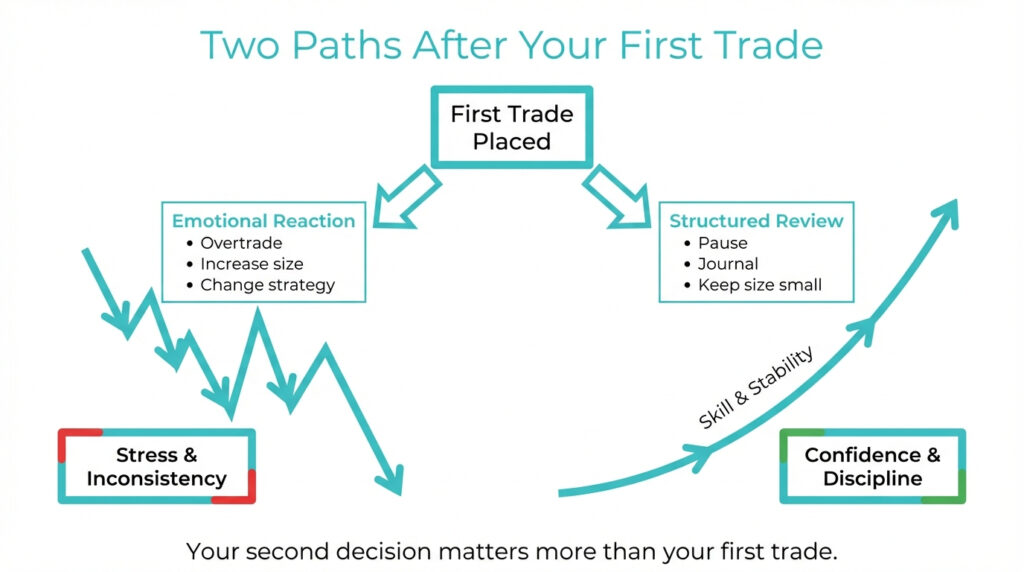
After your first investment, emotions become visible. Excitement arises when the price shifts in your favor. Fear appears when the price moves against you. This psychological reaction is explained in Why Emotions Affect Investment Decisions?, which shows that uncertainty can trigger behavior faster than logic.
Write Down What You Experienced
Documentation transforms experience into education. Write what you felt, what you expected, and how you reacted. Over time, it helps you become more aware and disciplined. This habit can help you develop a more disciplined approach to investing.
Avoid Overtrading
Making the same investment right away is risky. Overtrading often comes from emotion, not just chance. The article How People Lose Money in Investing? outlines this kind of action, where rushing replaces careful planning and sticking to a strategy.
Understand That Your Financial Risk Is Now Real
Your first investment introduces real exposure. Investment risk involves uncertainty, including the possibility of losing money. The article What Does Investment Risk Really Mean? lays this out clearly, explaining that entering the market is more about probabilities than exact predictions. Understanding this changes how you behave.
The FCA's guidance on investment risk and returns also explains why understanding potential losses is essential before committing money to financial markets.
Keep Position Sizes Small
After your first investment, your primary focus should be on protecting it, not on growing it. This idea aligns with Why Starting Small Is Smart?, which highlights how gradual exposure can reduce stress and speed up learning.
Study How Execution Actually Works
Your first trade can help you understand order execution, how spreads affect prices, and how profits and losses swing. This layer is explained in Trade Mechanics & Execution Basics, where execution is treated as part of the system rather than just a gut feeling.
Return to a Simulated Environment if Needed
Sometimes real-money pressure arrives too early. A VARIANSE trading account page offers a safe space to practice trading, manage your trades, and learn to stay calm without risking your cash.
Link Experience to Structured Learning
Your first investment should not exist in isolation. The VARIANSE academy education page links to a structured progression where psychology, risk, and execution evolve hand in hand. Education directs the experience.
Why Shouldn't You Change Your Strategy Too Quickly?
One trade proves nothing. Constantly changing your strategy makes it hard to evaluate its effectiveness. Stability requires a consistent routine, not simply following current trends.
Conclusion: What to Do After Your First Investment
After your first investment, don't rush into the next trade. Instead, focus on building better financial habits through:
- Observing your behavior and learning from your decisions.
- Managing your emotions rather than reacting impulsively.
- Controlling risk and protecting your capital.
- Building a structured approach to future investments.
Your first investment isn't about proving your ability to predict the market. It's a chance to gain experience, understand your reactions, and build financial discipline.
By learning from each decision and managing risk carefully, you can build a more informed and confident approach to investing over time.








