


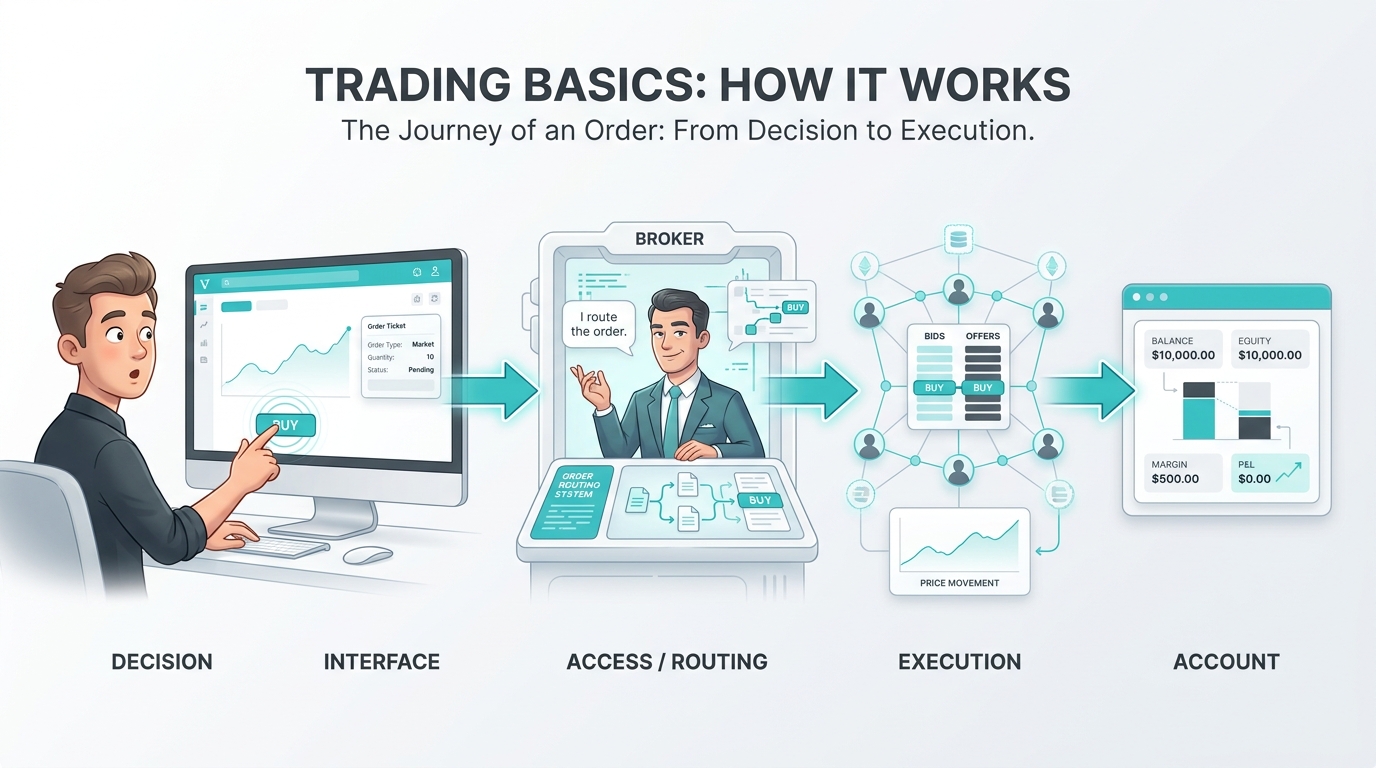
Understanding trading basics and how it works starts with looking beyond the buy and sell buttons. Trading seems straightforward at first glance: pick an asset, hit buy or sell, and see the price change. But behind that button is a real system of brokers, trading platforms, pricing sources, execution rules, account mechanics, and costs that shape results.
This parent guide offers newbies a clear, structured look at how trading actually plays out. You'll also see links to the detailed beginner-friendly articles linked throughout this guide, making it easy to dive into each subject without having to make wild guesses.
How Does the Trading System Work
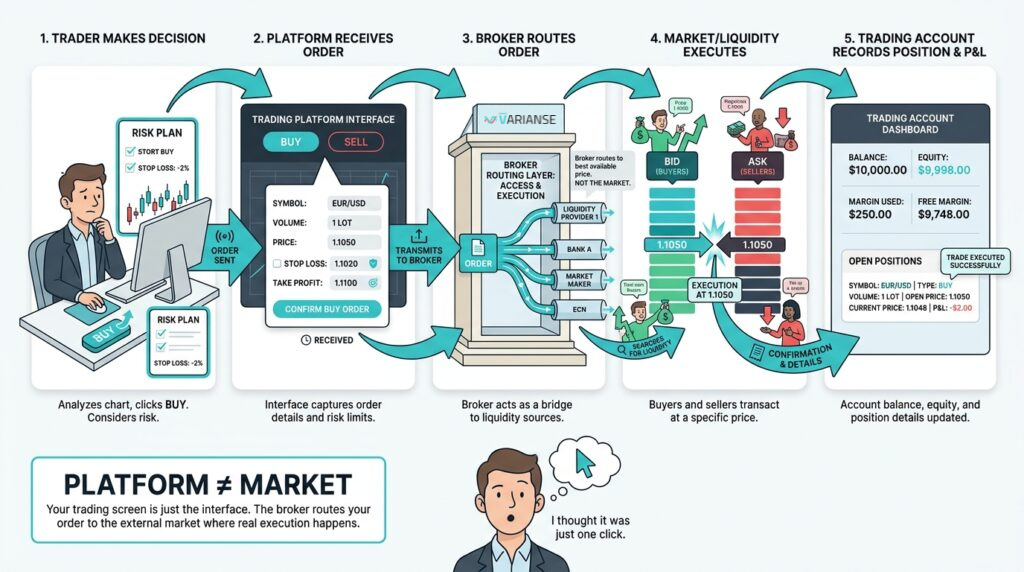
Trading involves more than analyzing charts. It relies on a wider system of brokers, platforms, pricing, and order execution. RTS’s infrastructure. A typical trading process works as follows.
The platform acts as an interface, brokering access and routing to the market, where liquidity is executed, impacting your account's performance and risk management.
Understanding this process can help reduce confusion, prevents you from expecting the impossible, and lets you trade with a clear plan rather than just feelings.
How Do Online Trading Platforms Work
A broker acts as an intermediary that provides access to financial markets that lets you trade in the markets. This service manages your trading account, routes your orders, and sets key parameters, including how trades are executed, the costs involved, and the safety measures in place.
If you're curious about how brokers operate behind the scenes behind the scenes and how trades get to the market, check out What Is a Broker and How Does It Work?
How Online Trading Platforms Work
A trading platform isn't just "the market". It's the app or website where you can check prices, place orders, manage your trades, and use tools to manage risk, such as setting stop-losses and take-profits. The platform forwards your order to the broker, who then directs it to the appropriate liquidity source.
o understand what happens after you place a buy or sell order, like how prices show up, slippage, and why things don't always go smoothly, check out How Online Trading Platforms Work?
What Is a Trading Account?
Your trading account records your funds, open positions, and trading activity. This thing keeps tabs on your trading funds, monitors open trades, figures out your equity on the fly, and sets limits to keep your investments in check. That's why a trading account isn't like a regular bank account; it's designed for taking on risk in a more controlled way.
To get the lowdown on balance vs equity vs margin, and why we set up accounts with risk controls in mind, check out: What Is a Trading Account?
What Is Leverage in Trading
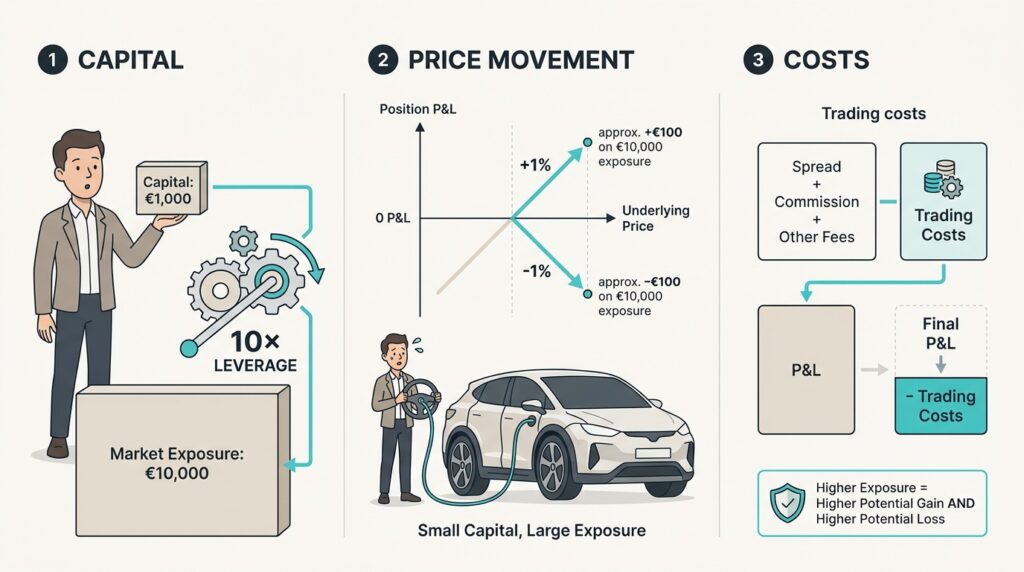
Leverage allows traders to increase their market exposure using a smaller amount of capital. It lets you control a larger position with a smaller margin requirement. That can boost your profits, but it also amplifies your losses, and it can cause you to lose money if the market goes the wrong way.
In practical terms, leverage is not “free money.". It’s borrowed exposure with rules. When you're getting the hang of leverage, always tie it back to risk, position sizing, risk management and emotional discipline, since it can really bite you if you mess up.
For additional guidance on the risks associated with leveraged trading, the Financial Conduct Authority (FCA) provides information about contracts for difference (CFDs), including the risks retail investors should understand before trading.
Market Orders vs Pending Orders: What's the Difference
Different order types really influence how things get done. A market order is meant to be filled immediately at the best available price. A pending order is set to activate when specified market conditions are met.
The U.S. Securities and Exchange Commission (SEC) explains different types of trading orders, including market, limit and stop orders, and how their execution conditions can differ.
Many newbies get it wrong when they think the price they see is the price they'll actually get. In real markets, prices are constantly changing, so the kind of order you place and when you execute it really count.
Check out this link to get the lowdown on how trading platforms work: How Online Trading Platforms Work?
What Are Trading Spreads, Fees and Commissions?
Trading comes with its expenses. Even if a platform seems straightforward, the market isn't free. Performance can really take a hit for active traders when you factor in spreads, commissions, and account fees. Costs play a big role in determining your break-even point, and overlooking them can reduce potential returns or increase overall losses.
Check out this link for a full rundown on trading costs and why they matter in risk management: What Are Spreads, Fees, and Commissions in Trading?
Where Does Your Invested Money Go
Many newbies think their investment "sits" in a specific place once they put their money in. In real life, putting your money into stocks or trading actually ties you to a bustling marketplace of buyers and sellers. our holdings or positions determine your exposure to market movements with price changes, and your involvement helps keep the market lively and active.
To get a handle on how money moves around in the markets and to figure out where your cash is actually hanging out compared to where you're exposed, check out: Where Does Your Invested Money Go?
Why Beginners Struggle With Trading
Most early losses don’t come from bad platforms. They come from behaviours under uncertainty: overtrading, ignoring risk limits, chasing price movements, and confusing activity with progress. Trading becomes far more stable when you treat it as a process—rules, sizing, costs, and discipline, not a shortcut.
If you're looking to get a deeper understanding of how things work in the market and execution, check out this link: Trade mechanics & Execution Basics
How Can Beginners Practise Trading with a Demo Account
One way to develop practical familiarity with trading is to watch actual market trends without worrying about the market. In a demo setup, you can try out buying and selling, watch how prices move, and see how your feelings play out live without risking real capital on each simulated trade.
Conclusion: Trading Basics and How It Works
Trading fundamentals and the mechanics are pretty straightforward; it's all about having a system in place. Brokers provide you with the necessary tools and guidance; platforms maintain control; accounts ensure safety; costs determine the outcome; and markets remain unpredictable.
When you understand the system, your decisions become calmer, your expectations become realistic, and your learning becomes faster because you stop guessing and start trading with structure.








