


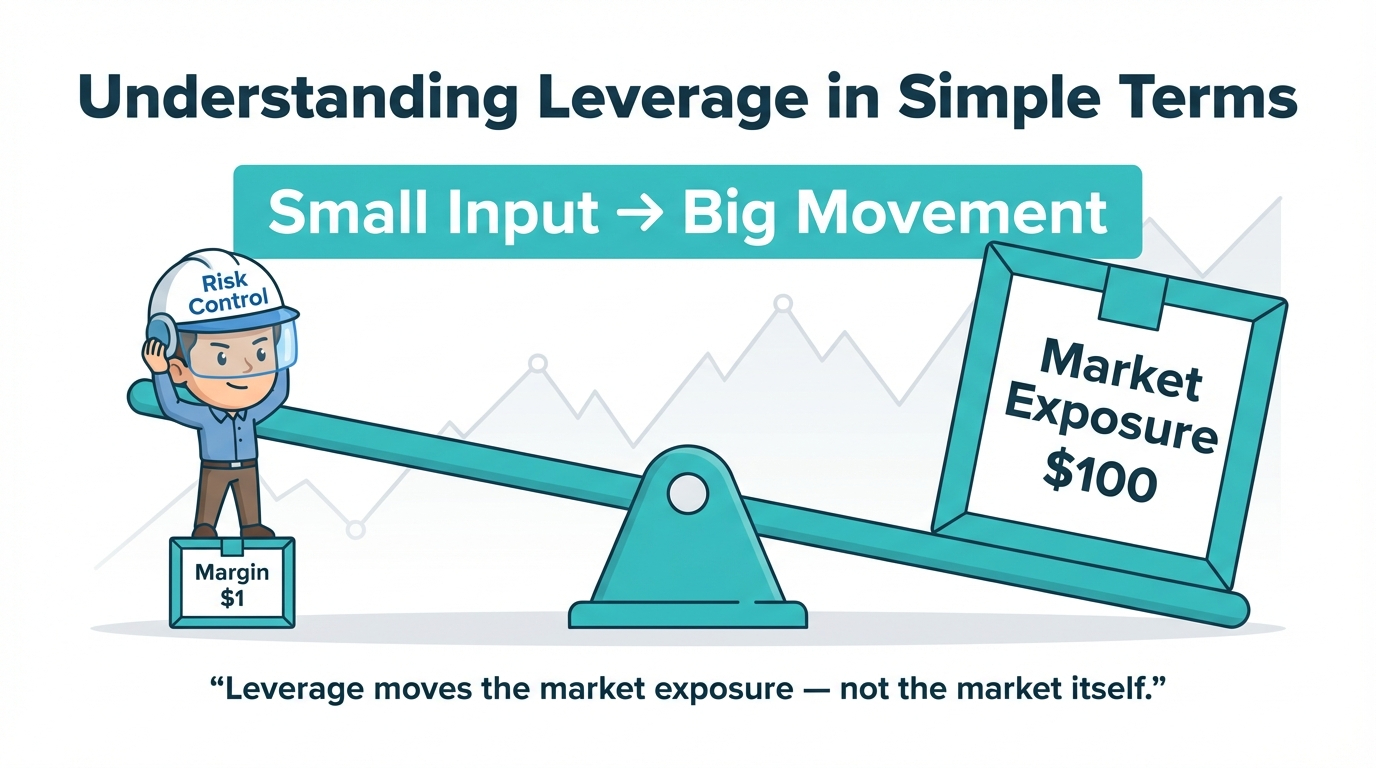
Understanding leverage in simple terms starts with one question: how can I control a larger position with smaller amount of money? Leverage allows traders to control larger market positions with a smaller initial margin. This lets traders and investors boost their market presence without having to commit the whole amount right away
Leverage can be a powerful trading mechanism, but it's not like it's free cash. It magnifies both potential profits and losses. It can boost your earnings, but it also ups the risk of losing some. Getting a solid grasp on leverage is key before you dive into any leveraged trades, since it's not a strategy in itself. It makes things riskier
In this piece, we break down leverage in simple terms, avoiding jargon and over-the-top claims, making it easy for newbies to grasp its true purpose and proper use
What Does Leverage Actually Mean
Leverage allows traders to gain greater market exposure relative to the capital committed. Instead of just using your own cash, you can take a bigger stake by putting down a smaller sum known as margin
For example, with 10: for every $1 of margin required, you're basically controlling $10 of market exposure in the market. With a 100:1 leverage, $1 controls $100. When you up your position size, your actual cash on the line is still just your margin. That's why people get leverage all mixed up It doesn't lower the risk. It focuses on the risk
How Does Leverage Work in a Trading Account
Automatic leverage is set up in your trading account. When you start a trade, your account figures out how much margin you need and allocates the required margin to support the position while the trade is still going
This process is how execution systems work, and it's all laid out in the section on Trade Mechanics & Execution Basics Leverage isn't a standalone feature. It's woven into the way we open and maintain trading positions. Your trading account is like the command center where leverage, margin, profit, and loss all play out live
Why Is Leverage Used in Financial Markets
Leverage exists to improve capital efficiency. Participants can get into markets without owning large chunks of assets. This idea is a key part of how today's money systems work, as detailed in the 🔗 Financial Market Foundations. Here, markets are considered tools for directing funds and handling risks, not just basic trade. Making it easier for people to join in, but the more accessible it gets, the more they've got to step up
How Does Leverage Affect Trading Profits and Losses
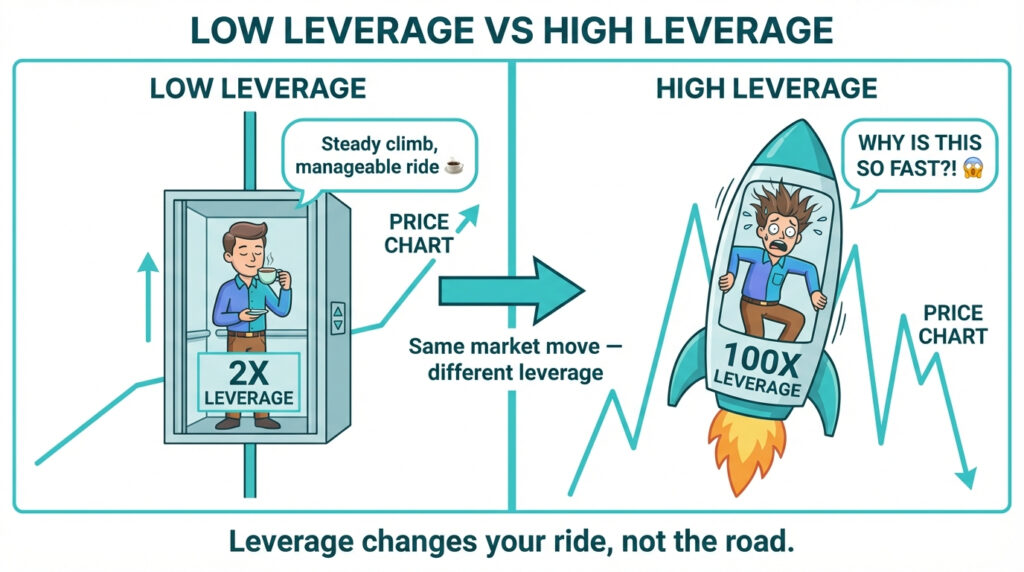
Leverage doesn't alter the market's direction. It alters your exposure to that movement. If the price goes your way, your profits increase relative to the margin committed. Your losses grow faster if the price declines. Leverage is tricky for newbies who just think about the money they could make. This bond ties right into the explanation of investment risk in the link. What Does Investment Risk Really Mean?, highlighting uncertainty as the main factor in all market involvement
Why Do Small Price Movements Matter With Leverage
Even small price movements can have a significant impact on leveraged positions. Leverage can make even tiny price changes matter a lot in finance. That's why trading with leverage can be stressful for novices. As exposure increases, the market's pace accelerates, becomes riskier, and becomes less predictable. The emotional impact of this boost is detailed in the link Why Emotions Affect Investment Decisions, where fear and greed get stronger when the risk goes up
Leverage and Margin: What's the Difference
Leverage and margin are related, but they're not the same. Your leverage decides how big your stake is. The margin is the portion of your investment capital backing up your position. Higher available leverage reduces the margin required for a given position, while larger exposure relative to equity increases risk.Lower effective leverage generally reduces exposure relative to account equity, although losses remain possibl. Picking leverage isn't just about grabbing every chance that comes your way. It's all about managing volatility
Why Can High Leverage Increase Trading Losses
Many newbies end up losing cash because they see using leverage as a quick way to make money. They're using high leverage without realizing how fast losses can pile up
This common pattern occurs when people let their feelings and big bets take over instead of sticking to a solid plan, as detailed in the article How People Lose Money in Investing and How to Avoid It. Leverage doesn't automatically lead to losses on its own. Misuse of leverage does.
The Financial Conduct Authority (FCA) provides information about contracts for difference (CFDs), including the risks associated with leverage and why these products may not be suitable for every investor.
How Should Traders Manage Leverage Risk
Experts use leverage for risk management, not gambling. They cut back on leverage when things get more unpredictable and only boost it when they've already got the risk under control. Leverage is really about balancing risks, not just about making more cash. This view aligns with the idea in the guide on cutting down investment risk, where a solid plan takes the place of guesswork for steady results.
The FCA's guidance on investment risk and returns explains why investors should consider their financial circumstances, risk tolerance and potential losses before committing capital.
Why Should Beginners Consider Low or No Leverage
Low leverage lets newbies get the hang of how prices move, how they feel about it, and how to stick to their game plan. Leverage's high takes away the learning zone and swaps it with stress. Practicing in a simulated setting with a demo account on the VARIANSE trading page lets you get a feel for leverage without risking your cash
How Is Leverage Used in Trading and Investing
Leverage is mostly a trading thing, not really for long-term investing. Investing is all about growing your money over time and letting it compound, as detailed in the article How Investing Helps Grow Wealth Over Time. Trading is all about keeping an eye on price changes and making sure trades go off without a hitch. Leverage is a key player in this execution-based setting. Keeping this difference in mind stops newbies from throwing short-term gadgets into their long-term money plans
How Can Education Help Traders Understand Leverage Risk
Using leverage is safe only when you get the hang of probability, manage position sizes appropriately, maintain emotional discipline, and understand the market's mood swings. That's why getting a solid education from VARIANSE Academy's website is key before you start playing with actual money. Knowledge doesn't eliminate risk; it quantifies risk
Conclusion: Understanding Leverage in Simple Terms
Understanding leverage in simple terms means recognising that it increases market exposure relative to the capital committed.
Leverage can magnify potential profits, but it can also increase losses, margin requirements and the risk of automatic position closures.
For beginners, the priority should not be accessing the highest available leverage. Instead, it should be understanding position sizing, margin requirements and how market movements affect account equity.
Leverage is a financial tool, not a trading strategy or a guarantee of success. Using it responsibly requires education, realistic expectations and disciplined risk management.








