
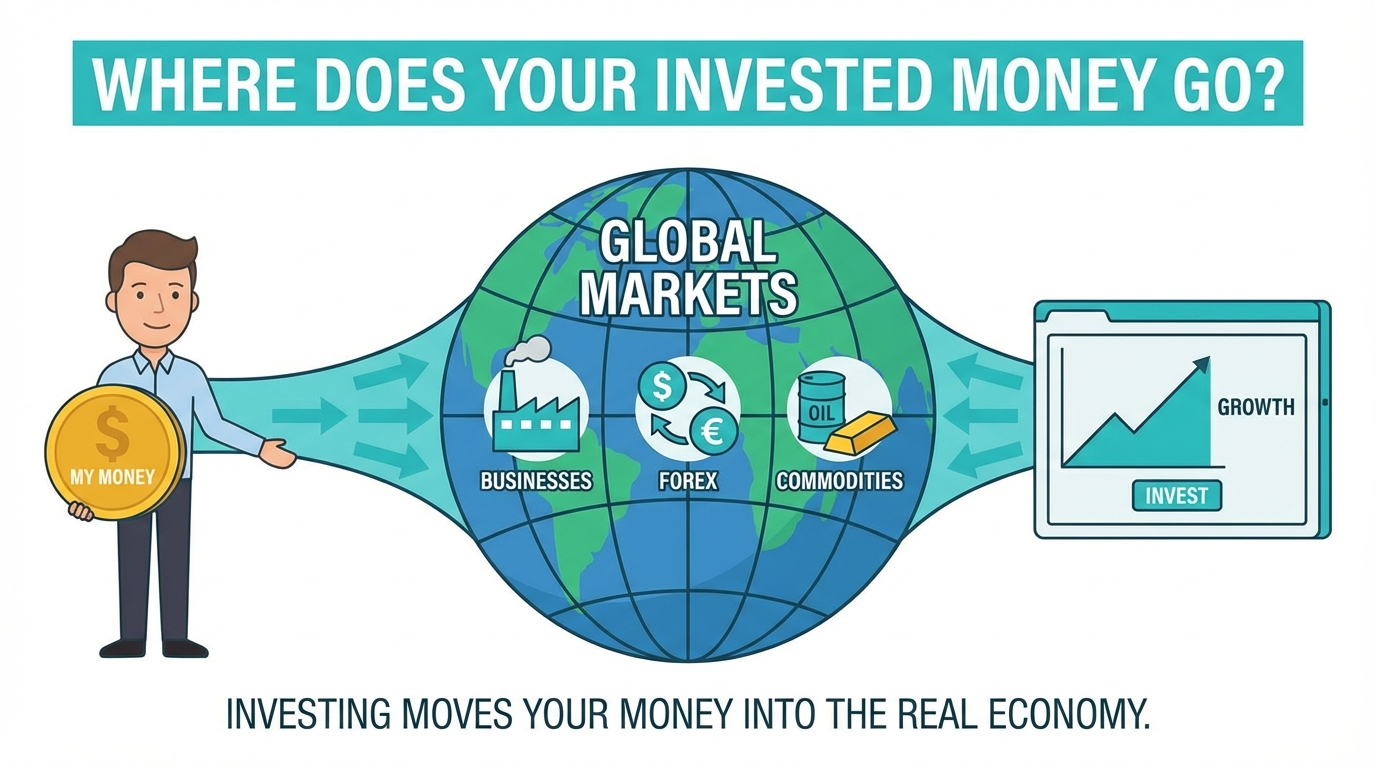
Where does your invested money go? When beginners start investing, they often wonder whether their money simply remains in an account or becomes part of the wider financial system. The answer depends on the type of investment and transaction: your money becomes part of the financial system. Investment activity can support businesses, stimulate economic development and create opportunities for expansion, and opens doors for expansion.
Putting money into investments isn't just about depositing money into an account and waiting. Investing involves allocating capital into real markets where supply, demand, and economic activity intersect. Once you understand this process, investing stops feeling like a far-off concept and becomes more practical and easier to understand.
This piece breaks down what really happens to your cash once you put it into investments and how it gets involved in the big financial scene.
How Does Your Money Enter the Financial System?
When you put your cash into investments, it doesn't just vanish. It enters the financial system through an investment transaction, matching buyers and sellers. This process is what keeps markets flowing, helps set prices, and drives them around.
In the article What Is Investing?, they break down investing as a way to put your money into something with a plan, not just betting on a quick win.
Your investment becomes part of the economy's financial market activity.
Where Does Your Invested Money Go
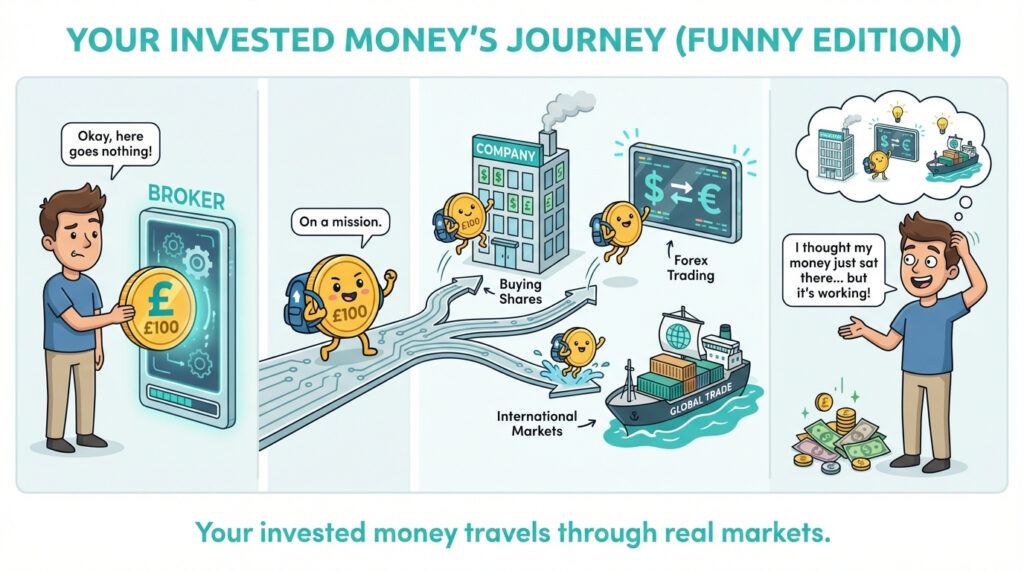
Markets function because every deal has a buyer and a seller. When you buy, someone else sells. When you sell an investment, another market participant may purchase it:
Financial markets connect buyers and sellers, but where investment money goes depends on the type of transaction.
- Businesses raising capital: Companies may receive investment funds when they issue new shares or bonds.
- Governments issuing securities: Governments can raise funds by issuing bonds and other debt instruments.
- Other investors: When existing securities are bought and sold, the payment generally goes to the selling investor.
- Financial institutions: Banks, brokers and other intermediaries may facilitate transactions, manage investments or charge fees for their services.
Understanding these differences helps explain how capital moves through financial markets. The financial markets thrive on this back-and-forth, and the 🔗 Financial Market Foundations provide a detailed understanding of it.
How Does Investing in Stocks Support Businesses
Investing in stocks ties your cash to businesses. This helps businesses grow, encourages research, fosters innovation, and boosts job creation.
In secondary markets, where investors exchange shares, the price tag significantly influences the perception of companies and their future financial performance.
Your investment becomes an integral part of the ownership and value chain.
Where Does Your Money Go in Forex Trading
In Forex, your cash isn't backing a business. It's involved in international currency swaps.
Currencies fluctuate due to trade between countries, changes in government policies, and the flow of money from one area to another.
Your investment becomes part of:
- International trade
- Interest rate expectations
- Economic stability assessments
Grasping the dynamics of price changes is key in the Trade Mechanics & Execution Basics course, where we explore both how trades are carried out and the concept of liquidity.
How Does Commodity Investing Work
When you put your money into things like gold, oil, or farm goods, your cash actually ties up with making and using stuff in the real world.
These markets reflect:
- Energy demand
- Industrial production
- Inflation expectations
- Global supply chains
Your investment becomes tied to physical economic activity.
Where Is Your Investment Money Held
Your money's in safe, official banking systems, not just floating around the stock market Your investments are in safe places, but they're still at risk of changing in value.
That's why getting to grips with how accounts are set up is key, and it ties in smoothly with the topic of What Is a Trading Account?, where we break down the nuts and bolts of accounts without getting into the nitty-gritty.
Your cash is locked up tight, but your investments are out there playing in the market game.
How Does Market Liquidity Affect Trading
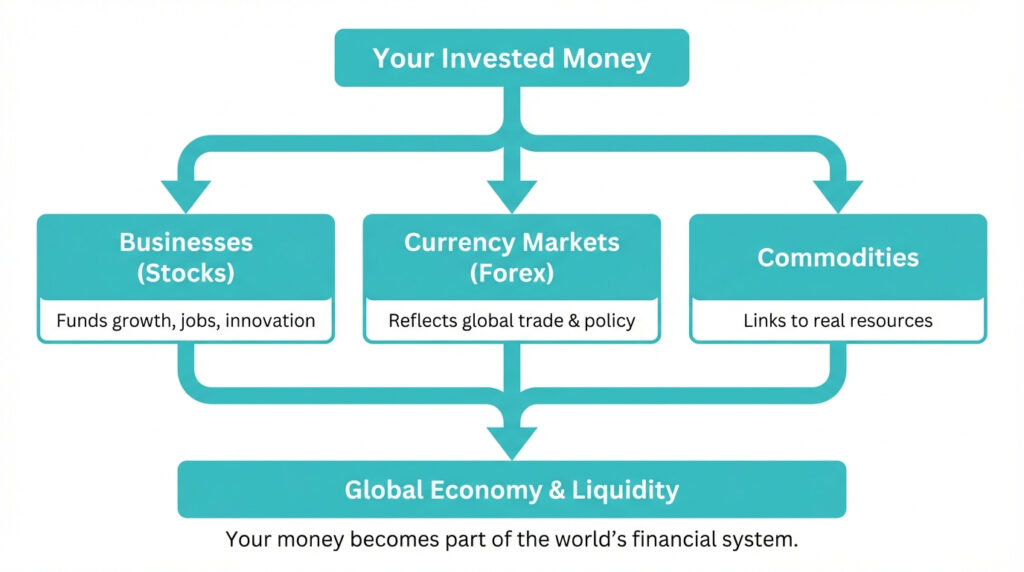
Liquidity ensures that money can move in and out of markets efficiently. This lets us open and close positions without causing big price swings. This idea aligns with the Bank for International Settlements definition of liquidity, showing that markets with easily traded assets help keep things stable and prices fair. Your investment contributes to liquidity simply by participating.
What Happens After Your Money Is Invested
Many beginners imagine their capital “waiting” somewhere. In real life, once you've put your money in, it's all about the ongoing market dance.
It influences:
- Price movement
- Market depth
- Capital allocation
- Risk distribution
Markets work only when people actually get involved.
Saving vs Investing: What's the Difference
- Saving stores money.
- Investing moves money.
The difference between saving and investing is laid out in the link Saving vs Investing: saving keeps your money safe, while investing puts it to work.
When you invest, you choose movement over stillness.
How Can Beginners Practise Without Risking Real Capital
Seeing capital flow in action makes it easier to grasp. Check out VARIANSE demo trading account page to see how the market moves, check out prices, and watch the flow of trades without actually spending any cash. This technique transforms theory into experience.
Why Is Investment Education Important
Once you get the hang of where your cash is heading, putting it into investments feels more chill and makes sense.
Education removes mystery and replaces fear with structure.
The VARIANSE Academy education page embeds this learning progression, approaching financial markets as systems rather than as quick fixes.
How Does Investing Support the Economy
At a macro level, investing helps:
- Fund business growth
- Stabilize financial systems
- Support innovation
- Allocate capital efficiently
This aligns with the IMF's description of capital markets, which notes that investments help the economy grow over time. Your cash gets mixed into a larger economic loop.
Conclusion: Where Does Your Invested Money Go
Understanding where your invested money goes helps explain how financial markets connect investors, businesses, governments and other market participants.
When you purchase newly issued securities, your money may help organisations raise capital. When you buy existing investments, the proceeds generally go to another investor.
Other financial products, such as derivatives, operate through different contractual arrangements and may not involve ownership of the underlying asset.
Where your funds and investments are held depends on the financial institution, account structure and investment product.
By understanding how these transactions work, beginners can make more informed investment decisions and develop a clearer understanding of the financial system.