


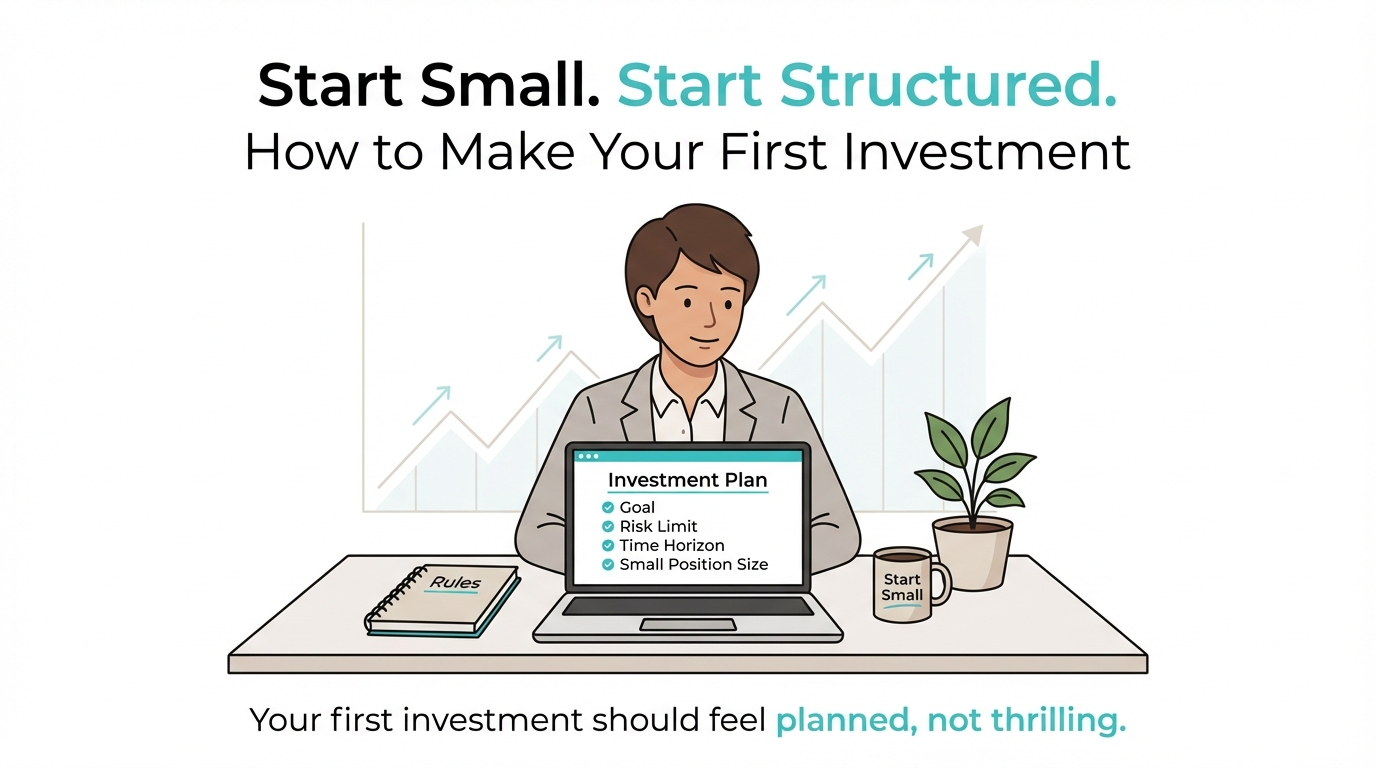
If you're digging into how to make your first investment, you're probably feeling a mix of excitement about growing your cash and a bit of worry about messing up. That’s normal. Most newbies don't have a tough time because they're not "bad with money." They're not used to investing, and it feels like a big deal.
A first investment shouldn't be a major, emotionally driven decision. A small, careful move that teaches you about markets without putting you in a tough spot financially.
First, Understand What “Investing” Actually Means
Before picking any investment, you've got to know exactly what you're aiming for. Investing involves more than just forecasting price movements. It's putting money into an investment with a purpose, a timeline, and a strategy for handling risks.
The What Is Investing? link clarifies this basic concept by framing investing as a planned activity rather than a spontaneous decision.
Step 1: Decide Your Goal and Time Horizon
Your initial investment should align with your goals. Are you looking to grow steadily over time, make big gains in the short term, or keep your money safe while still growing a bit?
The time horizon can significantly alter the outcome. Shorter timeframes require stricter management and greater emotional composure. A longer investment horizon may provide more time to recover from market fluctuations, although it does not eliminate investment risk.
The Financial Conduct Authority (FCA) provides educational resources to help beginners understand investment risks, evaluate their financial goals and make informed decisions before investing.
Step 2: Separate “Investable Money” From Daily Money
A common beginner mistake is investing money needed for rent, utilities, or other essential living expenses, or using it to keep your finances steady. That creates significant mental strain and nudges people toward gut feelings about their financial decisions, which can lead to poor investment choices.
In the book Saving vs Investing, it's clear that "protection money" and "growth money" serve distinct purposes.
Step 3: Learn Risk Before You Choose an Asset
Beginners often ask, Which Investment Is Best? The more useful question is, "How much uncertainty can I tolerate without panicking?”
Risk isn't just about losing cash. Investment risk refers to uncertainty around financial outcomes, including the possibility of losing some or all of your invested capital; it's about managing uncertainty, not just avoiding it, which means understanding the potential for both gains and losses in different investment scenarios.
For additional guidance, MoneyHelper offers independent information on investment risks, financial planning and important considerations before committing money to financial markets.
Step 4: Choose a Simple, Beginner-Friendly Asset Type
Your initial investment should be straightforward to monitor without getting too caught up. Beginners may consider diversified options, such as broad-market funds, depending on their goals and risk tolerance, rather than pursuing high-risk or highly leveraged options. If you're still comparing asset classes, you'll find a structured overview in Asset Classes Explained
Step 5: Understand Where Your Money Actually Goes
Investing feels calmer when it's not so abstract. Financial markets connect investors, businesses, and other participants through the buying and selling of financial assets, and cash is flowing as prices change.
This "money movement" viewpoint is detailed in Where Does Your Invested Money Go?, a starter's guide to investing that helps beginners enter the market with confidence and less worry.
Step 6: Open the Right Account for Your First Step
Your investment account links you to the markets. An investment or trading account allows you to access eligible financial instruments, monitor holdings or positions, and review transactions, and it really brings the risk home.
Trading account mechanics are detailed in the link What Is a Trading Account? A Total Newbie's Guide to Investing", where balance, fairness, and profit margins are seen as signs of risk, not just cold figures
Step 7: Practice the Process Before You Risk Real Capital
Newbie traders often burn cash by learning the hard way with costly blunders. A smarter first step is to master execution and behavior without risking real capital while you learn.
You've got a simulated trading space on the VARIANSE account page, perfect for newbies to watch how prices move, see how orders work, and build trading discipline.
Step 8: How to Make Your First Investment With Simple Rules
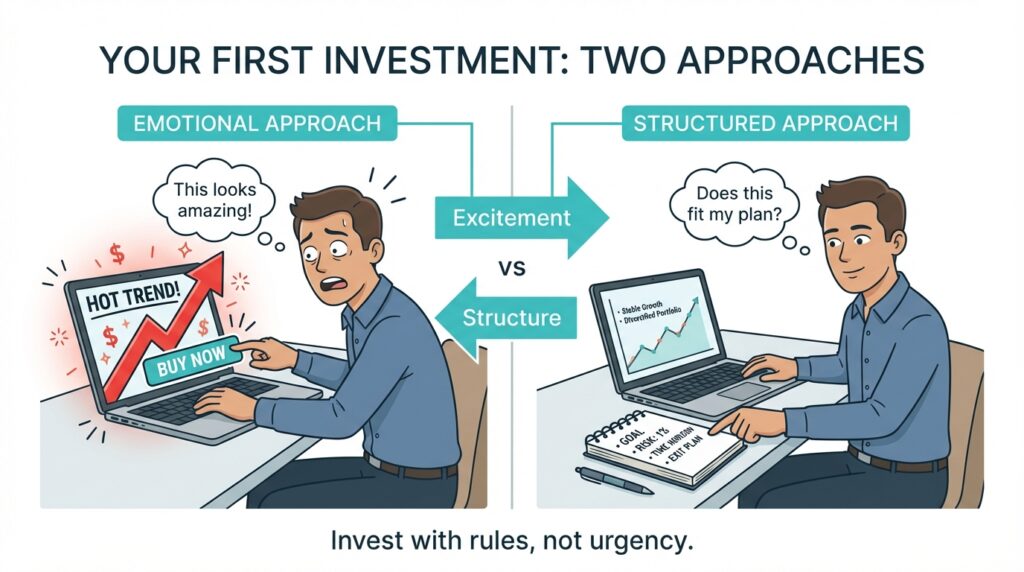
Start your investment with something straightforward and not too flashy. Stick to small amounts, have a clear reason for buying, set a clear time frame, and have a backup plan if the market goes the other way.
If you act impulsively because of excitement, haste, or fear of missing out, it's likely driven by emotion rather than a sound investment strategy.
Step 9: Expect Costs and Build Them Into Your Thinking
Even a well-structured investment plan can be affected by transaction costs if you overlook them. Things like spreads (the difference between buying and selling prices), fees (charges for executing trades), and commissions (payments to brokers for their services) can really mess with your break-even point and long-term results, especially if you're trading a lot.
This cost structure is detailed in the section What Are Spreads, Fees, and Commissions in Trading?. Simply put, we treat regular expenses as part of the usual setup, not as unexpected events.
Step 10: Review actions more than outcomes
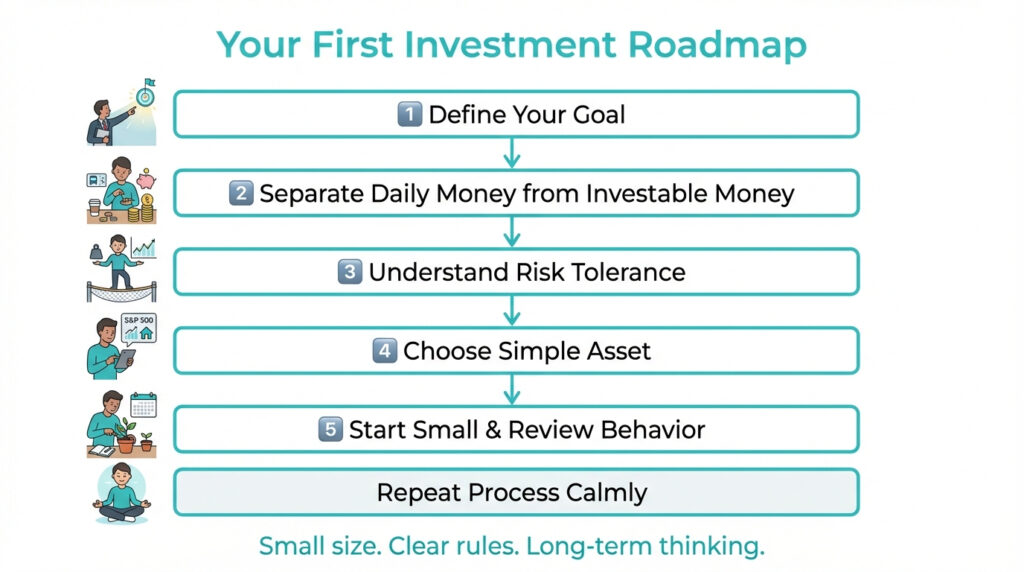
Making your first investment is like learning the ropes. Following a structured investment plan encourages disciplined decision-making, although it cannot guarantee positive returns.
We build this foundation on the beginner investing mindset and psychology, viewing emotional mistakes as learnable habits rather than personal shortcomings.
Conclusion: How to Make Your First Investment
Making your first investment isn't about finding a “perfect” asset. Developing a method that you can confidently repeat is crucial. Begin with the basics: define your goal, assess the risks, monitor expenses, and review your actions after each move.
Keep your initial investments organized, not just exciting. That's where consistency kicks off.








