


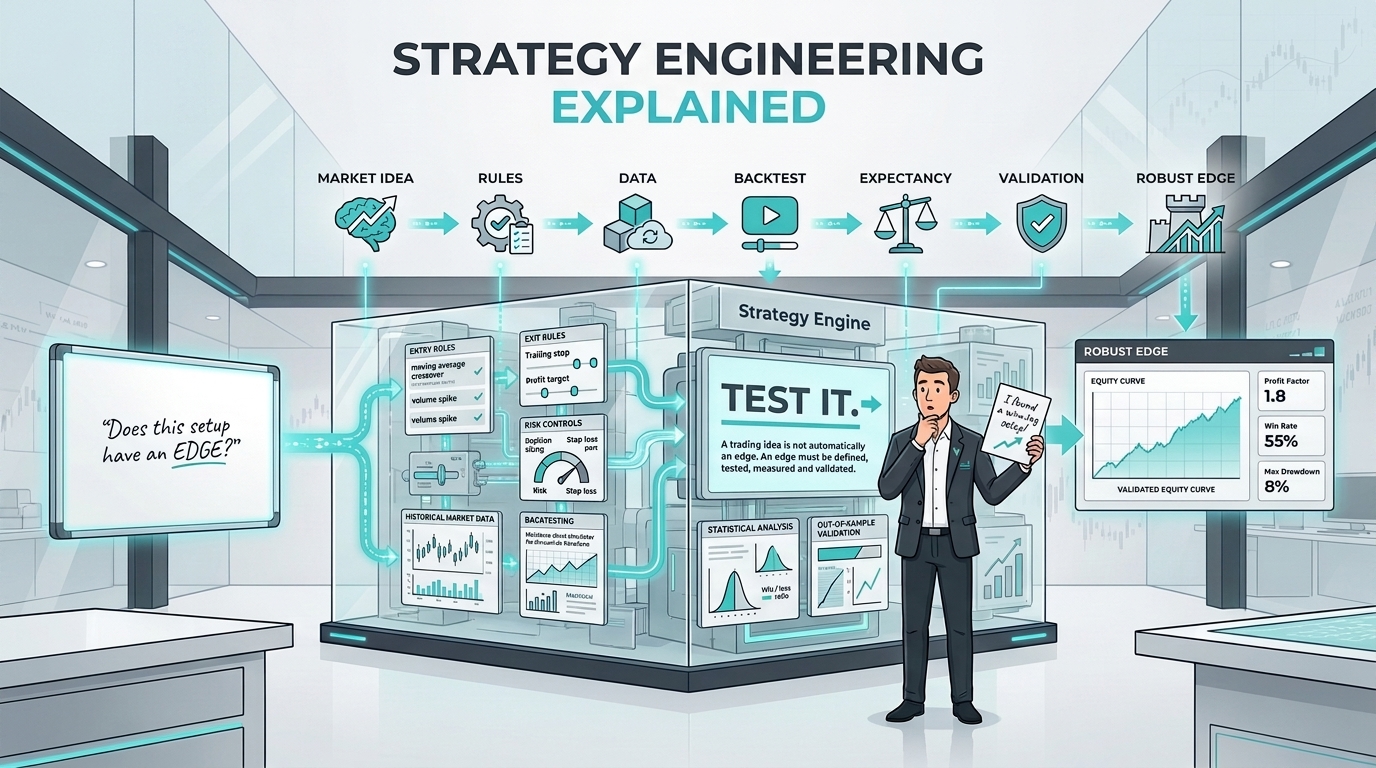
Most traders reckon trading strategy engineering is all about crafting a smarter setup. Trading strategy engineering is about turning a trading concept into a solid, measurable model that can withstand the ups and downs of the real market.
A strategy isn’t a guaranteed win. A backtest doesn’t guarantee future results. A couple of successful trades don’t necessarily prove anything. Trading strategy engineering basically makes a trader act like a machine: set up the model, choose a trading-decision framework, check expected outcomes across different sample sizes, test thoroughly, and avoid getting overconfident before risking any money.
This parent guide ties together your complete “trading strategy engineering” journey and connects to the kid-friendly lessons that dive deep into each part.
What Strategy Engineering Means in Trading
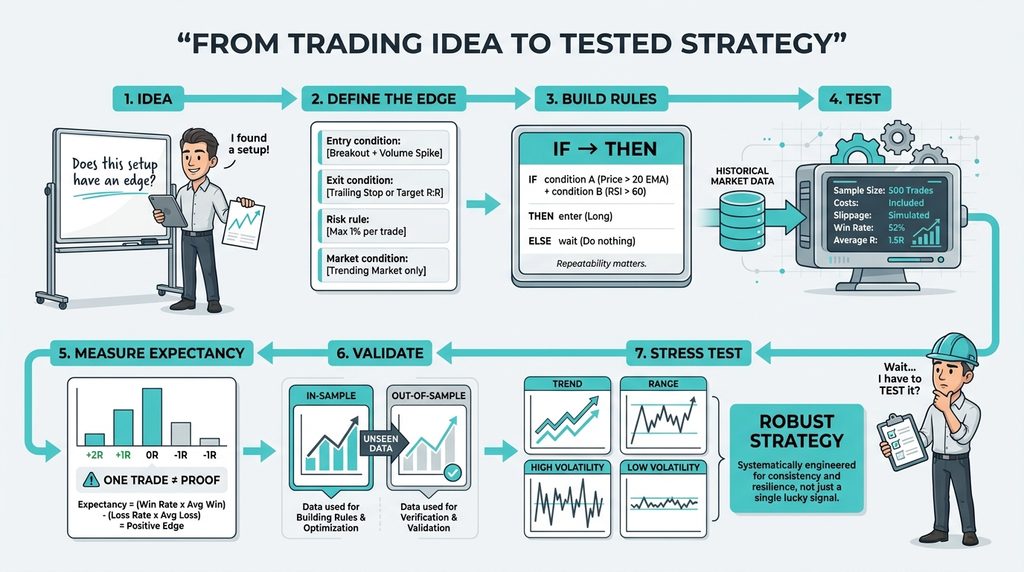
Trading strategy engineering is all about creating a trading strategy design you can stick to and back up with numbers. It doesn’t depend on excitement, gut feelings, or just one part of the market.
In practice, trading strategy engineering answers five questions:
- What is the edge?
- How are decisions made?
- Is expectancy positive over a real sample?
- Has it been tested without bias?
- Is it robust, or is it overfit?
If you can’t answer these questions clearly, you’re missing a strategy. You’ve got your own take.
Step 1 — Define the Trading Edge Before You Build Anything
Every engineered strategy starts with a correct definition of edge. Without this, traders mistake randomness for skill and build confidence on short-term outcomes.
A real trading edge is a measurable advantage that plays out over many trades, with controlled losses and repeatable outcomes across time and market conditions.
Step 2 — Choose the Decision Framework: Discretionary vs Rules-Based
A strategy won’t work out if choices keep changing. That’s why trading strategy engineering needs a framework to execute it.
Rule-based strategy development makes it easier to track, review, and repeat. Discretionary trading can be effective, but it hinges on having a solid plan, sticking to it, and monitoring performance. Without it, discretion becomes noise and personal feelings. This trading decision framework is broken down in Discretionary Trading vs. Rules-Based Trading.
Step 3 — Anticipation Is the Real Game-Changer
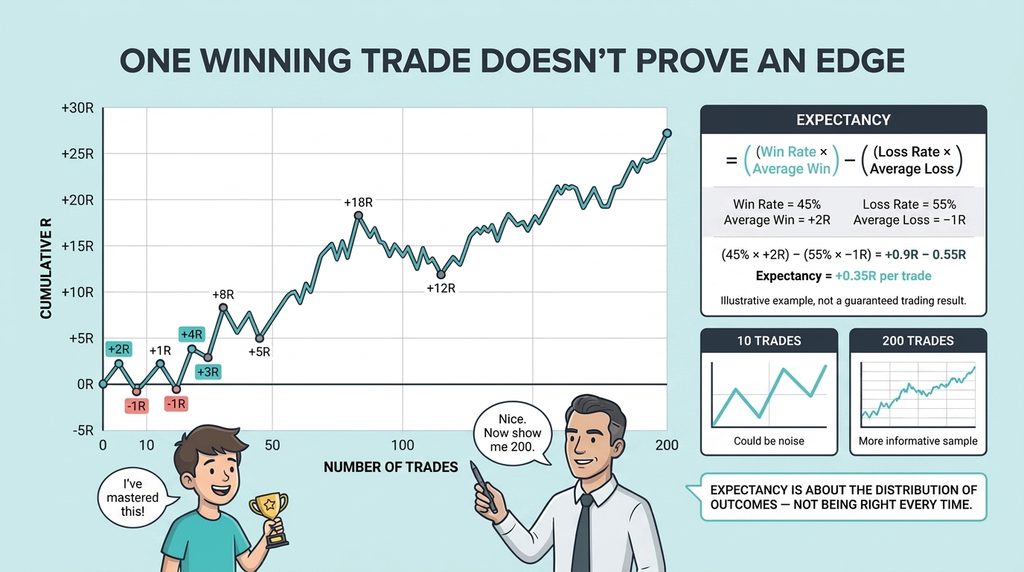
Trading strategy engineering isn’t just about being correct. It’s all about having a positive outlook.
Expectancy tells us if a strategy consistently gives us an edge, even when we’re on a losing streak. That’s why a solid professional assessment relies on a decent sample size, quantitative trading methods, and how results are spread out, not just a handful of deals or a brief streak of wins.
To learn how experts assess models before taking on risk, check out this link: Trading Expectancy Explained.
Step 4 — Backtesting Without Curve Fitting
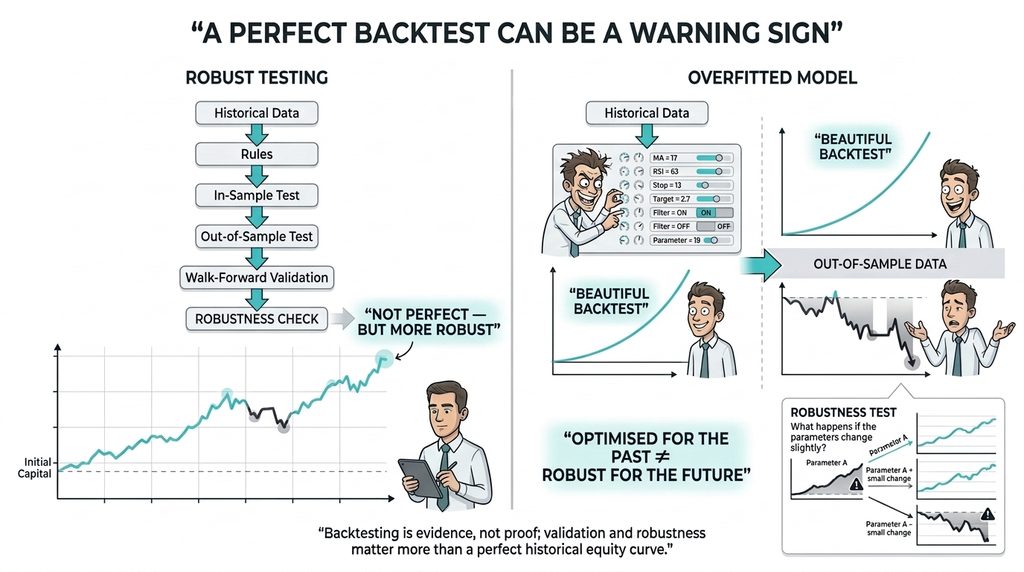
Backtesting is a key part of trading strategy engineering, but traders often misuse it. They focus on creating a stunning equity graph rather than looking for flaws.
Backtesting trading strategies is a rule-based, cost-aware approach built to show where things might go wrong. This separates training data from test data and includes reality checks like walk-forward testing. Check out this step-by-step guide on Backtesting Basics Without Curve.
Step 5 — Avoid Overfitting and False Confidence
Even after testing strategies with past data, traders still mess up because they end up making plans that only work in hindsight.
Overfitting can lead to a false sense of security. This strategy seems like a sure thing, which might tempt you to go big, but it’s likely to crash and burn when things don’t go as planned. Strong plans can handle some changes without falling apart. Overfit strategies can fall apart with a minor tweak to a single parameter.
To understand overfitting and avoid building weak systems, check out this link: Avoid Overfitting in Trading.
Research on backtest overfitting in investment strategies highlights how repeatedly testing and selecting models using historical data can create misleading performance expectations. This is why trading strategy engineering should include independent validation, realistic transaction costs and robustness testing rather than relying solely on attractive backtest results.
Common Strategy Engineering Mistakes That Keep Traders Stuck
The most common failures in strategy engineering are predictable:
- Traders confuse a setup with a system.
- They judge results on tiny sample sizes.
- They optimize too early instead of validating logic.
- They ignore costs and slippage.
- They change rules mid-trade, destroying the data.
- They build confidence from backtests instead of robustness.
A strategy that cannot survive discipline is not a strategy. It is entertainment.
Conclusion: Strategy Engineering Is the Difference Between Trading and Guessing
Most traders search for strategies, not a professional engineer's model.
Trading strategy engineering isn’t all about making things complicated. It’s about structure: setting clear boundaries, choosing a measurable system, proving it works over time, testing it honestly, and avoiding overfitting pitfalls that create a false sense of security.
If you stick to this plan, you’re not just experimenting with tactics; you're creating clear, assessable, and actionable systems.








