
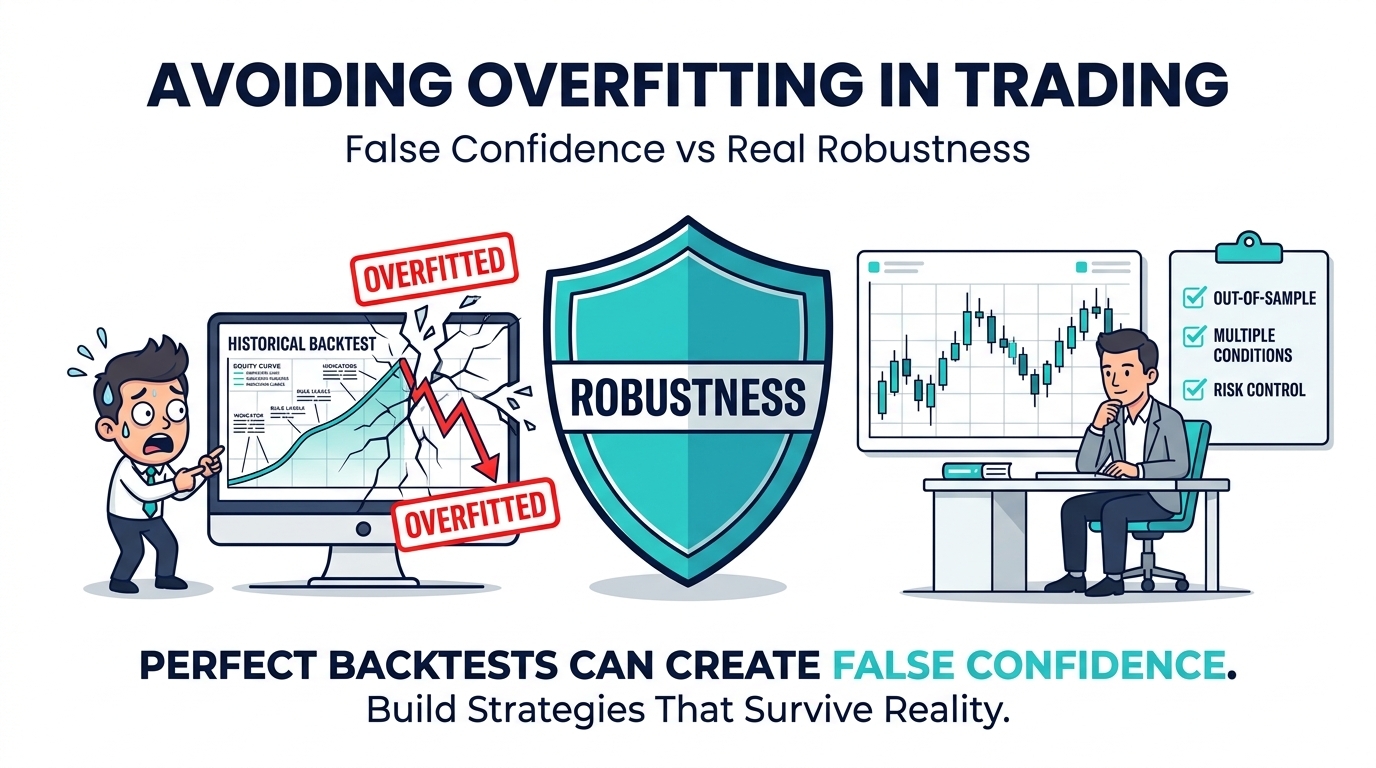
Overfitting in trading is a major reason traders feel confident just before their strategy starts failing.
A strategy may appear well tested. The equity curve looks smooth, and confidence increases. But when real market conditions change, the strategy quickly collapses.
But when real-world market conditions shift, that strategy just falls apart. That gap between past results and what’s actually happening is where false-confidence trading begins.
In this lesson, we’ll dive into what overfitting in trading really means, why it’s common, and how to avoid creating strategies that only work in the past.
What Is Avoiding Overfitting in Trading? (Simple Explanation)
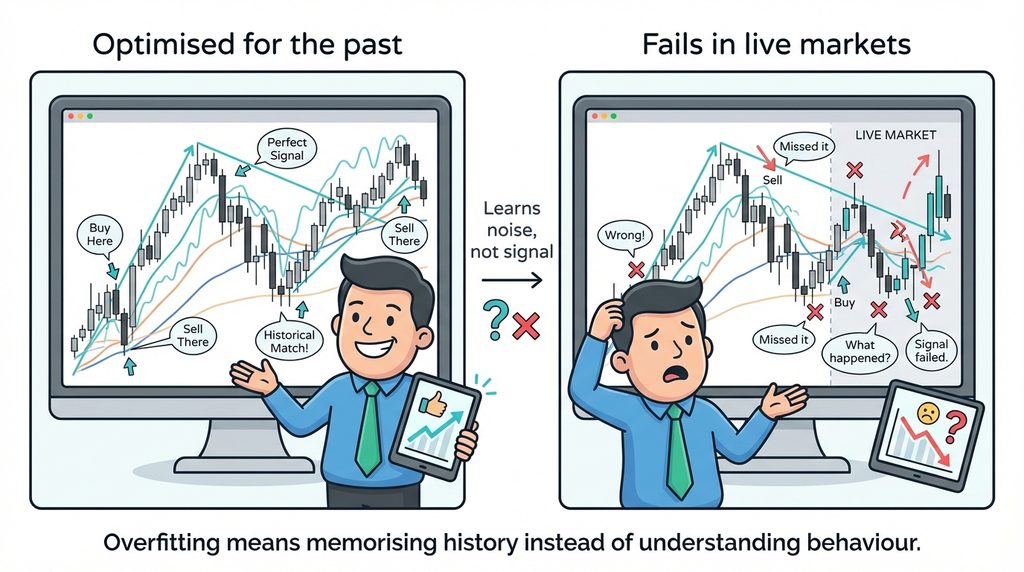
Overfitting happens when a trading strategy becomes too closely tailored to historical data instead of underlying market behavior.
In simpler terms, the plan picks up noise instead of the real signal. It can look great in backtests because it just memorizes certain price patterns, not because it has a consistent edge, but often because of backtesting bias.
If a strategy only works when everything goes exactly as it did in the past, it’s not tough enough for real-world trading.
This mix-up happens often when traders get it wrong, thinking that just because a strategy worked in the past (backtest), it’s a magic key Trading Edge that will work all the time.
Why Overfitting Creates False Confidence
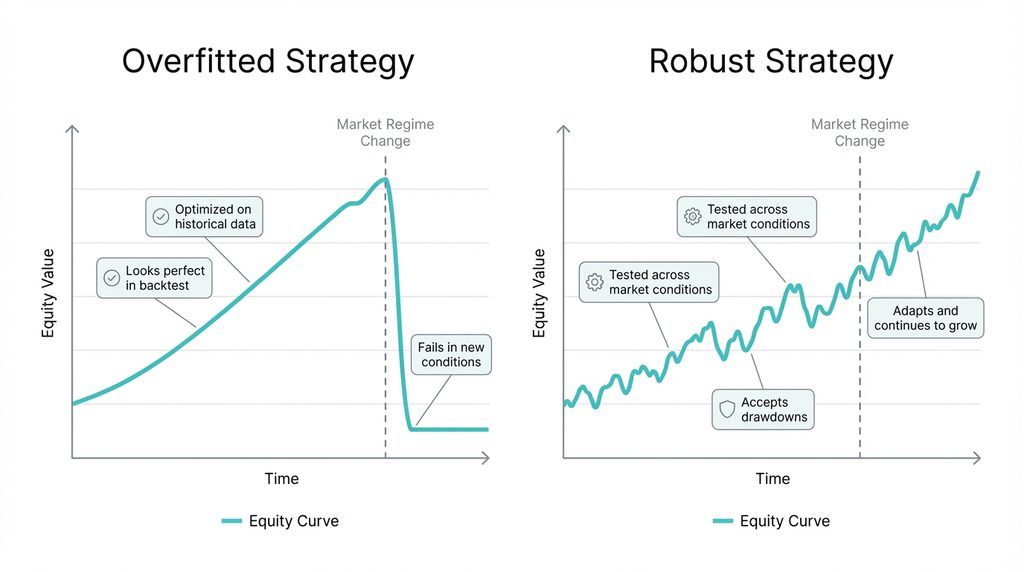
False confidence in trading can be more dangerous than a weak strategy.
Backtests Feel Like Proof
When traders see high win rates or smooth equity curves, they assume things are certain. This often comes from backtesting bias, leading to larger position sizes, looser risk rules, and an emotional attachment to the strategy.
Leverage Amplifies the Damage
In markets like Forex and CFDs, small structural issues can cost you big in no time. Overconfidence can speed up drawdowns.
Bottom line: overfitting in trading doesn’t just flop; it crashes hard. This behavioral loop ties in with the Psychology of Trading.
Common Causes of Overfitting in Trading
Too Many Rules and Parameters
Adding more filters makes it easier to accidentally fit a curve to historical data.
Endless Optimization Loops
Tweaking indicators until they seem to work is just data-snooping bias, not real refinement.
Ignoring Sample Size
Strategies that work on small samples or just one part of the market often fall apart when conditions change. This statistical trap is known as sample size bias, the same issue explained in “Trading Expectancy Explained: Probability, Sample Size & Real Edge.”
Look-Ahead Bias
Using future information, even accidentally, can lead to unrealistic and risky outcomes—another form of backtesting bias.
Warning Signs Your Strategy Is Overfit
Performance Collapses With Small Changes
If tweaking one setting wipes out the outcomes, the edge was never really solid.
Results Only Work in One Market or Period
Robust strategies adapt across instruments and regimes.
Equity Curve Looks “Too Perfect”
Real edges have drawdowns. Perfection often signals curve fitting.
This idea of flawless execution usually gets unmasked when you dive into Backtesting Basics Without Curve Fitting.
How to Avoid Overfitting in Trading (Practical Rules)
Test for Robustness, Not Perfection
A solid plan does a decent job in different settings; this is called robustness testing, not optimization.
Use Out-of-Sample Testing
Make sure to check strategies with new data before you fully trust them to reduce backtesting bias.
Focus on Logic, Not Indicators
Ask: Why should the market reward this behavior? If there is no logical explanation, the edge is likely imaginary.
Expect Messy Results
Professional traders are okay with performance that’s not always smooth. Stability comes from discipline, not from endless optimization or data-snooping bias.
This way of thinking goes hand in hand with Improving Without Strategy Hopping.
Overfitting vs Real Trading Edge
A real trading edge:
- Survives different market regimes
- Does not depend on precise settings
- Accepts drawdowns as normal
- Prioritizes risk control over win rate
- An overfitted strategy relies on false confidence and trades without durability.
The difference becomes clear when you monitor results consistently and avoid sample size bias, as explained in Trading Performance Explained.
Conclusion — Confidence Must Be Earned, Not Simulated
Overfitting in trading creates the illusion of skill.
True confidence comes from:
- Robust testing
- Realistic expectations
- Disciplined execution
- Respect for uncertainty
If your strategy only worked in the past, it doesn’t work anymore.
Focus on building systems that last, not ones that just look good, and avoid curve fitting, backtesting bias, and data-snooping bias.