


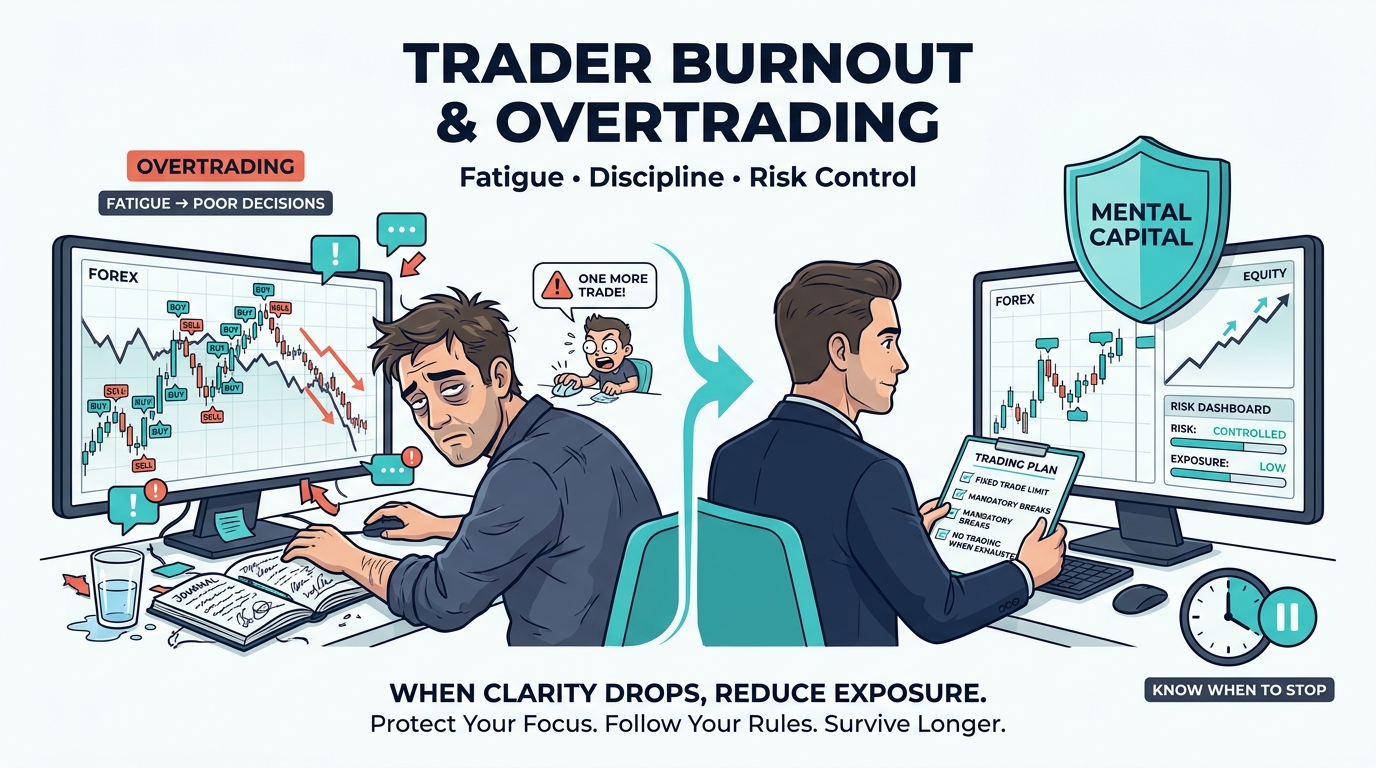
Trader burnout and overtrading rarely arrive suddenly. It quietly crumbles under trading fatigue, emotional pressure, and overtrading until discipline gives in.
Most traders don’t tank because of lousy game plans. They fail because exhaustion slowly replaces clarity.
In markets like Forex and CFD trading, leverage magnifies mistakes, speeds up losses, and can push you into rash choices you wouldn’t make when you're fresh and clear-headed.
This lesson explains:
- What trader burnout is really about.
- How trading fatigue can lead straight to overtrading.
- Why burnout wrecks consistency.
- How disciplined traders stop problems before they start.
What Is Trader Burnout (And Why Most Traders Miss It)
Trader burnout happens when you’re mentally and emotionally wiped out, and it messes with your ability to make good decisions, even when you’re pushing yourself too hard.
It is not laziness. It is cognitive overload tied to trading psychology.
Burnout typically develops when traders:
- Overtrading.
- Keep a close eye on market movements.
- Chase performance following a losing streak.
- Skip rest periods between sessions.
The danger is subtle. Burned-out traders often feel a sense of urgency, which can lead to overtrading.
Trading Fatigue vs Normal Losing Periods
Every trader experiences losing streaks. Burnout is different.
Normal Losing Period
- Strategy guidelines are still in play.
- Risk management is still holding strong.
- Emotions can be handled.
- Mistakes stand out pretty obviously.
Trader Burnout
- Rules are bent or ignored.
- Trade frequency goes up.
- Emotional trading takes the lead.
- Overtrading just because of losses.
If trading fatigue leads to performance problems rather than just setbacks, we’re dealing with trader burnout, not random fluctuations. This kind of downward spiral usually pops up with the stress of equity drawdown, which you can read all about in the link Trading Losing Streaks Explained.
How Trader Burnout Leads to Overtrading
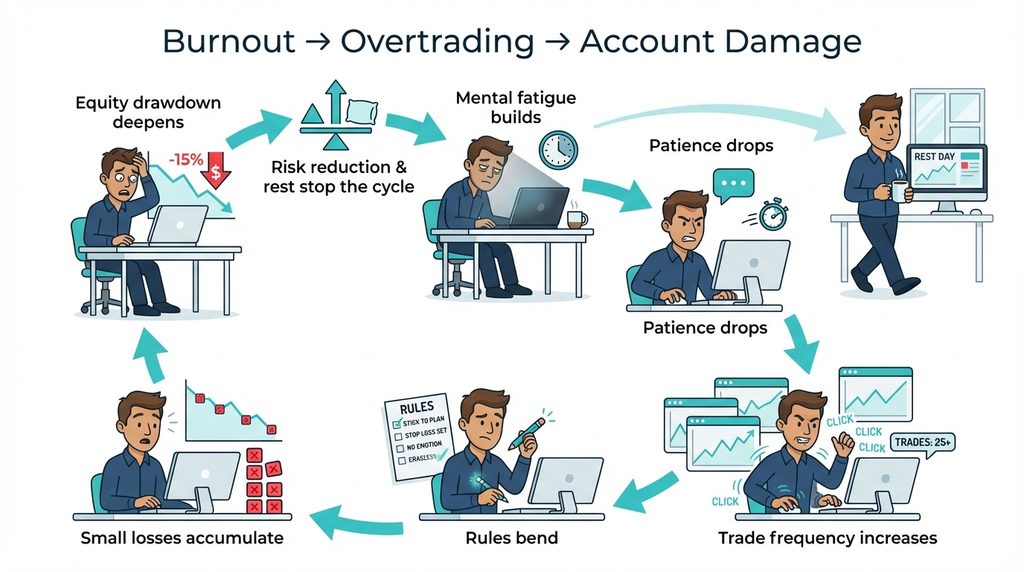
Overtrading is rarely a personality flaw. It is a symptom of trader burnout.
When trading fatigue sets in:
- Patience disappears.
- Quality benchmarks are lowered.
- Market buzz feels like a chance to do something.
- Sitting out just doesn’t feel right.
Mental fatigue can affect decision-making, concentration and the ability to assess risk. According to the CDC's guidance on fatigue, prolonged fatigue can impair judgement and reduce attention. In Forex and CFD trading, these effects may contribute to overtrading, impulsive decisions and difficulty following predefined risk management rules, particularly during extended trading sessions.
In 24-hour markets, constant price shifts and leverage in Forex and CFD trading amplify the impact. Trading professionals start trading to feel like they’re actually getting stuff done instead of just trading because the market looks good it’s a habit that’s pretty much the same as the discipline issues we talked about in the Reducing Risk Trading Strategy.
What Burnout Does to Your Equity Curve
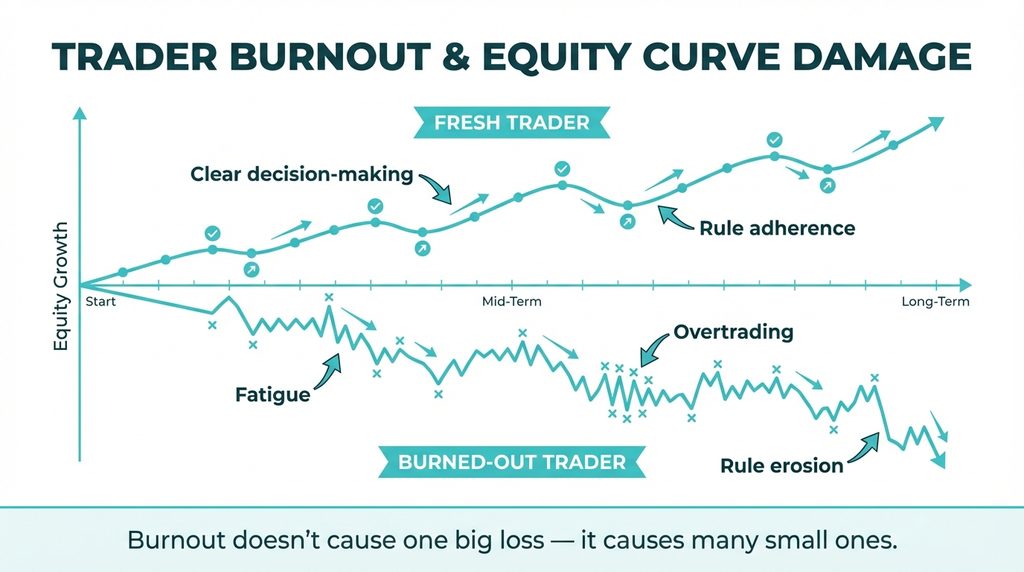
Trader burnout rarely leads to a single catastrophic loss. This leads to a bunch of tiny, avoidable setbacks that gradually chip away at capital.
Equity Curve Damage from Burnout
- More frequent trades make it harder to maintain expectancy.
- Risk management consistency starts to fall apart.
- Equity drawdown happens quicker than expected.
- Recovery gets tougher as losses accumulate.
Many traders reach a point where they say. “My strategy works. I just can’t execute it anymore.” That is not a strategy failure.
Burnout is interfering with execution; it’s all connected to Equity Curve Management.
Warning Signs of Trader Burnout (Pause Trading If You Notice These)
If three or more of these are true, it’s time to pause trading.
- Trading when you’re not fully awake or sharp.
- Overtrading again after the downturn.
- Feeling the urge to get something going.
- Bypassing journaling or performance evaluations.
- Emotional ties to results linked to emotional trading.
- It’s tough to break free from the grip of screens.
Burnout ignored becomes overtrading. Overtrading becomes equity damage.
Equity damage turns into mental stress, setting off a vicious cycle in trading psychology.
Why “Trading More” Makes Burnout Worse
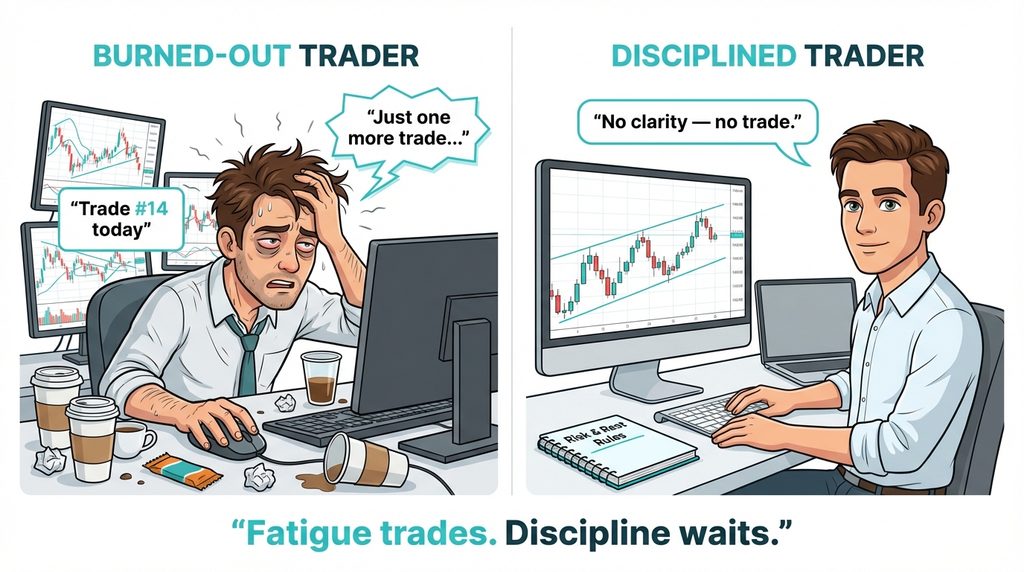
Burned-out traders sometimes think they just need to work harder. This assumption about trading is pretty devastating.
More screen time:
- Lowers decision quality.
- Emotional trading reactivity goes up.
- Reinforces bad habits.
- Speeds up trading fatigue.
Professional traders do the opposite. When things get murky, they reduce risk management and exposure. Correlation & Risk Management.
How Disciplined Traders Prevent Burnout
Trader burnout cannot be prevented by motivation. Structural controls and risk management prevent it.
Practical Burnout Prevention Rules
- Set daily trade limits.
- Maximum time you can spend in a single session.
- Take required pauses after emotionally charged trades to prevent emotional trading.
- No trading after a rough night’s sleep.
- Weekly non-trading days.
- Consistent journaling and review routines.
These rules protect decision quality in trading psychology, not comfort.
Structured traders outperform impulsive traders because structure reduces psychological leakage — a core principle reinforced in Scaling In vs Scaling Out in Trading.
Recovery Protocol After Burnout
Recovery is not “resting until you feel better.” It is an intentional reset.
Effective Recovery Steps:
- Pause trading live capital temporarily.
- Review your errors objectively.
- Cut down trading hours in Forex or CFD markets.
- Get your routine back on track before you start.
- Start with a smaller position.
Clarity returns faster when you take the pressure off and get things back in order. Experts see recovery as safeguarding both money and mental health through proper risk management.
Conclusion: Trader Burnout Is a Risk Management Issue
Trader burnout is not merely a mindset problem. It is a failure in psychological risk management. Trading fatigue leads to overtrading. Overtrading leads to expectancy collapse. Expectancy collapse destroys accounts quietly through equity drawdown.
- The best traders are not the most active.
- They’re at their sharpest when they get involved.
- Survival comes before growth.
- Clarity comes before execution.
- Structure comes before confidence.








