


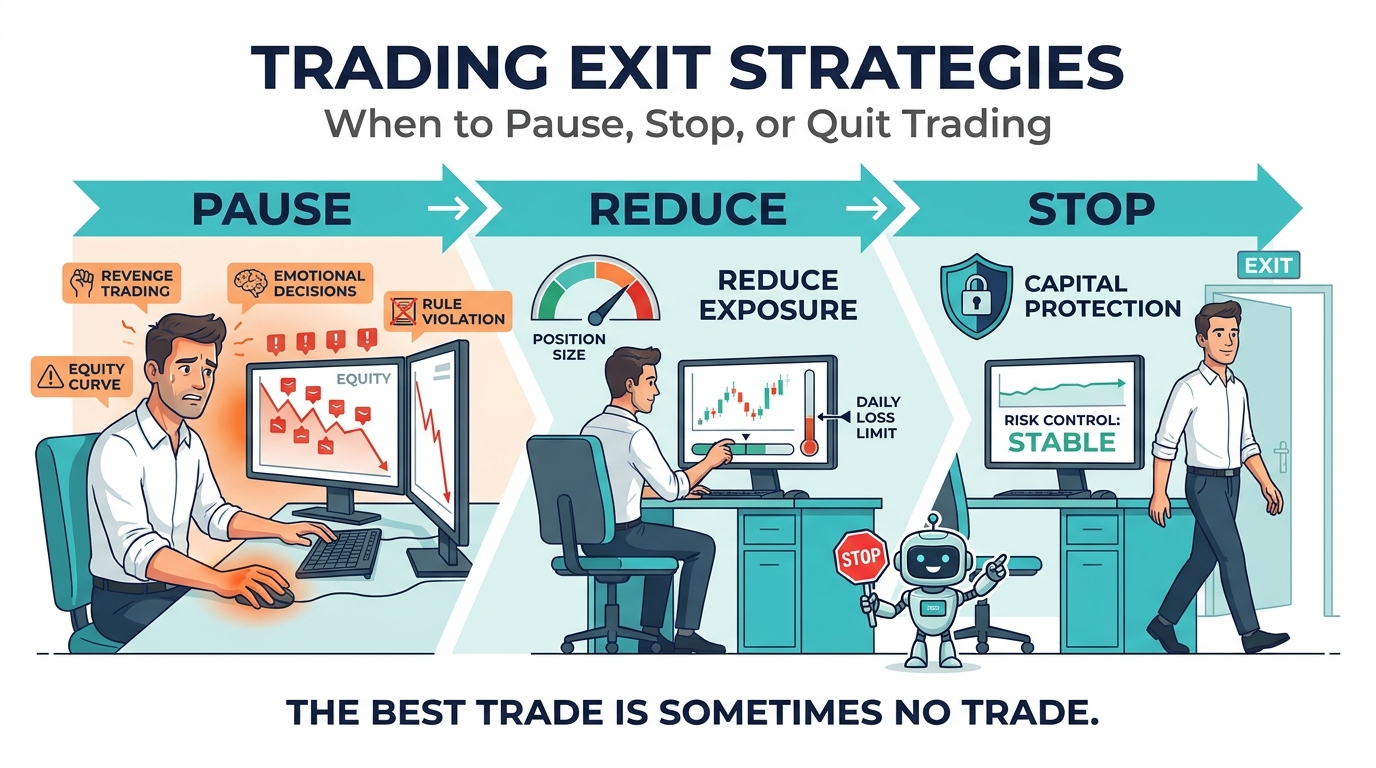
Trading exit strategies aren’t just about closing winning or losing positions. They involve knowing when it’s time to step away from the market completely.
A lot of traders don’t fail because of bad entries. They make mistakes because they keep trading when they’re fatigued, emotional, frustrated, or overconfident. Knowing when to stop trading can be a critical skill for long-term success in financial markets.
Long-term consistency isn’t just about having solid setups; it’s also about knowing when to stop trading. This idea aligns with the article Trading Resilience, which considers emotional resilience essential, not just something that keeps you going.
What Are Trading Exit Strategies Really About, Aside From Just Stop-losses
Most beginners believe trading exit strategies only mean:
- Where to place a stop-loss?
- When to take profit?
Real exit strategies also include:
- When to stop trading for the day?
- When to pause after emotional mistakes?
- When to reduce exposure?
When to temporarily quit trading and reset
Professionals manage the end of their trading day, not just individual trades. This wider view is backed up in Process-Oriented Trading where execution quality matters more than short-term results.
Why Traders Ignore Signals For When To Stop Trading
The toughest decisions often aren’t about technology or trading tools; they’re all about the mind.
Emotional Trading Masks Risk Signals
After wins or losses, traders may experience:
- Revenge trading.
- Overconfidence.
- Fatigue.
- Decision paralysis.
These states distort judgment. The market hasn't changed, but the trader has. When emotional state shifts, execution quality drops and the trading edge is compromised.
This pattern is commonly observed in Overconfidence in Trading, where confidence gradually turns into rule-breaking behavior.
When to Pause Trading (Non-Negotiable Rules)
Knowing when to pause trading is just as important as knowing when to enter a trade. Emotional fatigue, consecutive losses, and excessive drawdowns can weaken decision-making and lead to impulsive trades. Clear trading stop rules help traders protect capital, manage emotional pressure, and maintain discipline.
Follow these predefined boundaries consistently, regardless of market conditions or the temptation to recover losses.
Daily Loss Limit Exit Strategy
One of the most effective structural rules is a daily maximum loss limit. Examples include:
- Two consecutive losses → stop trading
- 1% daily drawdown → session closed
These limits prevent emotional spirals and protect both capital and mental clarity. Similar survival logic appears in Trading Losing Streaks Explained, where predefined thresholds prevent account erosion.
Emotional Rule Violations
Pause immediately if you:
- Move a stop-loss emotionally
- Enter without a valid setup
- Chase price after missing an entry
These are process failures, not market failures. Continuing to trade after rule violations amplifies psychological leakage and increases risk.
Trading Exit Strategies Based on Drawdowns & Equity Protection
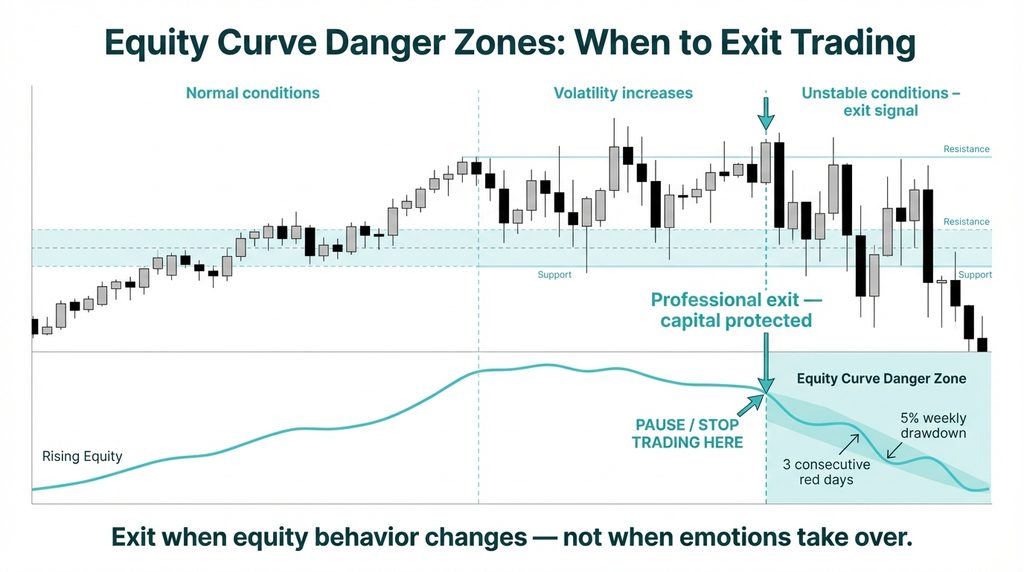
Many retail traders struggle with this concept, but professionals manage it effectively.
Trading exit strategies play an important role in managing risk, particularly when trading leveraged financial instruments. The Financial Conduct Authority (FCA) highlights the risks associated with CFDs and the importance of regulatory protections for retail investors. This reinforces why traders should establish predefined loss limits, monitor account drawdowns and recognise when reducing exposure or pausing trading may be appropriate.
Drawdown-Based Exit Rules
Instead of reacting emotionally to P&L, experienced traders use equity-curve protection rules such as:
- 5% weekly drawdown → pause for structured review.
- Cut losses and step back from trading for a while.
These rules prevent small setbacks from becoming structural damage. The same philosophy is central in Equity Curve Management, where equity stability is prioritized over short-term gains.
Equity Curve “Danger Zones”
If your equity curve:
- Accelerates downward.
- Becomes unusually volatile after consistency.
This usually points to a behavioral or risk issue, not a growth opportunity. Pushing harder often makes things worse.
When Reducing Risk Beats Trading More
One of the most intelligent exit strategies is not full withdrawal, but controlled reduction.
Risk-Reduction Exit Strategy
Instead of quitting trading entirely:
- Cut position size by 30–50%
- Trade fewer setups.
- Shift to higher timeframes.
This maintains engagement without emotional overload. This approach mirrors the principles explained in Reducing Risk Trading Strategy, where exposure control outperforms forced participation.
When to Stop Trading Completely (Temporarily)
A temporary withdrawal can be a professional decision, not a defeat.
Clear Signs You Should Stop Trading
- Persistent overtrading.
- Repeated rule violations.
- Emotional attachment to P&L.
- Trading solely to “get back to breakeven.”
These aren’t just discipline issues; they’re usually signs of burnout. Continuing like this only damages decision-making and increases risk.
Professional Trading Exit Strategies Framework
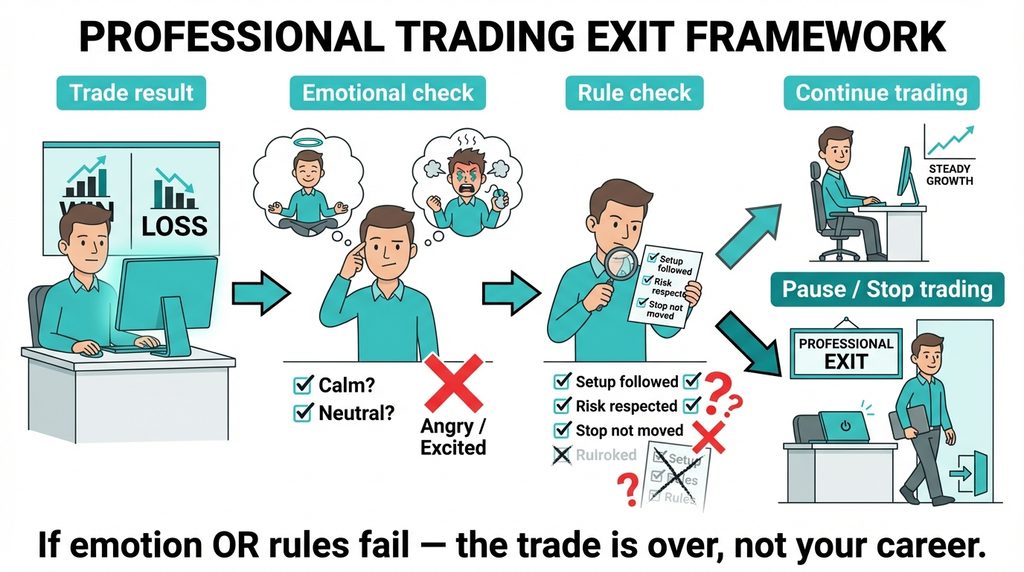
A straightforward yet powerful decision-making process employed by disciplined traders. Check your emotions, then check your rules, and decide when to stop trading or keep going.
If any of the following fail:
- Emotional neutrality.
- Rule compliance.
- Risk limits.
Trading should stop immediately. This structure keeps traders focused on long-term discipline instead of reacting impulsively to short-term market movements.
Common Mistakes Traders Make With Trading Exit Strategies
- Waiting until the account is heavily damaged.
- Trading longer to “fix” losses.
- Pausing only after confidence collapses.
- Treating quitting trading as personal failure.
Disciplined traders exit early and intentionally, not reactively.
Conclusion: Trading Exit Strategies Are Survival Tools
They’re a critical survival tool for traders. Understanding when to stop trading isn’t about fear; it’s about self-awareness and disciplined risk control.
Markets will always be available. Capital and mental clarity will not.
Strong exit strategies help traders:
- Avoid overtrading.
- Protect equity.
- Preserve confidence.
- Maintain long-term participation.
The most consistent traders do not trade more. They exit better.








