


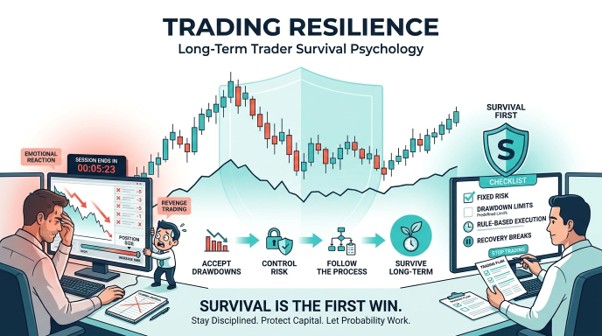
Most traders don’t fail because their strategy is bad. They struggle because they cannot handle the mental pressure long enough for their edge to play out.
Trading resilience means keeping your cool, staying level-headed, and managing risks even when things get tough and uncertain. Without it, even a money-making trader will eventually crash and burn. Long-term performance is more about sticking it out than just guessing what’s going to happen.
This lesson dives into the real psychology of trader survival, why bouncing back matters more than feeling sure-footed, and how to build that grit on purpose with a solid game plan instead of hoping for the best.
What Does Trading Resilience Actually Mean
Trading Resilience isn’t just a buzzword; it’s not simply about motivation or self-belief.
It is the ability to:
- Carry out teh same process when under pressure.
- Stick to the risk boundaries even when you’re on a losing streak.
- Stay calm through short-term P&L fluctuations.
- Keep your act steady when things are unpredictable. Resilient traders don’t let their emotions dictate their actions; they stay cool and collected.
This execution-first mindset goes hand in hand with Process-Oriented Trading.
Trading resilience involves responding to uncertainty, setbacks and emotional pressure without abandoning a structured decision-making process. The American Psychological Association's guidance on resilience explains how individuals can develop the ability to adapt to stressful experiences and adversity. For Forex and CFD traders, these principles highlight the importance of emotional self-regulation, realistic expectations and predefined risk management rules when navigating losing streaks and market uncertainty.
Why Most Traders Break Before Their Strategy Does
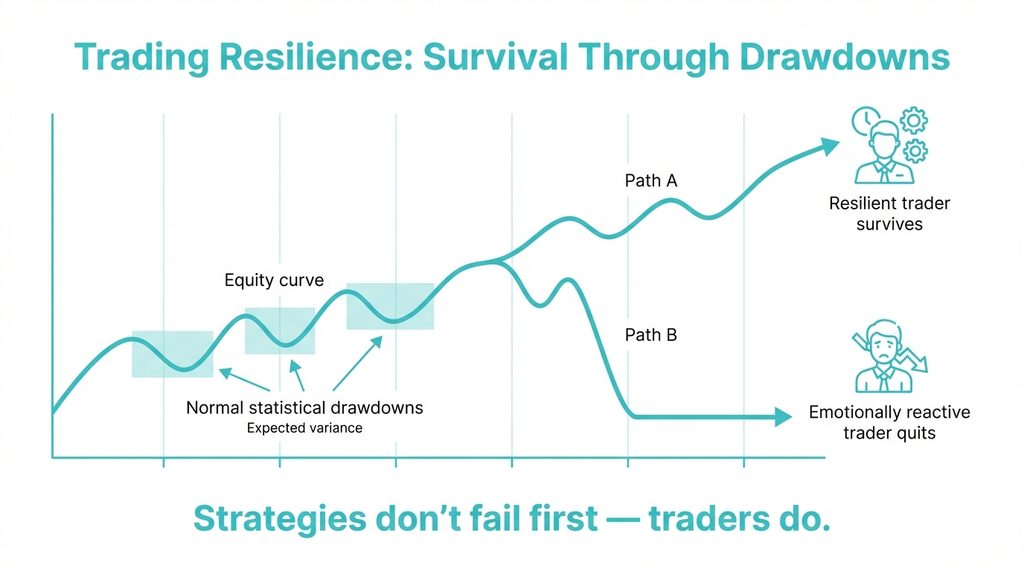
Most traders quit or fail during normal market conditions, not extreme ones.
Common psychological breaking points include:
- 5–10 consecutive losses.
- Equity growth plateauing after early gains.
- Confidence dropping after a losing period.
- Extended periods of slow or flat performance.
Without Trading Resilience, traders often respond by:
- Increasing position size impulsively.
- Overtrading.
- Revenge trading.
- Ditching the strict guidelines.
This behavioral collapse is rarely a strategy flaw. This is a discipline failure, the same kind of survival mistake detailed in the link Trading Losing Streaks.
The 5 Core Trading Resilience Skills Every Long-Term Trader Needs
Trading resilience is the ability to manage setbacks, uncertainty, and changing market conditions without abandoning a structured trading plan. It doesn't mean avoiding losses or staying unaffected by them, but responding to challenges with discipline rather than emotion.
Developing these five core skills can help traders manage psychological pressure, maintain realistic expectations, and make more consistent decisions over time.
1. Drawdown Acceptance (Not Tolerance)
Systems go through their ups and downs. Smart traders plan instead of freaking out when things go south. They define:
- Maximum acceptable loss.
- Probability of hitting a losing streak.
- Reduced-performance phases.
Acceptance reduces emotional shock and prevents impulsive behavior.
2. Emotional Neutrality Toward P&L
Short-term P&L is feedback — not identity. Resilient traders focus on:
- Rule execution quality.
- Risk consistency.
- Process adherence.
This balanced approach avoids emotional highs after wins and lows after losses, strengthening emotional control, a twist often seen in the article Overconfidence in Trading.
3. Risk Stability Under Pressure
Most traders increase risk when emotions take over. Resilient traders do the opposite:
- Manage risk for each trade.
- Reduce risk when performance becomes unstable.
- Avoid revenge trading.
Risk discipline keeps equity trading on track and supports the key ideas we discussed in Equity Curve Management.
4. Patience During Flat or Slow Periods
Not every market phase rewards participation. Resilient traders:
- Step back during unfavorable conditions.
- Don’t push your luck with trades.
- Preserve capital and mental focus.
Survival beats activity; that’s the same idea in Reducing Risk Trading Strategy.
5. Identity Separation From Results
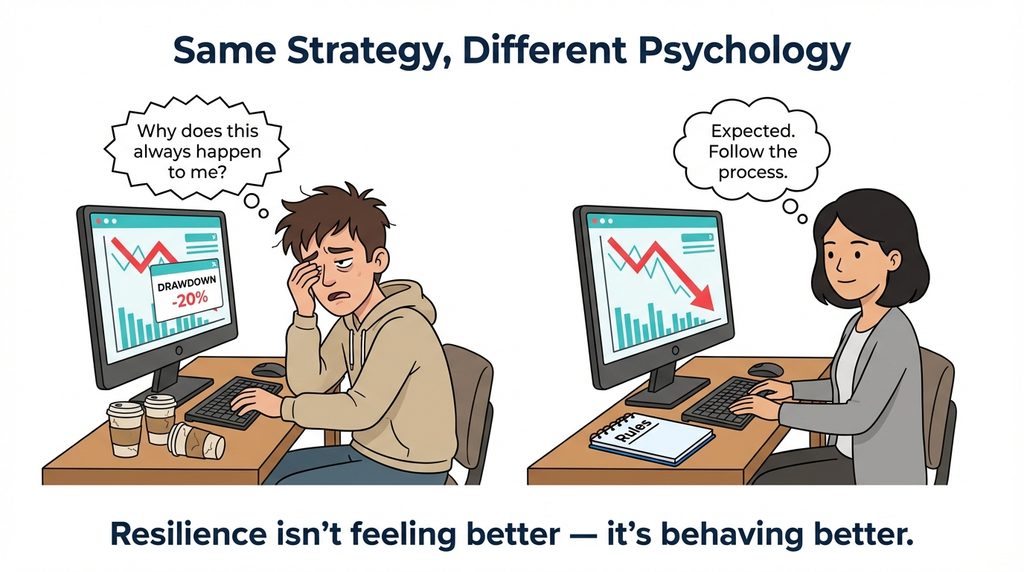
Losing a trade doesn’t mean you’re a bad trader. Resilient traders define success by:
- Following rules.
- Handling risk properly.
- Making decisions that are backed by solid stats.
This split strengthens mental discipline in trading and maintains consistency when you’re dealing with large groups.
Practical Trading Resilience Habits for Long-Term Consistency
Trading Resilience is not built through thinking. It is built through structured habits and systems.
Effective habits include:
- Set daily loss limits.
- Predefined “stop trading” rules.
- Emotional reflections after teh session.
- Writing down errors instead of earnings.
- Planned days off from trading.
Taking time to think things through helps you manage your emotions and strengthen your emotional control over time.
Trading Mindset Myths That Destroy Consistency
Myth 1: “Confidence solves emotional problems.” Unchecked confidence can sometimes make you take more risks and trade too much.
Myth 2: “Good traders don’t feel fear.” Professional traders experience fear but follow their process anyway.
Myth 3: “More screen time equals better performance.” Fatigue can break down mental discipline in trading quicker than not having the right skills, and it’s pretty obvious in Trader Burnout & Overtrading.
Trading Resilience is built through restraint, not intensity.
How Professional Traders View Trading Resilience
Professional trading environments treat emotional management as risk management, not just motivation.
Institutions design systems that:
- Keep your feelings in check
- Cut down on decision overload
- Encourage consistent behavior
- Automatic drawdowns kick in
Professional trading environments treat emotional management as risk management, not just motivation.
How Trading Resilience Compounds Over Time
When Trading Resilience improves:
- Errors happen less often.
- Drawdowns get less steep.
- Consistency in trading stabilizes.
- Confidence takes root instead of just reacting.
This mental stacking thing usually beats out the edge of tweaking tech strategies. Behavioral consistency turns out to be teh real long-term advantage.
Conclusion — Survival Is the First Win
Markets do not reward intelligence alone. They reward behavioral stability.
Swapping Trading Resilience for skill means you can build on what you’re good at, let your edges shine, and keep your confidence steady instead of letting it get all over the place.ce If you’re mentally tough, you let your plan play out, and in trading, time’s the real advantage.








