


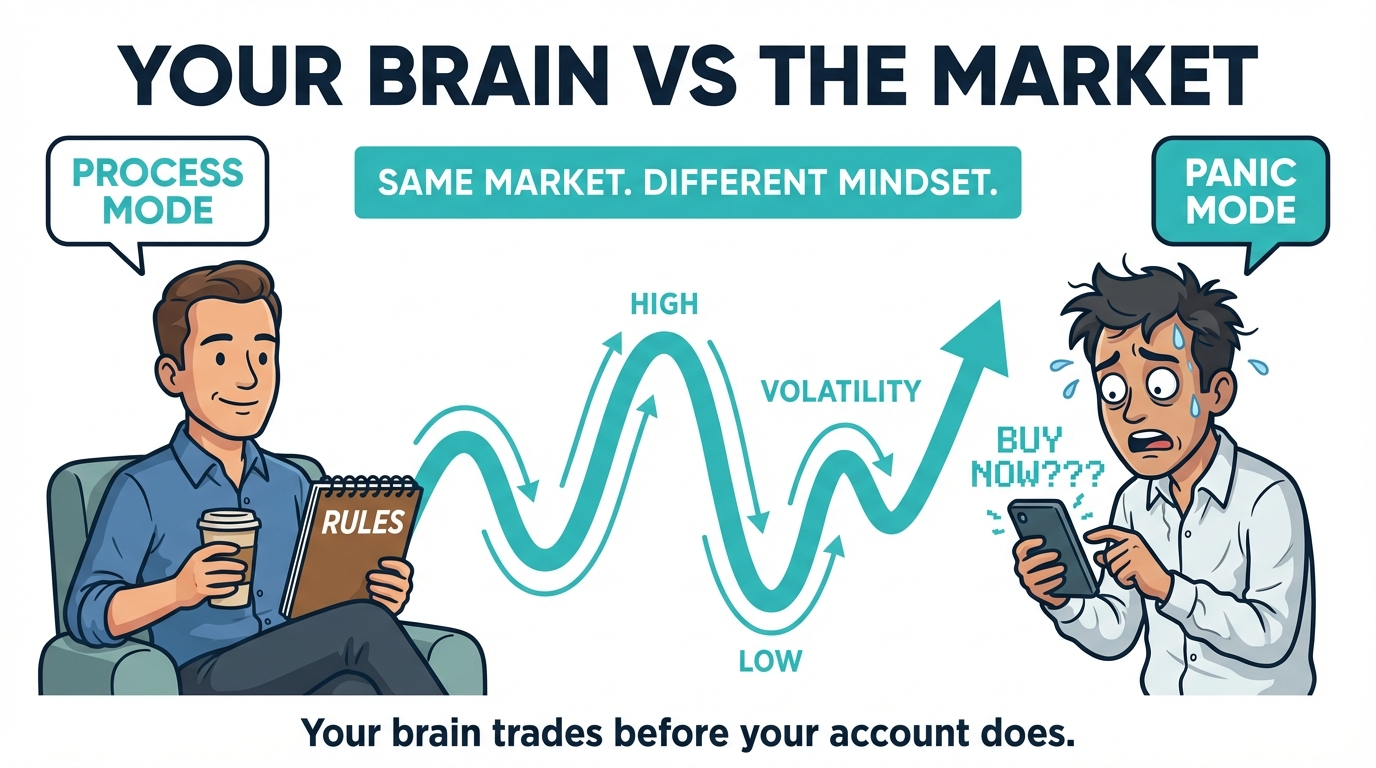
If you've ever wondered why mindset matters in investing, you're already on the path of a dedicated student. Markets aren't just about knowing stuff; they're about how you act. You can understand risk and still break rules when fear, impatience, or ego takes control.
Your mindset extends beyond simply maintaining a positive outlook. It's more about sticking to a plan when things are unpredictable, which requires discipline and the ability to adapt your strategy in response to changing circumstances.
When emotions influence decisions, investing often feels like a hasty decision. When you have a strong mindset, investing becomes a more organized, calm, and consistent process.
Why Mindset Matters in Investing for Beginners
Your investing mindset is based on the habits you form when you're uncertain. This entails exercising patience, maintaining composure, staying steadfast, and staying focused despite unexpected setbacks.
As Varianse Academy states in their article, investing is about taking a long-term approach rather than focusing solely on making quick money.
Why Market Uncertainty Tests an Investor's Mindset
Financial markets are influenced by economic developments, investor expectations, liquidity and changing market conditions.
Because future prices cannot be predicted with certainty, investors may experience periods of volatility or outcomes that differ from their expectations.
These conditions can create psychological pressure, particularly when financial losses are possible.
Understanding uncertainty helps investors recognise that risk involves a range of potential outcomes rather than a single expected result.
Understanding investment risk is an important part of developing a disciplined mindset. The Financial Conduct Authority (FCA) provides educational guidance on investment risks and returns, helping beginners understand why financial decisions should consider both potential rewards and possible losses.
The basic idea of risk being all about uncertainty is laid out in the Variance Academy article, What Does Investment Risk Really Mean? It shows that "risk" is more about the range of possible outcomes than just one specific danger
Why Emotions Affect Investment Decisions
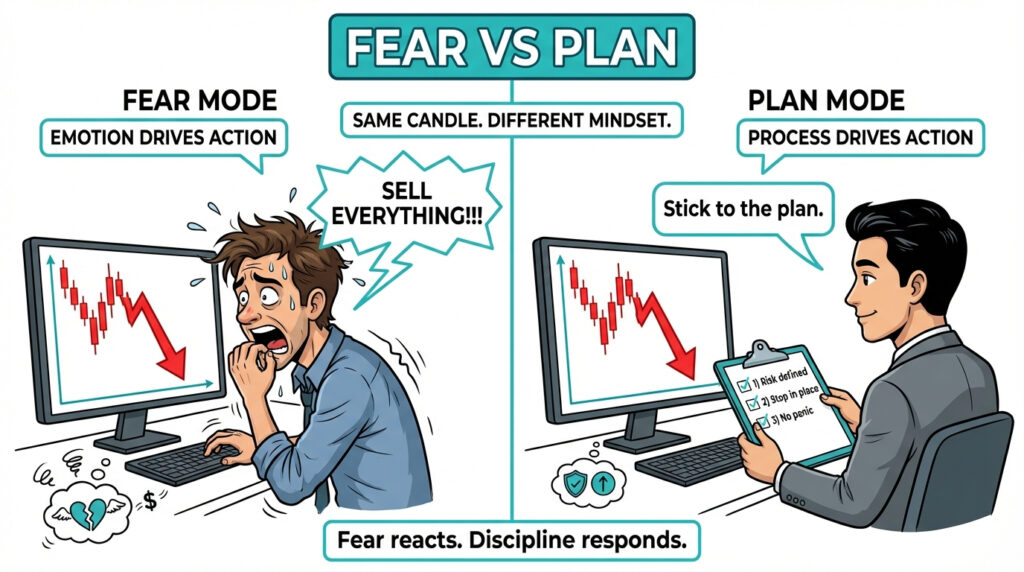
Emotions can influence how investors interpret information, assess risks and respond to market movements.
For example, fear may encourage premature selling during a market decline, while overconfidence may lead to taking greater financial risks after profitable outcomes.
Loss aversion can also influence decisions, as some individuals experience the discomfort of losses more strongly than the satisfaction of equivalent gains.
However, emotional reactions are not always irrational. Concern about potential losses may encourage appropriate reassessment when an investment no longer suits someone's circumstances.
Recognising these psychological influences can help investors distinguish between considered financial decisions and impulsive reactions.
The article from VARIANSE Academy, titled Why Emotions Affect Investment Decisions?, breaks down how fear, greed, and the tendency to avoid losses play out in our investment choices, treating our emotional reactions to uncertainty as just part of being human.
The Most Common Mindset Mistakes Beginners Make
Most beginners' losses come from repeating behavioral patterns, not a lack of intelligence.
Mistake 1: Chasing Fast Results
Unrealistic expectations about investment returns can encourage beginners to take unnecessary risks.
Some individuals may increase their trading frequency, invest without sufficient research or take larger positions in pursuit of quick gains.
However, frequent trading does not automatically lead to losses, just as long-term investing does not guarantee positive returns.
Setting realistic expectations and understanding potential financial losses can help beginners make more informed decisions.
This pattern is laid out in the VARIANSE Academy article, Common Investing Mistakes Beginners Make and How to Avoid Them? where it's clear that unrealistic expectations often lead to the same kind of loss over and over.
Mistake 2: Holding Losing Positions to Avoid Accepting a Loss
Keeping losses on the table to avoid admitting a mistake is mistake number two. Newbies often hold back from quitting because losing feels like they've totally bombed themselves. Sometimes, just a little hesitation can turn a tiny loss into a big one.
This behaviour ties into the VARIANSE academy article on how people can lose money while investing and how to steer clear of it, where dodging feelings takes the place of actually managing risks.
Mistake 3: Revenge Trading After a Loss
Revenge trading occurs when someone enters additional trades primarily to recover money lost on previous positions.
This behaviour may involve increased position sizes, reduced planning or greater financial exposure. The urgency to recover losses can encourage decisions that do not align with the trader's original strategy or risk tolerance.
Recognising this pattern can help traders reassess their decisions before taking additional financial risks.
How Investing Mindset and Risk Management Work Together
Investing psychology and risk management are closely related, but they serve different purposes.
Risk management involves assessing financial exposure, determining appropriate position sizes, understanding potential losses and considering how investments fit within broader financial objectives.
Investing psychology concerns the emotions, habits and cognitive biases that may influence these decisions.
For example, overconfidence may encourage someone to increase their exposure beyond what their financial circumstances justify.
However, even disciplined investors remain exposed to market risks. Stop-loss orders, diversification and position sizing cannot guarantee protection against financial losses.
In the article How to Manage and Reduce Investment Risk Safely and Effectively? from VARIANSE academy, they outline a practical approach to managing uncertainty. They talk about sticking to a disciplined plan, spreading your investments, and keeping a tight grip on them.
Why Trading Accounts Can Influence Emotions
Trading accounts display financial information that may influence how individuals respond to market movements. For example, unrealised losses may create anxiety, while profitable positions may encourage overconfidence.
However, account information serves an important practical purpose.
Account balance generally reflects funds after realised transactions and applicable adjustments, while equity also reflects unrealised profits and losses. Margin represents collateral required for leveraged positions.
Understanding these figures helps traders assess financial exposure rather than interpreting account movements solely through an emotional perspective.
This matter is clarified in the section titled, What Is a Trading Account? The beginner's full guide (from Varianse Academy) shows that balance, equity, and margin are about exposure, not just figures.
How Online Trading Platforms Can Influence Decision-Making
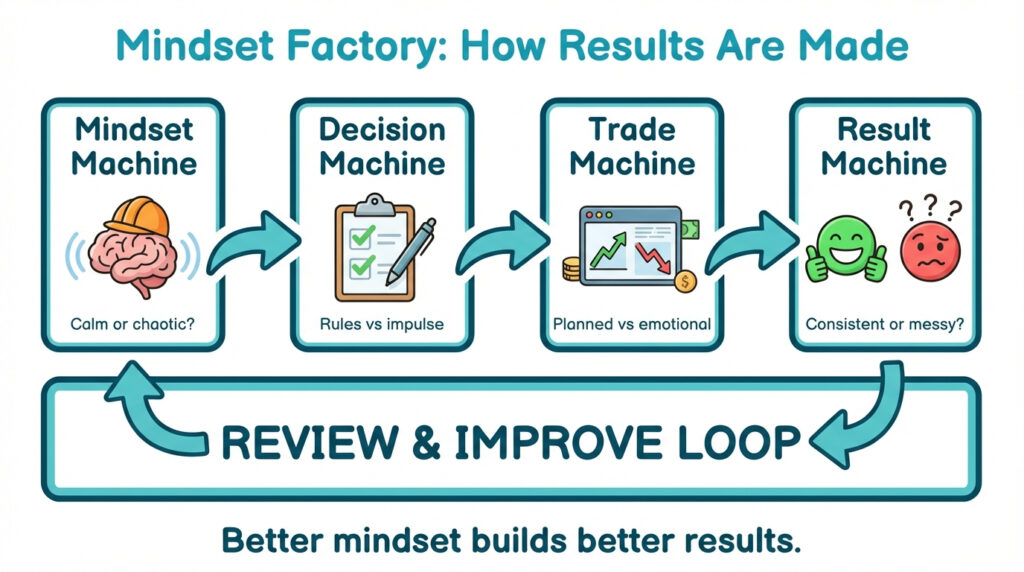
Online trading platforms provide access to market prices, charts, account information and order-management tools.
Real-time information can help traders monitor positions, but frequent exposure to price fluctuations may also encourage unnecessary decisions.
Some individuals may feel pressure to act when prices change rapidly, even when no meaningful change has occurred in their original trading plan.
Developing a structured decision-making process can help traders evaluate whether action is appropriate.
The article from VARIANSE Academy, titled How Online Trading Platforms Work?, concisely explains the actual functions of these platforms; it's not about devising a strategy but about establishing a connection with the market.
This article provides a beginner's approach that effectively accomplishes the task. Your mind gets better when you organise your actions before you let your feelings in.
Before Making a Decision
Consider your financial objectives, risk tolerance, investment timeframe and the potential consequences of losses.
For active trading, this may also involve reviewing position size, planned exit conditions and execution risks.
During the Investment or Trade
Monitor whether the original investment rationale remains valid.
Avoid making changes based solely on short-term emotions, but remain willing to reassess decisions when relevant information or personal circumstances change.
After the Decision
A disciplined loss can be a better trade than a lucky win. Review the behavior first, followed by the results. This is how consistency is built.
Practice Is the Fastest Way to Build Mindset
Review the reasoning behind the decision alongside its financial outcome.
A profitable result does not necessarily mean the decision was well informed. Similarly, a loss does not automatically indicate poor judgement.
Regular reviews can help identify recurring behavioural patterns and opportunities for learning.
You can kick off a controlled practice approach by checking out the VARIANSE trading account page and then following a step-by-step learning sequence on the VARIANSE academy education page.
Conclusion: How Practice Can Support Investing Discipline
Structured learning and simulated trading can help beginners become familiar with financial concepts, trading platforms and decision-making processes.
Demo trading may provide opportunities to practise placing orders, assessing potential risks and reviewing trading decisions without risking real trading capital.
However, simulated trading does not fully reproduce the emotional pressure of live markets, and demo results do not guarantee future performance or psychological readiness.








