


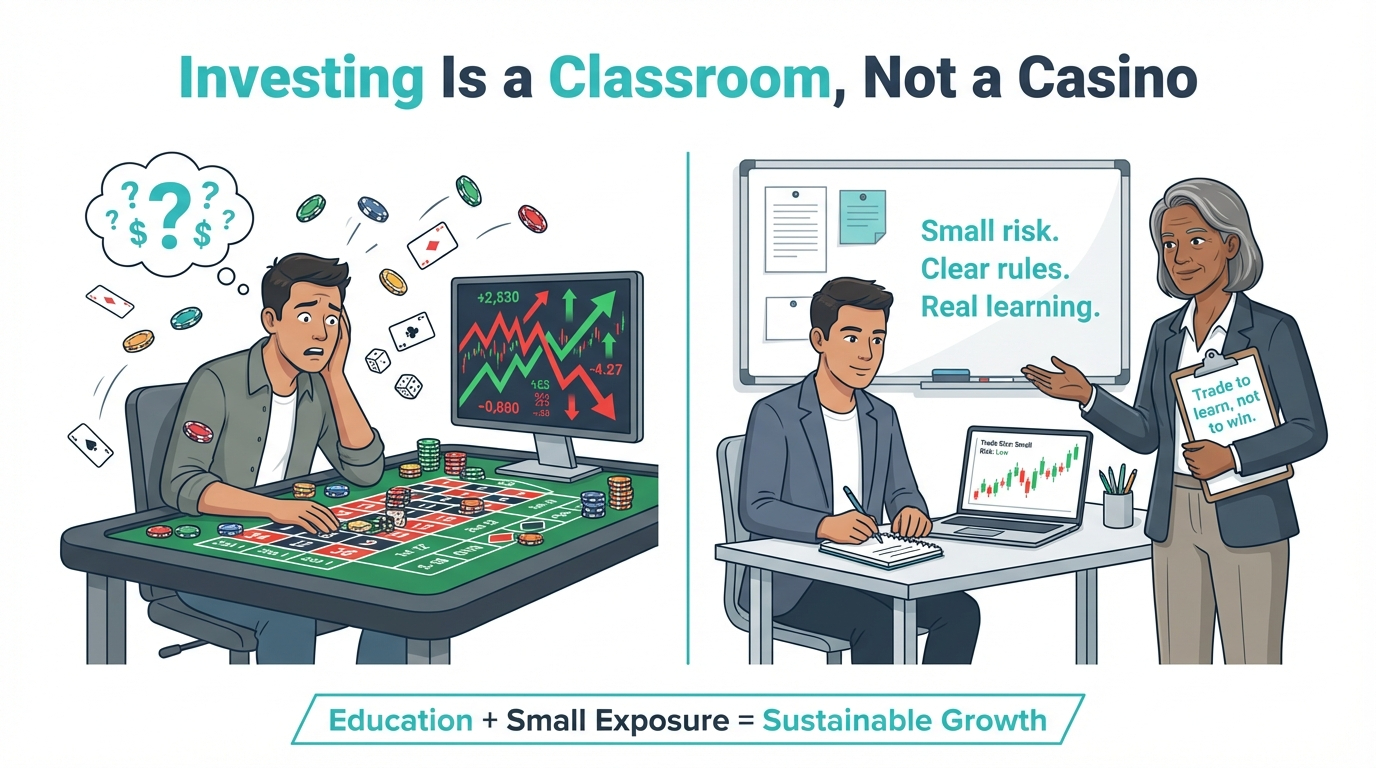
If you're looking to how to learn while investing, you're already thinking like a responsible newbie. You're looking to build your knowledge without taking unnecessary shortcuts. You're looking for a way to expand your knowledge and skills without risking excessive capital.
Learning while investing is like using the real market as your classroom, not as a casino. It means making small, calculated trades and learning as much as possible about risk, execution, the underlying mindset, and the overall setup.
When you do it right, every trade becomes an opportunity for feedback rather than a source of pressure, letting you learn from each trade and improve your strategies over time.
How to Learn While Investing: Why Learning and Investing Go Together
Many beginners believe they must fully understand everything before they begin investing. Learning and investing are inextricably linked.
This relationship is explained in What Is Investing? It explains that investing is about participating in the markets with a plan, not gambling blindly, which points us in the right direction. Experience really brings it to life.
Why Experience Is Essential for Real Understanding
Books and videos explain the theory. Market experience helps build practical understanding. Until you make a trade, ideas like risk, uncertainty, and discipline remain somewhat vague. Practical experience can help turn theoretical knowledge into understanding. That's why learning should involve hands-on practice, not just reading.
Begin with Small Steps, Not Unrealistic Expectations
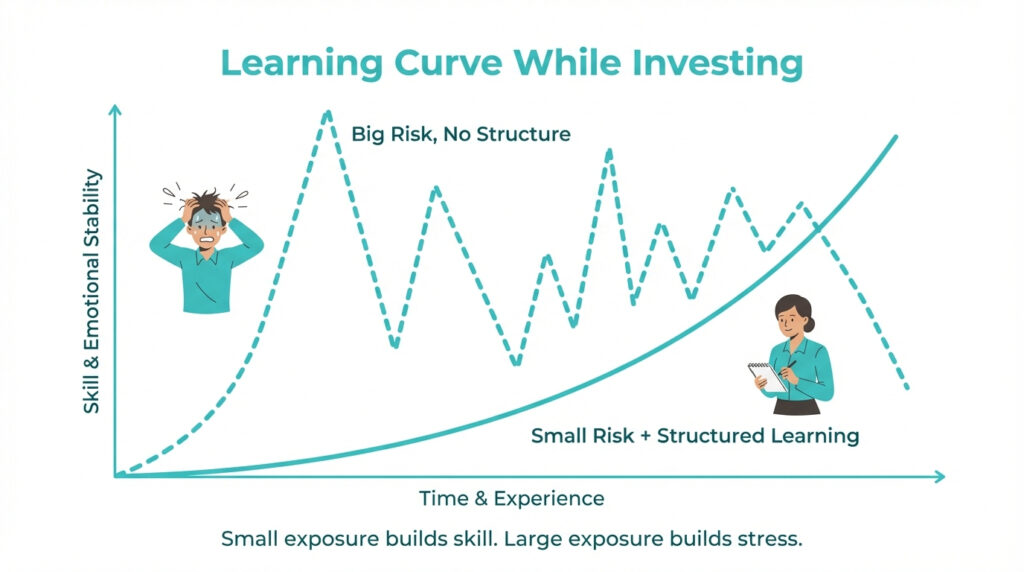
One approach is to start small, based on your financial circumstances and risk tolerance.
This method aligns with the idea in Why Starting Small Is Smart?, showing that gradual exposure may reduce emotional pressure as you gain experience. Small trades ease stress and clarify your approach.
Use Structure Before Using Capital
Learning while investing needs some guidelines. You need entry logic, exit logic, and risk limits before you put money on the line.
Trade Mechanics & Execution Basics explains trades as orders, not forecasts. Without structure, experience becomes random rather than educational, missing opportunities to learn and improve trading strategies and hindering a trader's ability to develop effective techniques and make informed decisions in future trades.
Treat Every Trade as a Lesson, Not a Verdict
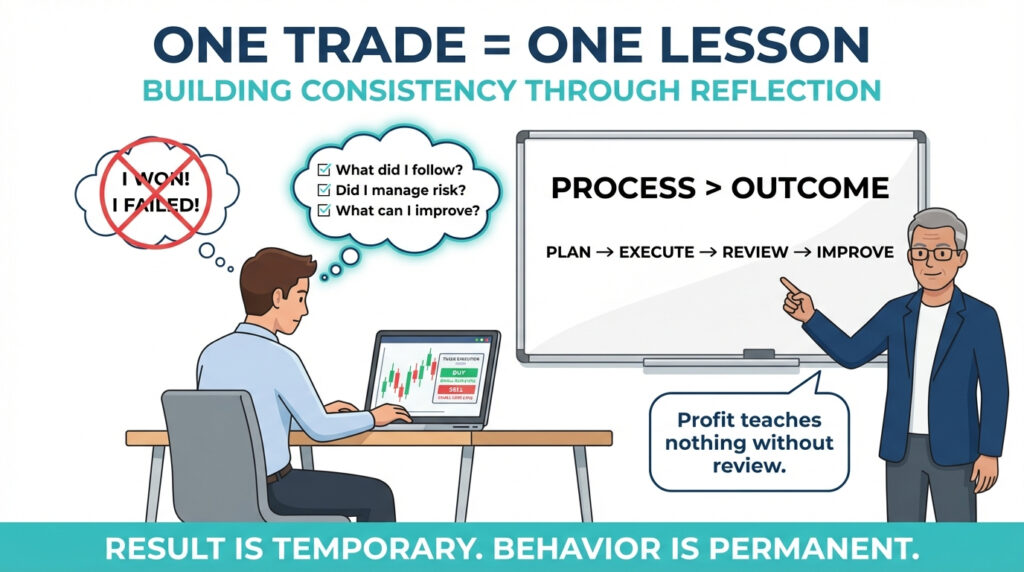
Profit doesn't always equal success. Not every loss signals failure. Each trade should be reviewed to understand the decisions behind it
- Did you follow your rules?
- Did you manage risk?
- Did emotions interfere?
This learning approach aligns with the idea in What Is Profit and Loss? that results are feedback, not just personal opinions.
Why Psychology Is Part of Learning
Markets test emotional control more than intelligence. When money is involved, you'll naturally see fear, greed, hesitation, and overconfidence pop up. Grasping this is crucial, and the article Why Emotions Affect Investment Decisions? shows that our emotional reactions are just part of being human when we face uncertainty.
Balance Theory with Practical Experience
Studying and implementing your plans at the same time is crucial to investing.
Study gives direction. Practice gives realism. The VARIANSE Academy education page clearly lays out this balanced approach, blending structured learning paths with theory, psychology, and execution discipline.
How Can a Demo Environment Support Learning
Before putting actual money on the line, many beginners benefit from practicing in a demo environment.
You've got a safe place to see how prices move, how trades go down, and how you feel about it, all without risking your cash, right on the VARIANSE trading account page. This can help beginners become familiar with platform features and order execution.
Understand Risk Before You Try to Grow Capital
Investment risk involves uncertainty, including the possibility of financial loss. This difference is clarified in the link What Does Investment Risk Really Mean?, where we discuss probabilities rather than guarantees. Understanding the market's unpredictable nature is key before you try to profit from it.
Before committing real money, understand the possibility of financial loss. The Financial Conduct Authority (FCA) explains investment risk and returns, helping beginners understand why they should always consider potential returns alongside risk.
What Can Trading Costs Teach You
When you start trading, you'll see spreads, fees, and execution friction
This reality is laid out in What Are Spreads, Fees, and Commissions in Trading? where costs are clearly displayed as part of market access, not as a hidden penalty. Getting to grips with them adds realism and discipline.
How Can Your Trading Account Support Learning
A trading account reflects exposure, behavior, and responsibility.
The link What Is a Trading Account? lays out this idea, discussing balance and equity as measures of risk, not performance. Learning while investing turns your account into a feedback loop, not just a scoreboard.
Conclusion: How To Learn While Investing
Learning while investing isn't about risking money quickly. It's all about managing market exposure carefully.
Learning while investing means:
- Starting small
- Using structure
- Treating mistakes as lessons
- Letting experience reinforce education
When you get it right, investing is like a classroom. Capital turns into a learning resource. Progress accelerates, then steadies, becomes calm, and becomes sustainable.








