
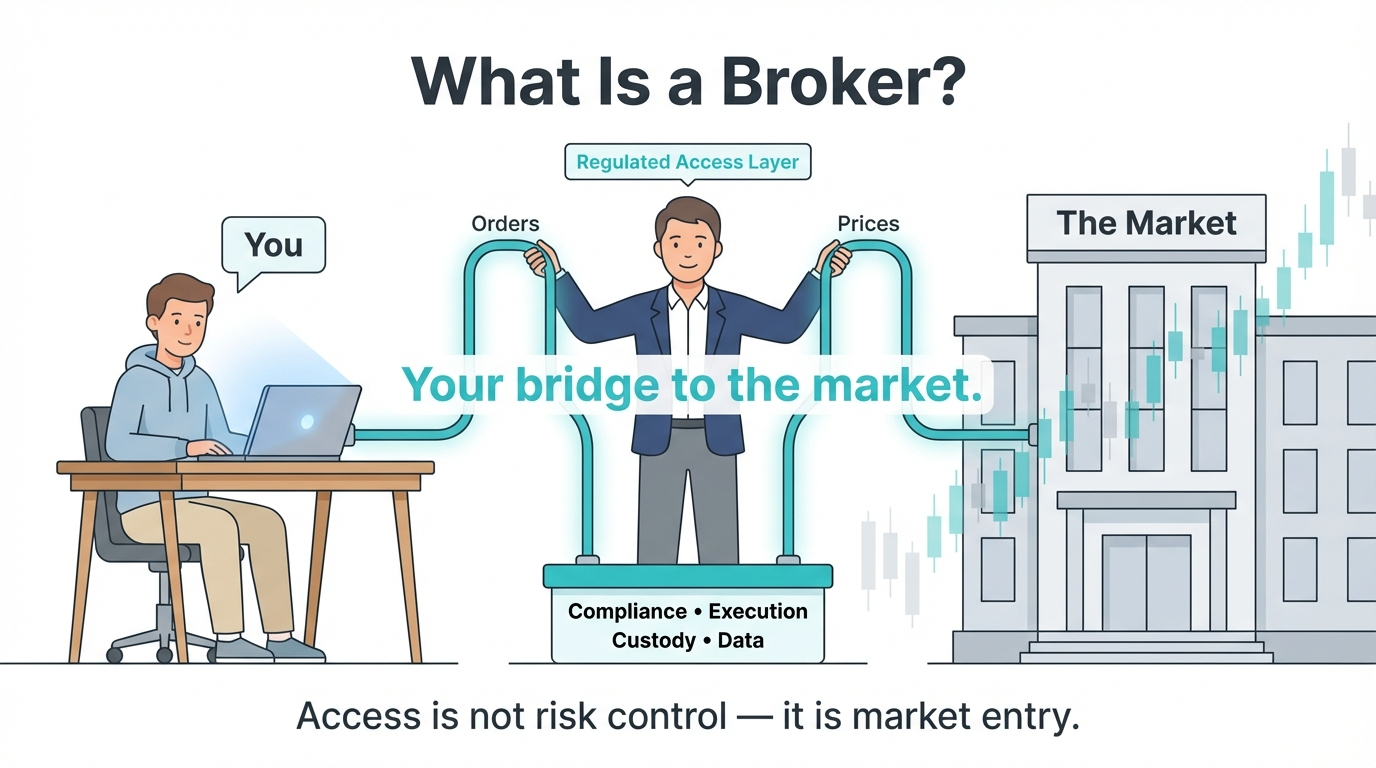
What is a broker and how does it work? A broker is a financial services firm that connects traders and investors to financial markets. Most retail investors access exchanges and trading services through brokers or other authorised intermediaries.
For beginners, a broker may appear to be little more than a trading platform, but their responsibilities extend beyond providing an app or website. This company offers the tools you need to manage your account, provide pricing, receive and process orders, and facilitate trade execution. Additionally, they handle the legal aspects that determine the regulatory protections that may apply to your account.
What a Broker Is in Simple Terms
A broker is a firm that opens your trading or investment account and allows you to buy and sell financial products. This could mean investing in shares, ETFs, currencies, commodities, indices and other financial instruments, or other financial products, depending on the broker's offerings and applicable laws.
If you're piecing together the bigger picture of how markets work and who's involved, the environment where brokers operate is detailed in 🔗 Financial Market Foundations, where market structure and participation are explained as a system rather than a mystery.
What Are the Main Functions of a Broker
Most markets aren't set up for people toaccess trading venues and settlement infrastructure directly. Exchanges, liquidity providers, clearing arrangements, and custody systems require membership, capital requirements, and operational controls that are impractical for retail participants.
This is why brokers exist: they've combined access, compliance, technology, and operational expertise into a service that lets people enter markets with less capital and a simpler setup.
Why Brokers Exist (And Why You Can’t Usually “Trade the Market” Directly)
At a practical level, a broker typically does four things: opens and maintains your account, provides a trading interface (or connects you via an API), delivers pricing and market data, and routes your orders to execution venues or liquidity providers.
To really gethow a trading instruction becomes an executed order (not just a click), the way orders are handled and how they play out ties in with Trade Mechanics & Execution Basics, which shows how pricing, fills, and execution quality affect the results
How Does a Broker Work When You Place a Trade?
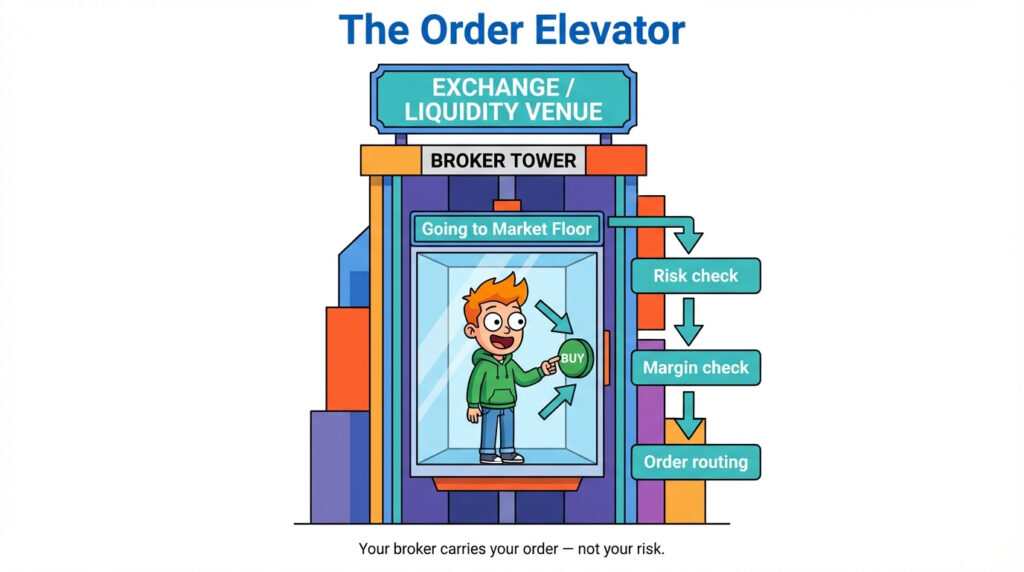
When you select buy or sell, you submit an order through your trading platform. The broker then processes the order based on your account permissions, available margin/cash, product rules, and execution routing.
From that point, the order is matched or filled based on the instrument type. When dealing with exchange-traded products, this may involve sending them to an exchange. In over-the-counter markets like FX, executing a trade may involve liquidity providers and a dealer or aggregator model. No matter what, the broker processes your instructions in accordance with its execution policy and applicable regulation, all within a set of clear guidelines.
Broker vs Exchange vs Liquidity Provider: What's the Difference
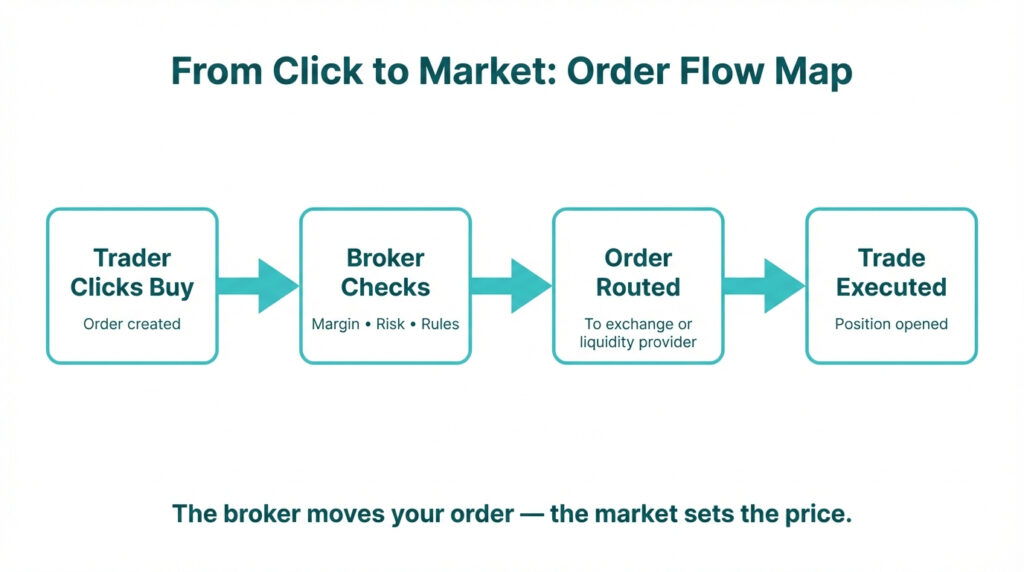
A broker isn't the market itself. A marketplace is where buyers and sellers come together to follow set guidelines. A liquidity provider typically sets prices and executes trades, especially in over-the-counter markets such as foreign exchange.
Many newcomers confuse these roles because the front-end platform seems to represent the market. The exchange/liquidity venue is where price-setting and matching occur, and the broker is the gateway to participation.
How Do Brokers Make Money
Brokers make money from a mix of spreads, commissions, fees for loan rollovers, and service charges, which can vary by product and account type. The broker's cost structure can significantly influence trading results in how much you need to break even and how well you'll do in the long run, especially when you're trading actively.
That's why traders may experience losses even when following a structured strategy: expenses and habits stack up the longer you stick with them. The article How People Lose Money in Investing and How to Avoid It dives into the psychological aspects of losing money, and Common Investing Mistakes Beginners Make and How to Avoid Them lists the usual slip-ups and how to steer clear.
How Does Broker Regulation Protect Clients
A broker’s regulation determines the rules it must follow, including how it handles client funds, provides disclosures, issues risk warnings, establishes complaint procedures, and adheres to conduct standards.
In the UK, you can check out a broker's licence and get advice on financial matters by looking at the Financial Conduct Authority's website. For U.S. definitions and regulatory oversight, you can find foundational broker guidance on the Securities and Exchange Commission (SEC).
For beginners, regulatory compliance is not “extra paperwork". Regulation is the framework that shapes trust, transparency, and recourse when things go wrong.
Brokers and Risk: Why Access Does Not Equal Safety
A broker can give you entry, but they can't take away the risk that comes with the market. Market risk is basically the unpredictability of results, and it's there no matter how you design your platform. This distinction is essential because beginners sometimes assume “good technology” means “low risk", which is not true.
If you're looking to get a clear picture of what investment risk is all about, you'll find the definition in the article What Does investment Risk Really Mean? and the fact that uncertainty is a given in investments is discussed in Why All Investments Carry Some Risk. Effective risk management can help limit exposure, but it cannot eliminate the possibility of loss instead of something to worry about
Why Emotions Show Up Faster Once You Have Broker Access
Once you've got a broker account, you're in the market right away. Prices shift instantly, and your profit or loss updates in real time. That speed can set off fear, greed, and impulse, even in individuals who normally consider themselves disciplined.
That's why psychology needs to be integrated into the main part of the process, not just tacked on at the end. If you're looking to get a clear picture of how emotions play into investment choices, check out this link: Why Emotions Affect Investment Decisions?
How Can Beginners Learn Trading with a Demo Account
New learners pick up skills more quickly when they can watch others demonstrate them for free. A structured setting lets you hone your skills in organising, sizing up, and staying disciplined without making every slip-up a pricey mistake.
A good place to start is with a demo account on the VARIANSE trading page, and the learning steps are laid out clearly on the VARIANSE Academy education page to keep your study on track rather than wandering.
Conclusion: What Is a Broker and How Does It Work
What is a broker, and how does it work? A broker connects traders and investors to financial markets by providing access to trading platforms, account services, pricing and order execution. However, brokers do more than facilitate buying and selling. Their execution models, trading costs and regulatory obligations can influence the overall trading experience.
Understanding how brokers operate can help beginners compare their options, recognise potential risks and make more informed decisions.
Before choosing a broker, take time to understand its regulatory status, trading conditions, fees and available financial products. A reliable trading experience begins with knowing how the system works, not simply knowing when to buy or sell.