


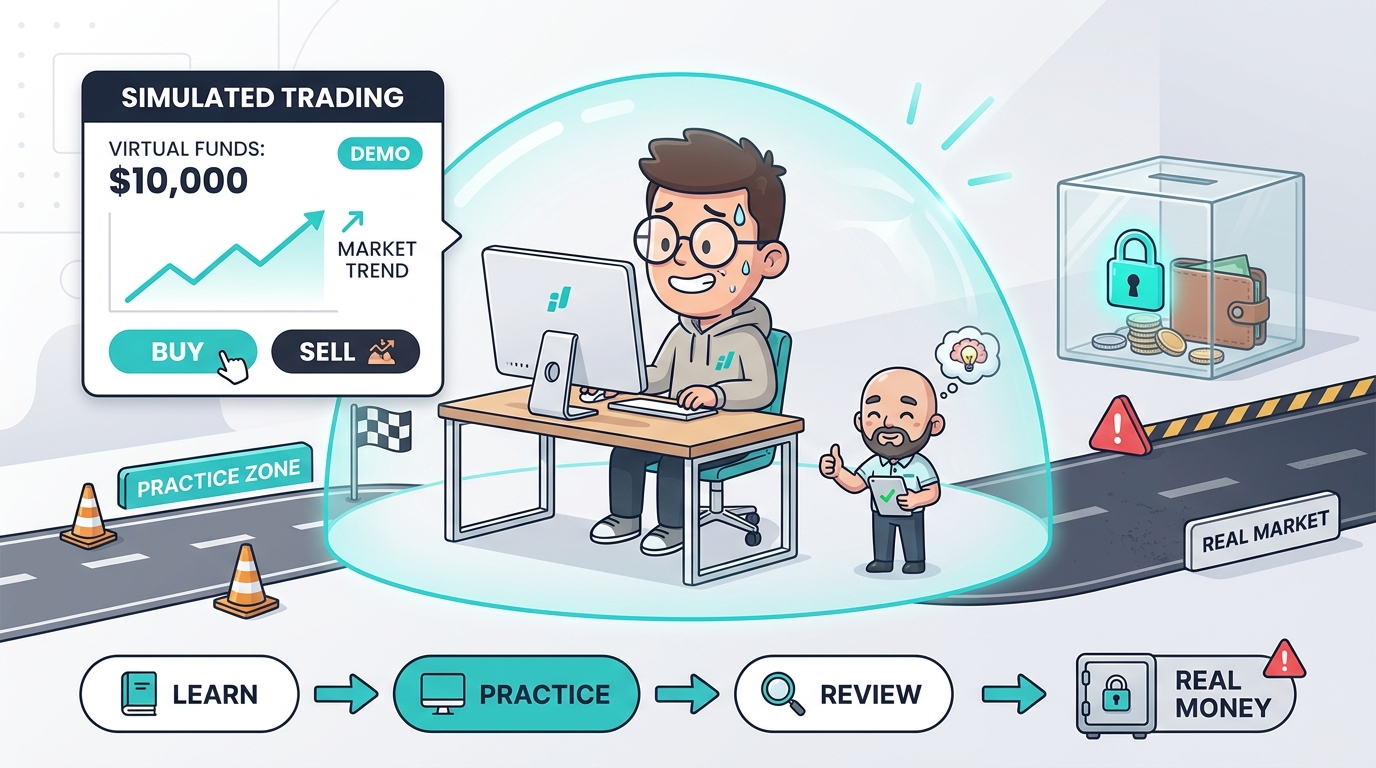
Practicing investing without risk isn't about avoiding responsibility. It's all about Developing practical skills before investing real money. Beginners can lose money for many reasons, including leverage, market volatility and poor risk management. They lose cash because they start learning when they're already stressed out.
A structured practice phase lets you Demo accounts may use live or delayed market data, but execution is simulated., execute orders, and see your profits and losses without every slip costing you big. When you nail it, practice turns into a solid training plan, not just a game.
What “Practice Investing Without Risk” Actually Means
Practicing without risk usually means using a simulated environment where Demo pricing and execution may differ from live trading, but the cash is just pretend.
This isn't "fake trading." It's more like structured learning. You get to know the market's rhythm, see how costs pop up, and watch how your choices shape things, all without the sting of actual losses.
Why Should Beginners Practise Before Investing Real Money
Practising with simulated funds allows beginners to become familiar with financial markets before exposing their savings to investment risk.
During this stage, learners can explore how different assets behave, understand basic trading instructions, and observe how market movements affect portfolio values.
Practice also lets you identify mistakes and build more structured decision-making habits.
This concept is fleshed out in the link Why Beginners Should Practice First Before Trading Real Money?, which emphasises that confidence grows with practice rather than just wishful thinking.
The Core Tool: Demo Trading Accounts
A demo trading account is a simulated environment that allows users to practise trading with virtual funds.
Depending on the platform, beginners may be able to explore financial instruments, place market and pending orders, monitor open positions and review simulated profits and losses.
Demo accounts can help users become familiar with trading platform features and basic execution processes.
However, demo trading does not always replicate live market liquidity, slippage, transaction costs or the psychological pressure associated with real financial exposure.
This foundation is laid out in the section titled What Is a Demo Trading Account?, covering what demo accounts can show you and what they can't
What You Should Practise Inside a Demo Account
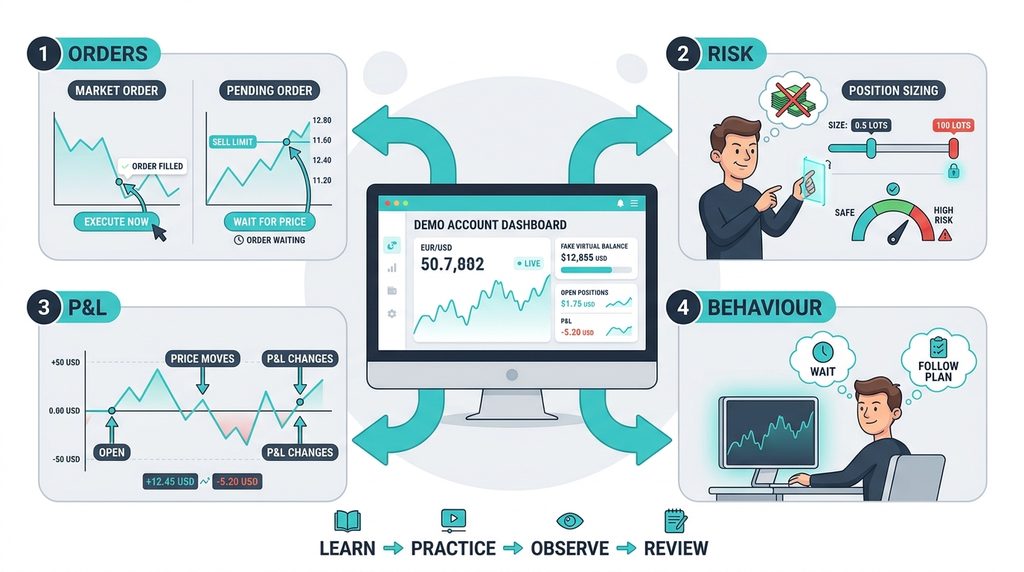
Practice becomes more effective when you have specific goals in mind. You're not just swapping things; you're honing your abilities.
Order placement and execution behavior
It's important to understand the process of placing trades, how orders get filled, and why execution isn't always flawless.
This execution logic ties into our trade mechanics and execution basics hub and gets solidified through demo practice.
Risk Management and Position Sizing
If your demo position sizes aren't realistic, you're getting the wrong lessons. Practice should mirror the risk level you'd take in real life. The goal should be practising consistent risk management, not expecting stable results, not excitement.
Understanding Profit and Loss
Monitoring your profit and loss (P&L) allows you to understand how your results align and how quickly they can change. This practice can significantly reduce feelings of panic and overconfidence in the future.
This is explained in the section What Is Profit and Loss?
Reviewing Trading Decisions
Keep a record of trade entries, exits, reasons for taking positions and whether predefined rules were followed.
Demo Trading vs Real Trading: What Changes
Demo and live trading may offer similar platform interfaces and financial instruments, but important differences remain.
Demo accounts use simulated funds, meaning trading losses do not reduce the user's real capital.
Live trading involves actual financial exposure, which can introduce emotional pressures such as fear, hesitation and overconfidence.
Execution conditions may also differ. Live orders can be affected by market liquidity, slippage, price gaps and trading costs.
If you're curious about why emotions get all fired up when money's involved, this mechanism is explained in Why Emotions Affect Investment Decisions?
Common Demo Trading Mistakes That Waste the Practice Phase
Depending on how you use it, a demo account can either help you settle into a routine or become a detrimental habit.
The link Common Demo Trading Mistakes Beginners Must Avoid Before Going Live covers the key mistakes to watch out for, such as acting like it's a game, using too much leverage, and trading too frequently.
How Long Should Beginners Practise Without Real Money?
There is no universal timeframe for practising with simulated funds.
Some beginners may need more time to understand order types, trading costs and risk management, while others may progress at a different pace.
Rather than focusing only on the number of days or weeks, learners can evaluate whether they understand their chosen financial instruments, follow a structured process and recognise potential risks.
Consistent demo performance may demonstrate familiarity with a trading approach, but it does not establish that the same results will occur in live markets.
There is also no obligation to begin trading with real money.
This is explained in How Long Should Beginners Use Demo Accounts Before Trading Live?, where readiness is measured through consistency and rule-following.
When Should Beginners Consider Trading With Real Money?
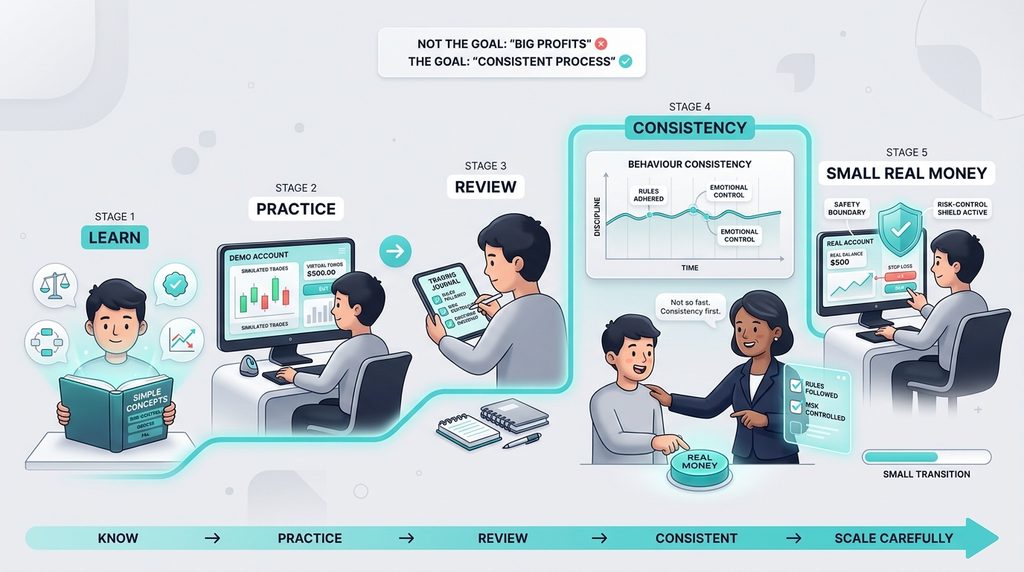
Moving from simulated trading to real-money trading is a personal financial decision rather than a required step.
Before considering the transition, beginners should understand the risks of their chosen instruments, the potential for financial losses and the costs associated with trading.
They should also have a realistic financial plan and avoid committing money needed for essential expenses.
If someone chooses to begin trading with real capital, limiting initial exposure and following predefined risk management rules may help control potential losses.
The Financial Conduct Authority (FCA) provides independent educational guidance on investment risks and making informed financial decisions.
This decision framework is laid out in a guide titled When to Switch to Real Money Trading?
A Beginner-Friendly Practice Path
A smart way to learn is to mix teaching with some practice.
- Learn the concept (risk, orders, P&L).
- Practice the concept in a demo environment.
- Review the results and behaviour patterns.
- Repeat until decisions become calm and consistent.
A controlled practice environment is available via the VARIANSE trading account page, and structured progression is organized on the VARIANSE Academy education page.
Conclusion: How Can Beginners Practise Investing Without Risk?
Practising investing without real-money exposure allows beginners to explore financial markets, understand trading tools and develop practical decision-making skills.
Demo accounts and virtual investment portfolios provide opportunities to learn about market movements, order execution, risk management and simulated profits and losses.
However, simulated trading does not guarantee success in live markets, where execution conditions, costs and emotional pressures may differ.
The goal of practice should be to build knowledge, improve consistency and understand financial risk rather than chase simulated profits.
Whether beginners eventually choose to invest real money or continue learning, a structured approach can help them make more informed financial decisions.








