


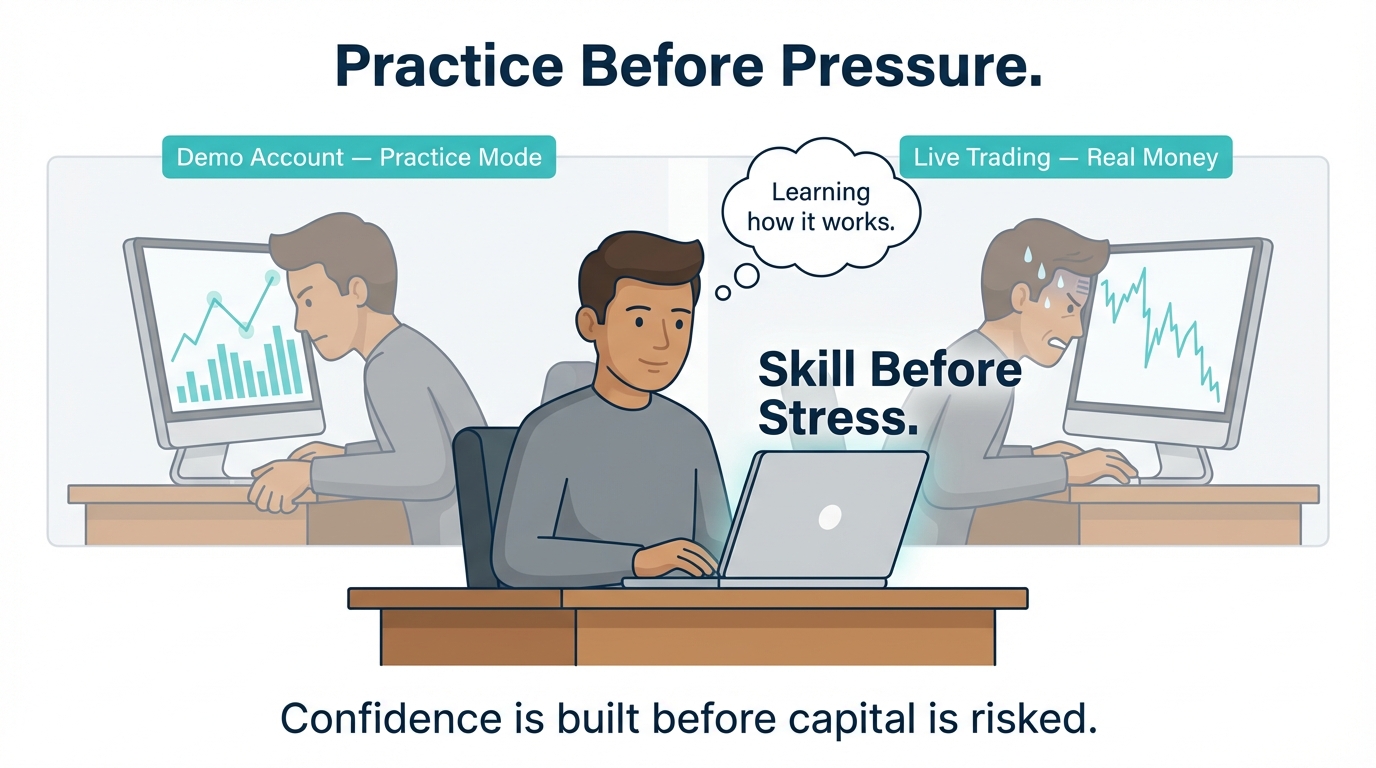
why beginners should practice first before trading real money? Trading involves financial risk, and beginners often face challenges when navigating unfamiliar markets, placing orders and managing trading decisions.
Practice helps beginners gain experience before risking real money. Making mistakes in trading is just part of the learning curve. Practising first turns blunders into learning opportunities rather than costly errors. It boosts self-assurance, mastery, and comprehension in a secure setting.
Why Beginners Should Practise First Before Trading Real Money
Markets move swiftly, leaving newbies completely overwhelmed by rapid price fluctuations. In a practice setting, you can observe price movements Demo trading may reduce financial pressure but does not eliminate emotions.
That's where ideas turn into real-life action. When you actually see things like orders, spreads, and volatility, they're not just ideas anymore.
Specify that simulated trading does not expose real trading capital to losses in a simulated environment by visiting the VARIANSE trading account page.
Practice Separates Curiosity From Commitment
Many people are intrigued by trading, but it's not for everyone because it can be an emotional rollercoaster. Practice reveals if trading aligns with your thinking style, your ability to wait, and your self-control.
This aligns with the idea in What Is Investing? that having a solid plan and being ready are more important than just getting excited.
Practice Helps Beginners Understand Trading Orders
Understanding buy and sell orders, market orders and pending orders is an important part of learning how trading works.
A demo account allows beginners to practise placing orders, opening and closing positions, and monitoring simulated trading results.
However, demo execution may differ from live trading because of liquidity conditions, slippage and other market factors.
The technical side of this process is structured in Trade Mechanics & Execution Basics, where orders are explained as mechanical instructions rather than guesses.
Practice Teaches How Orders Really Work
Trading decisions can be influenced by emotions such as fear, excitement, frustration and overconfidence.
A simulated trading environment allows beginners to practise following a trading plan, reviewing decisions and avoiding impulsive actions. However, trading with virtual funds does not fully reproduce the emotional pressure of risking real money.
The psychology behind these reactions is explained in the article Why Emotions Affect Investment Decisions?
Practice Reveals the True Cost of Trading
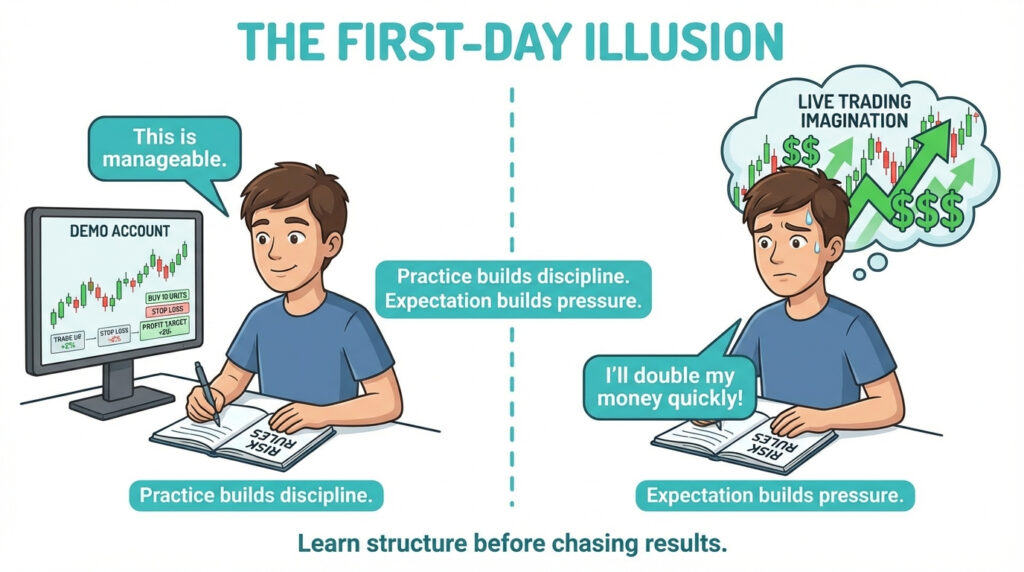
These costs can be understood through education and platform disclosures until you see their impact on results. Practice allows you to understand break-even levels and real profitability.
This cost structure is laid out in the link What Are Spreads, Fees, and Commissions?, where trading is depicted as a service you pay for
Practice Builds Discipline Before Risk
Too absolute. Practice can help develop disciplined habits. It needs to be trained before any pressure is applied.
A practice environment helps you get used to thinking ahead with trades rather than relying on gut feelings.
Structured learning paths are available on the VARIANSE Academy education page, where discipline is built up before you get into the real world of business.
Practice Helps Beginners Understand Trading Risk
Risk includes uncertainty and the possibility of financial loss. A simulated trading environment allows beginners to explore how market movements, position sizes, and leverage can affect potential trading outcomes.
Beginners can also practise using risk management tools and evaluating the consequences of different trading decisions. However, demo trading cannot eliminate the risks associated with live trading. For a deeper explanation, read What Does Investment Risk Really Mean?
Why Professional Traders Practice Too
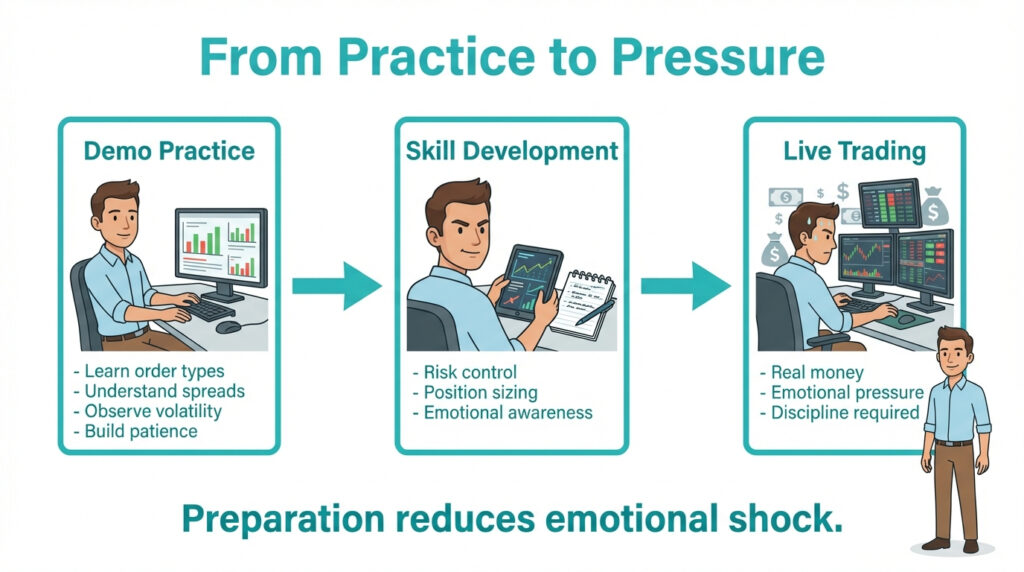
Even seasoned traders try out strategies before using them in real-world trading. Practice isn't just for newbies. Use “Experienced traders may use demo accounts, simulations and backtesting.”
Before committing real money, beginners should understand the potential for financial losses and consider their personal risk tolerance. The Financial Conduct Authority (FCA) provides independent educational guidance on investment risks and returns.
Conclusion: Why Beginners Should Practice First
Practising before trading with real money can help beginners understand market movements, trading orders, costs and risk management.
Demo trading provides an opportunity to develop practical skills, review mistakes and build familiarity with trading platforms without risking real trading capital.
However, simulated trading cannot fully reproduce live execution conditions or the psychological pressure associated with financial losses.
By combining structured education with practical experience, beginners can develop a stronger foundation for making informed trading decisions.








