
Common demo trading mistakes can prevent beginners from making the most of their practice accounts. Although demo trading allows users to explore financial markets using virtual funds, unrealistic trading habits can reduce its educational value.
Some beginners treat demo accounts like games, take excessively large positions or focus entirely on simulated profits. These behaviours may create unrealistic expectations about real-money trading.
A more structured approach involves practising order execution, understanding trading costs, managing risk and reviewing decisions.
This guide explores common demo trading mistakes, why they matter and how beginners can develop more effective trading habits without risking real trading capital.
Treating the Demo Trading Account Like a Game
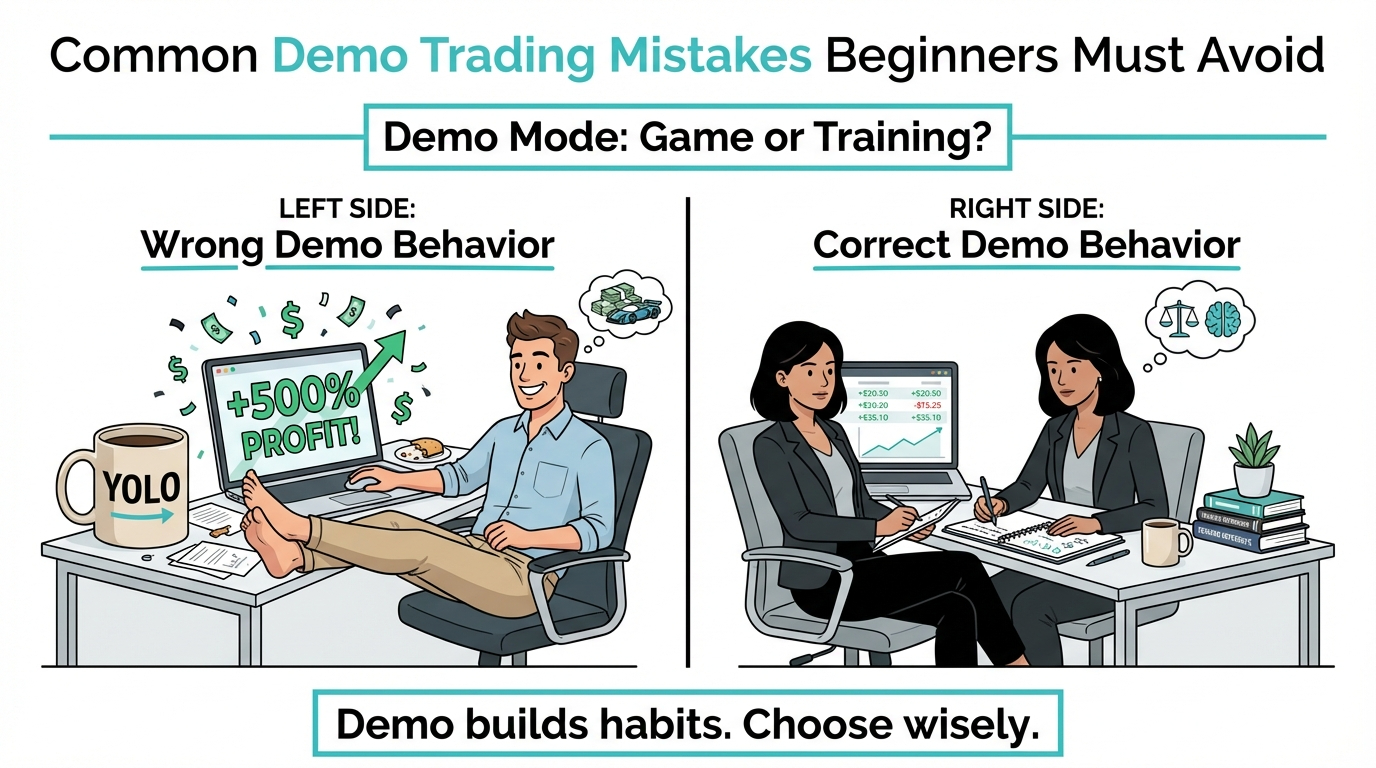
One common demo trading mistake is treating virtual funds as though they have no practical significance.
Because simulated losses do not affect real capital, beginners may take unnecessary risks, open excessively large positions or ignore their trading plans.
These habits can create unrealistic expectations about live trading.
To make practice more meaningful, beginners can set realistic account balances, establish trading rules and review their decisions as though they were managing real capital.
Using Unrealistically Large Position Sizes
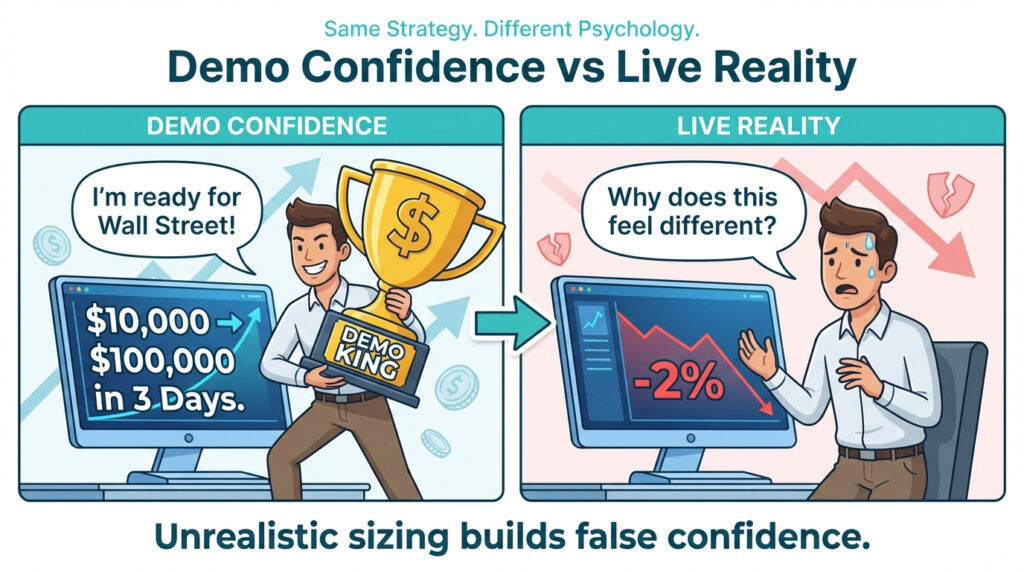
Beginners may open excessively large positions in demo accounts because virtual funds do not represent an immediate financial loss.
However, position size directly affects a trade's financial exposure and potential profit or loss.
Practising with realistic position sizes can help beginners understand how market movements, leverage and risk limits affect trading outcomes.
This slip-up ties back to the concept of leverage, which you can get a handle on in the article Understanding Leverage in Simple Terms
Ignoring Risk Management
Another common mistake is placing simulated trades without considering potential losses.
Beginners may overlook position sizing, leverage, stop-loss orders and overall account exposure because their demo balance is virtual. Practising risk management can help users understand how different trading decisions affect simulated outcomes.
In What Does Investment Risk Really Mean?, they stress that uncertainty is a part of investing, but you can handle it.
Focusing Only on Profit Instead of Process
Large simulated profits do not necessarily indicate effective trading skills. Beginners may generate positive results through excessive leverage, unusually large positions or favourable short-term market movements.
Rather than focusing entirely on simulated returns, traders can evaluate whether they follow a predefined plan, manage risk and review their decisions consistently.
This idea ties into how investing is structured in What Is Investing?, where staying consistent trumps the thrill.
Overtrading and Chasing Every Price Move
Overtrading occurs when traders place excessive or unnecessary trades, often without following a clear strategy.
In demo accounts, the absence of real financial consequences may encourage beginners to trade impulsively or react to every price movement. This behaviour can reduce the value of practice by reinforcing inconsistent decision-making.
The reasons for this behaviour are outlined in the article Why Emotions Affect Investment Decisions?
Skipping Trade Documentation
Failing to record demo trades makes it hard to spot recurring mistakes and evaluate your decisions.
A trading journal can help beginners track:
- Reasons for entering and exiting trades.
- Position sizes and risk levels.
- Trading costs and simulated outcomes.
- Whether trading rules were followed.
- Emotional reactions and lessons learned.
Reviewing this information regularly can help beginners recognize patterns and improve their decision-making process.
Not Practicing Real Market Conditions
Beginners may become familiar with only one type of market environment, such as periods of relatively stable prices.
Observing different conditions, including increased volatility and changing price trends, can help users understand how markets behave.
However, demo accounts may not fully reproduce live trading conditions, including liquidity constraints, slippage or order rejections.
Moving to Live Trading Without Understanding the Risks
A few successful demo trades do not necessarily indicate that someone is prepared to trade with real money.
Before considering live trading, beginners should understand order execution, position sizing, leverage, trading costs and the possibility of financial losses.
They should also recognise that emotions and execution conditions may differ significantly between demo and live accounts.
Moving to real-money trading is optional and should depend on individual financial circumstances, risk tolerance and understanding of the products involved.
Before trading with real money, beginners should understand the potential financial risks associated with leveraged products. The Financial Conduct Authority (FCA) provides independent information about contracts for difference (CFDs), including their risks and the importance of understanding these products before trading.
Variance Academy supports its learning journey with a well-structured educational approach on its website.
Why Demo Trading Is Part of Trading Education
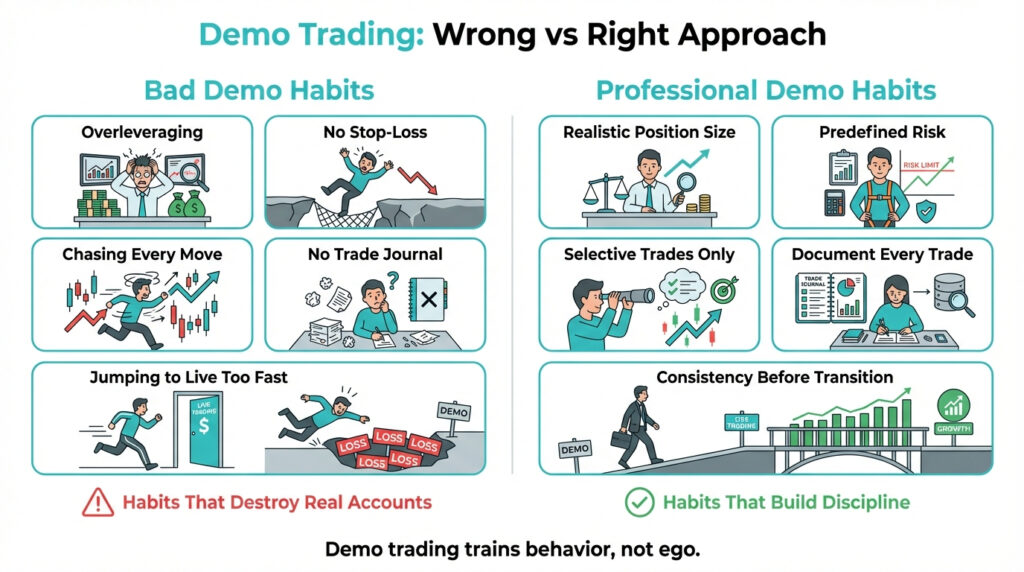
Demo trading provides an opportunity to apply financial concepts in a simulated environment.
Beginners can practise order placement, observe market movements, explore trading costs and develop risk management habits without exposing real capital to trading losses.
However, practical experience should be combined with structured education and an understanding of the limitations of simulated trading.
Conclusion: Why Common Demo Trading Mistakes Matter
Common demo trading mistakes can reduce the educational value of practising with virtual funds.
Treating demo accounts like games, ignoring risk management, overtrading and focusing only on simulated profits may encourage unrealistic trading habits.
A more structured approach involves following a trading plan, reviewing decisions, understanding trading costs and practising realistic position sizing.
However, even consistent demo trading cannot fully reproduce live market execution conditions or the emotional pressure of risking real money.