


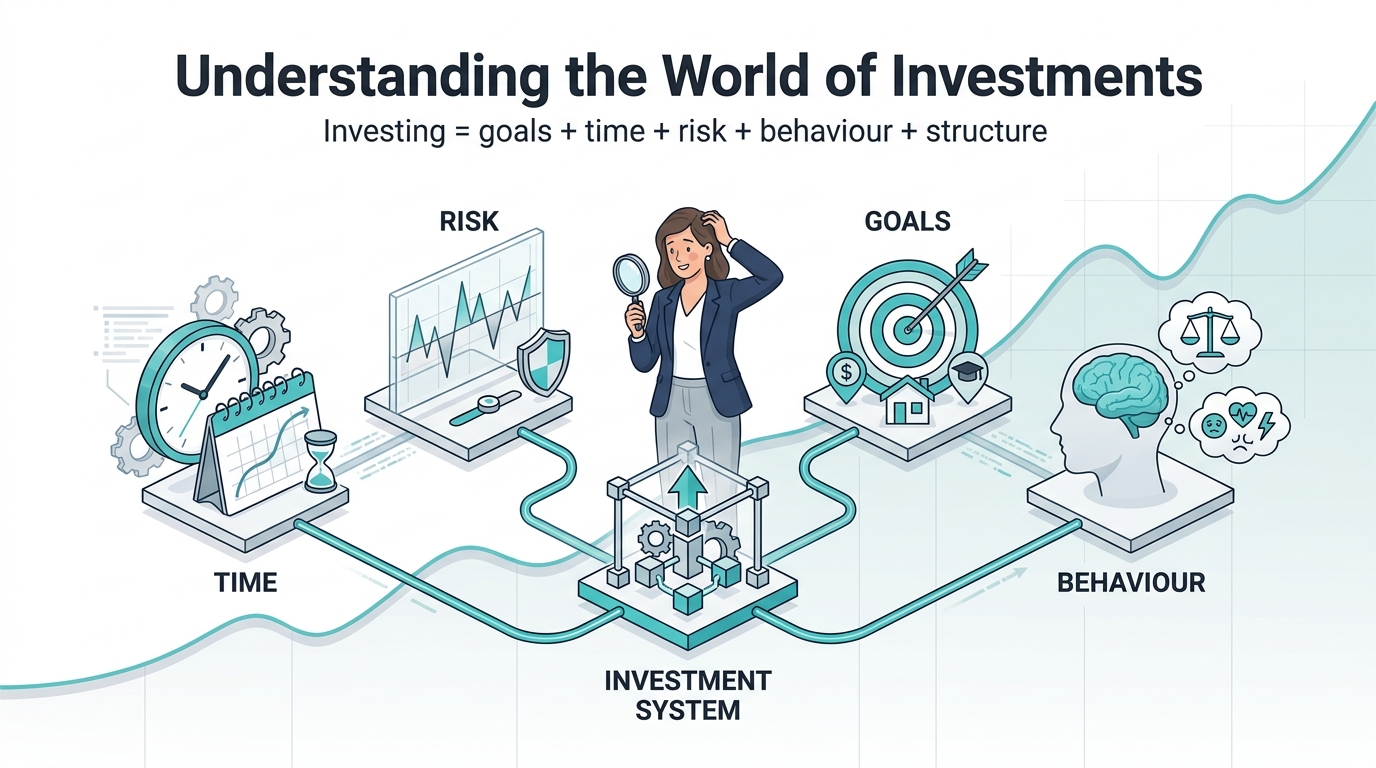
If you're new to investing, Understanding the World of Investments builds your knowledge before you venture into potentially risky areas. Investing isn't a one-time event or a quick decision. This system consists of objectives, a timeline, potential hazards, and actions.
This parent guide gives you an overall view of investing: what it entails, why people get involved, how risk is managed, and why newbies often end up losing money. You'll also find helpful links to dive deeper into each subject, keeping your learning organized instead of scattered.
Understanding the World of Investments. What Is Investing and How Does It Work in Real Life?
Investing means putting your money into assets like stocks or real estate, expecting them to generate higher returns or compensate you over time. Investing involves taking risks to potentially increase your wealth, even though it may not be as secure as simply saving. This uncertainty is not an issue; it is simply the nature of the investment world. The basic idea is laid out in What Is Investing?
Why Do People Invest Money Beyond Making a Profit?
People put their cash to work because leaving it sitting doesn't keep it as strong as it could be. Inflation, rising living costs, and long-term goals make growth necessary, not optional. Investing is more than chasing large returns; it's about building a robust plan to support your future lifestyle.
In Why People Invest Money?, you'll find a thorough breakdown of what drives people to invest, how they safeguard against inflation, and how they keep a tight grip on their finances for the long haul.
Saving vs Investing: What's the Difference?
While newbies often struggle, most novices find it simple because they aren't lacking intelligence; they're simply confusing saving and investing. Saving is usually for keeping your finances steady and handling unexpected situations. Investing usually focuses on growing wealth over time. Investing your savings can easily trigger emotions because you're relying on that cash.
To understand how these two tools work together (not against each other), review Saving vs Investing.
How Does Investing Help Build Wealth Over Time?
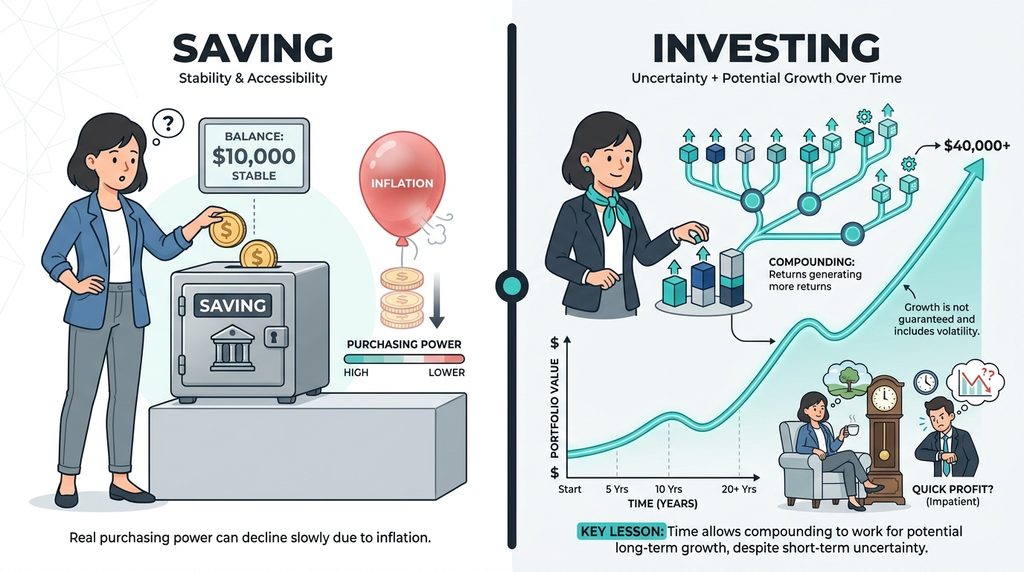
Long-term investing pays off because time lets compounding work its magic. Growth accelerates over time because returns keep piling up and generating more returns. A disciplined approach to investing often outperforms impulsive, emotionally driven strategies. If you're looking for a breakdown of how investing can help your wealth grow over time, check out How Investing Helps Grow Wealth Over Time?
The Reality of Risk: What It Means, Why It Exists, and Why It Matters?
Investing involves more than the chance of losing money. It's really about not knowing what will happen. Markets shift as economies evolve, people's expectations change, and people respond to new information. This discussion explains the connection between risk and reward: greater potential growth typically entails greater uncertainty.
A complete guide to understanding risk as uncertainty is found in the article What Does Investment Risk Really Mean? It's a beginner's guide, but it lays out the bigger idea that you can't dodge risk in Why All Investments Carry Some Risk? The CFA Institute highlights the risk–return trade-off in standard financial education.
Why Do Beginners Lose Money When Investing?
Before a newbie even realizes what's going on, they often make mistakes. Typical mistakes include making decisions based on emotions, setting unrealistic expectations, failing to assess risks accurately, and investing without a clear strategy. When someone dives into investing for a quick buck or gets caught up in the hype, they usually take on risks they don't fully grasp.
If you're looking for a clear-cut rundown of the usual blunders in investing, check out Common Investing Mistakes Beginners Make and How to Avoid Them. To get a clear picture of the "how losses happen" sequence, the behavior-based causes are detailed in How People Lose Money in Investing and How to Avoid It?
How Can Beginners Manage Investment Risk?
Risk management sets investing apart from wild guesses: choose the right level of exposure, diversify when needed, give it time to develop, and keep your choices free of emotional reactions. The goal is not to achieve success consistently. It's more important to avoid making decisions that could negatively impact our investments.
For a practical, beginner-friendly guide to cutting investment risk with a solid structure, see: How to Manage and Reduce Investment Risk Safely and Effectively? It also covers research-backed long-term stability ideas that the World Bank often cites.
The Financial Conduct Authority (FCA) also explains how diversification can help manage investment risk by reducing dependence on individual assets or markets.
How Do Emotions Affect Investment Decisions?
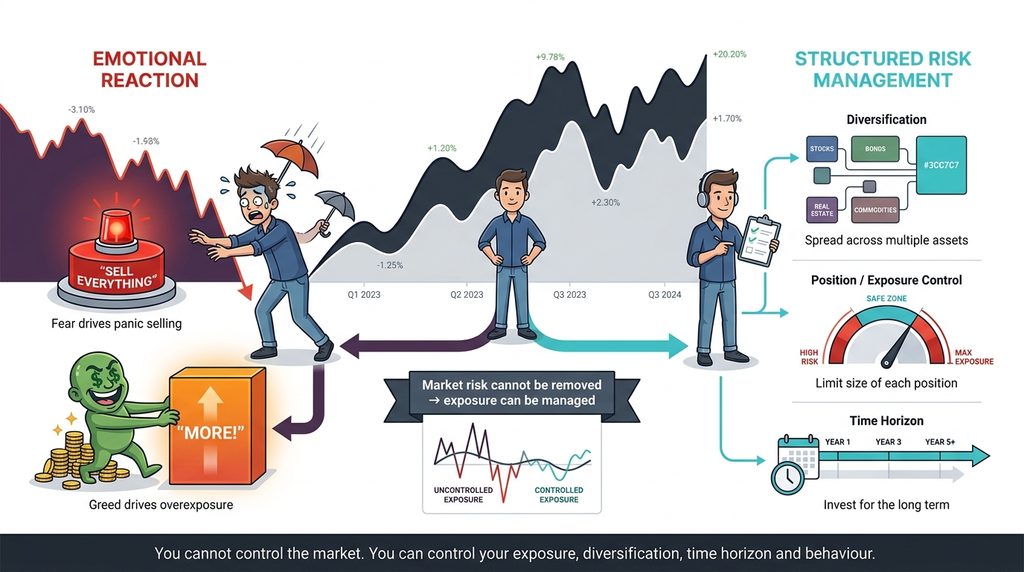
Even if a plan looks sound on paper, it may fail if emotions drive your actions. Fear prompts a panicked response. Greed leads to taking on too much risk. Being too sure of yourself can lead you to overlook the dangers. That's why psychology isn't just a side subject; it's central to investing.
The article Why Emotions Affect Investment Decisions? by Trading Psychology Explained offers a deep dive into fear, greed, bias, and emotional control. It's also crucial to understand how we make decisions when the future is uncertain.
How to Use This Pillar as a Step-by-Step Learning Path?
If you're eager to grasp the fundamentals of investing, start by understanding what it is and why it matters. Next, learn about the associated risks. Don't forget to cover common blunders and mindset issues. The goal isn't just to memorize terms; it's to build a framework that keeps you on track.
To explore these topics, VARIANSE Academy offers a step-by-step learning journey on its website, and you can practice trading in a secure environment on its VARIANSE trading account page, all without risking your money.
Conclusion: Building a Strong Foundation for Investing
Grasping the investment world isn't just about snagging the "best tip". Understanding the full picture matters: why people invest, how wealth accumulates, how risk shows up, why emotions shape decisions, and how structure keeps momentum going.
Treat investing like a skill you've honed with learning, experience, and sticking to a plan, and you'll stop panicking with every market swing and start moving through it with a cool, consistent strategy.








