


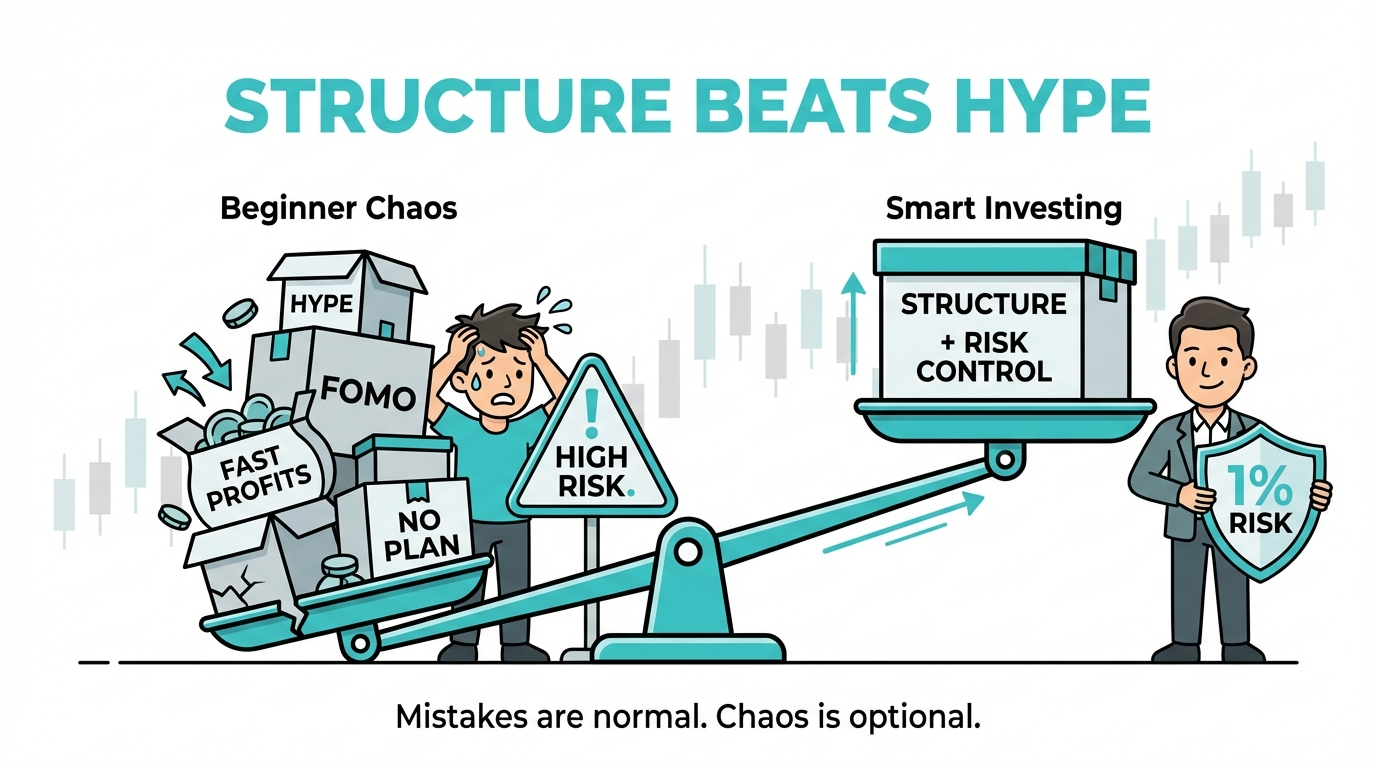
When people search for common investing mistakes beginners make, they're usually aiming to avoid losing money before they even start. You should trust your instincts. Most early investment setbacks come not from tough markets but from poor choices made without a clear plan, patience, or a solid understanding of investing.
Investing isn't just about quick wins; it requires knowledge, patience, and discipline. Mistakes are part of the learning process, but if you keep making the same ones, you probably don't grasp fundamental investment principles. Once beginners learn to spot mistakes, they can approach investing with greater confidence, consistency, and a long-term perspective.
Mistake 1 – Not Understanding What Investing Really Means
Many beginners invest before they fully understand what it's all about. They see it as a way to make quick profits rather than a long-term financial strategy for growing wealth. This thinking creates unrealistic expectations and leads to emotional choices, which can result in poor investment decisions and significant financial losses.
The definition and mindset of investing are explained in What Is Investing? The authors break down investing, emphasizing that it's primarily about long-term financial growth rather than short-term gains. Without this foundation, every market movement feels personal and stressful.
Mistake 2 – Skipping Financial Foundations
Newbies usually dive into the stock market without understanding the basics of financial systems. They trade charts without understanding who moves prices, how liquidity works, or why volatility appears.
Financial Market Foundations lays out these ideas and clarifies the investment landscape. Without this knowledge, decisions become reactive rather than informed.
Mistake 3 – Expecting Fast Profits
Believing investing is all about making quick cash is a major mistake. This misconception is often reinforced by social media and advertising campaigns.
Real investing takes time to grow, but it's all about letting it compound and sticking with it. The article How Investing Helps Grow Wealth Over Time? lays out how the process works and shows that patience is a smart move, not a drawback.
Mistake 4 – Confusing Saving and Investing
Some beginners invest money they should have saved. Some people are really tight with their cash and don't put it into anything risky, which can lead to missed opportunities for growth and financial advancement. Both ends cause issues.
Striking the right balance between protecting your cash and fostering growth is crucial, as the Saving vs Investing guide explains. It shows that you can safeguard your money while still seeking opportunities to grow it.
Mistake 5 – Using Money That Cannot Be Afforded to Lose
Investing money you need for rent, bills, or unexpected expenses can cause significant stress. This can cause people to sell in a panic, overtrade, and make poor choices.
Only invest money you can afford to lose. Without that, fear takes over reason, leading to impulsive decisions that can cause significant financial losses.
Mistake 6 – Ignoring Risk and Position Control
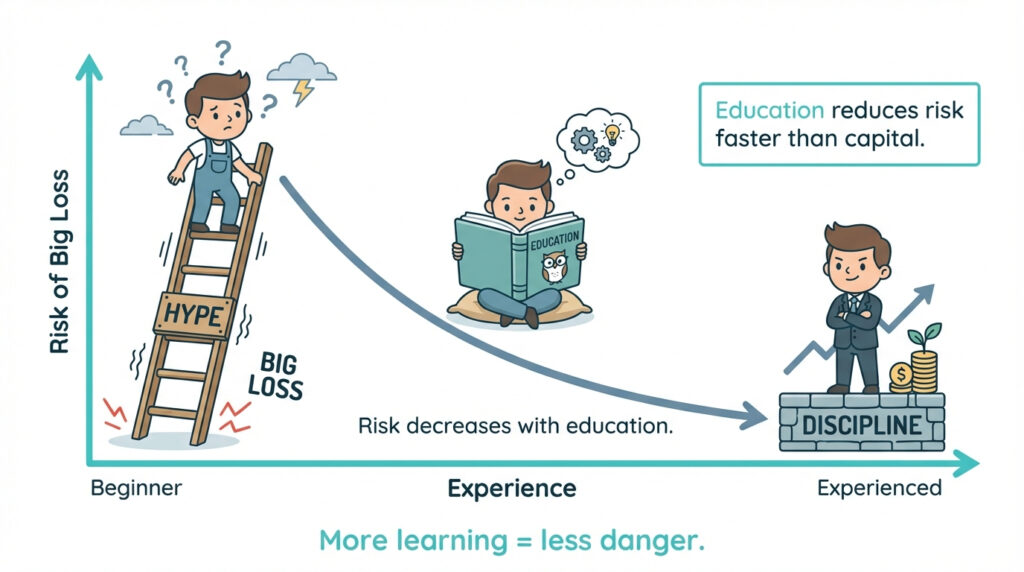
Many newbies chase cash without understanding the risks involved. They invest too much in one idea or trade too aggressively, often leading to significant financial losses that a more balanced risk-management approach could have avoided.
Risk isn't a choice. It's the heart of investing. This reality is laid out in the article Why All Investments Carry Some Risk?, where it's clear that uncertainty is a given, but something we can handle
Mistake 7 – Overtrading and Overreacting
More action doesn't always equal better results. Trading too much can increase expenses, stress, and errors.
This principle ties into the execution discipline we learn in Trade Mechanics & Execution Basics: quality decisions matter more than quantity.
Mistake 8 – Following Hype Instead of Structure
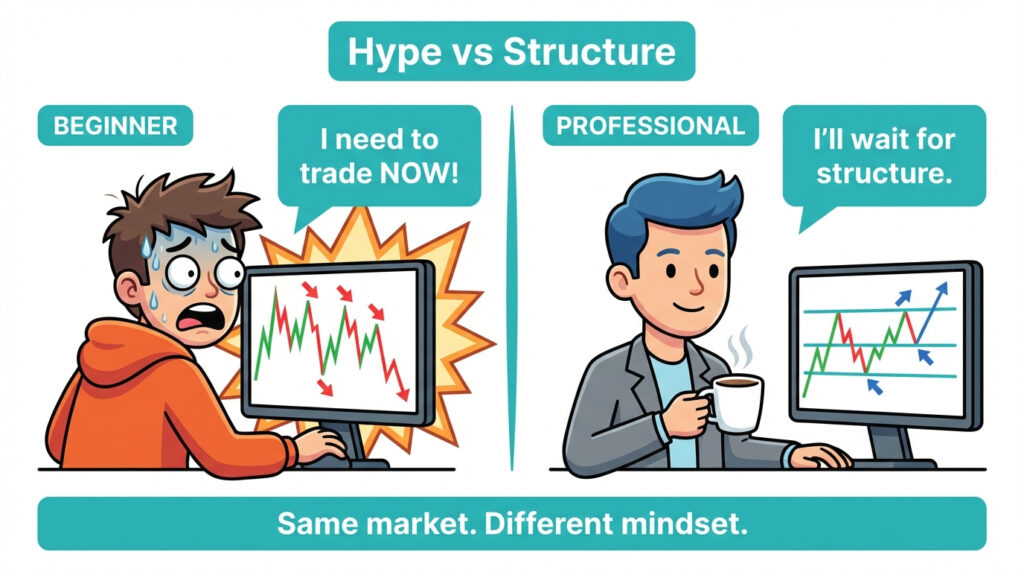
Newbies often chase what's hot in the market, tips from influencers, or market excitement. This shifts the burden of choices away from individuals. Successful investors trust their methods, not just what's trendy. Structure outperforms the noise.
Mistake 9 – Thinking Small Capital Means Small Learning
Some newbies think lowercase doesn't really matter. In real life, using a little capital helps you stick to a routine and stay disciplined.
The article Can Beginners Invest with Small Amounts of Money? endorses this idea, demonstrating that starting small can indeed be a wise decision.
Mistake 10 – Avoiding Education
The most dangerous mistake is not learning. Without learning, we keep making the same errors. Markets become confusing rather than understandable, leading to poor decisions and potential financial losses.
VARIANSE Academy's website offers structured learning that builds concepts gradually, rather than relying solely on intuition.
Mistake 11 – Practicing With Real Money Before Using a Demo Account
Understanding market trends through real investments can be stressful. A better approach is to hone your execution skills in a safe, controlled environment.
You can build execution discipline safely in a demo setup, like the VARIANSE trading account, where you can see real market moves without risking money.
Conclusion: Common Investing Mistakes Beginners Make: Avoidable Errors
Even intelligent individuals can make mistakes when they are new to investing. These issues arise from a lack of a proper framework, unrealistic expectations, and emotional decision-making.
When newbies trade quick wins for steady learning, excitement for knowledge, and panic for insight, their investing becomes steadier and more reliable. Errors turn into learning opportunities, not just setbacks.
Investing isn't just about dodging mistakes. Learning is more about grasping concepts than repeating them.








