


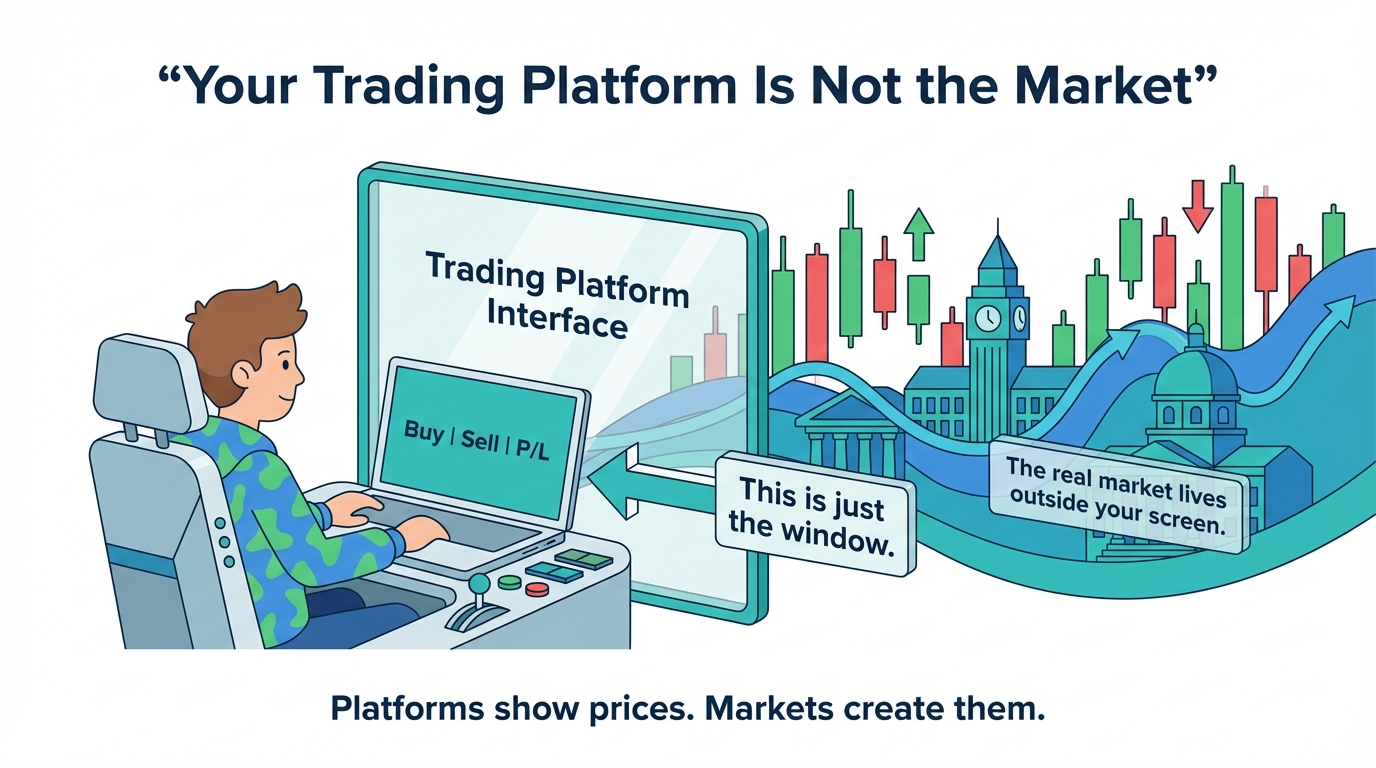
When people search for how online trading platforms work, they are usually trying to understand what actually happens after they press “buy” or "sell". A trading platform may look like a simple app or website, but behind it sits an entire system that connects your decision to real financial markets.
An online trading platform isn't the actual market. The platform provides an interface for interacting with your broker's trading systems, which may connect to exchanges or liquidity providers. Getting the hang of it clears up any confusion, helps reduce impulsive trading decisions, and lets you trade with a solid plan rather than relying on guesswork
What Is an Online Trading Platform
An online trading platform is software that lets you check market prices, manage your account, and place trade orders. It serves as an interface between you and your broker's trading services.
- The broker provides market access.
- The platform provides control and visibility.
If you're still trying to wrap your head around the difference between a broker and a platform, you'll find everything laid out clearly in the article What Is a Broker and How Does It Work?, which separates the infrastructure and responsibilities.
What Happens When You Place a Trade
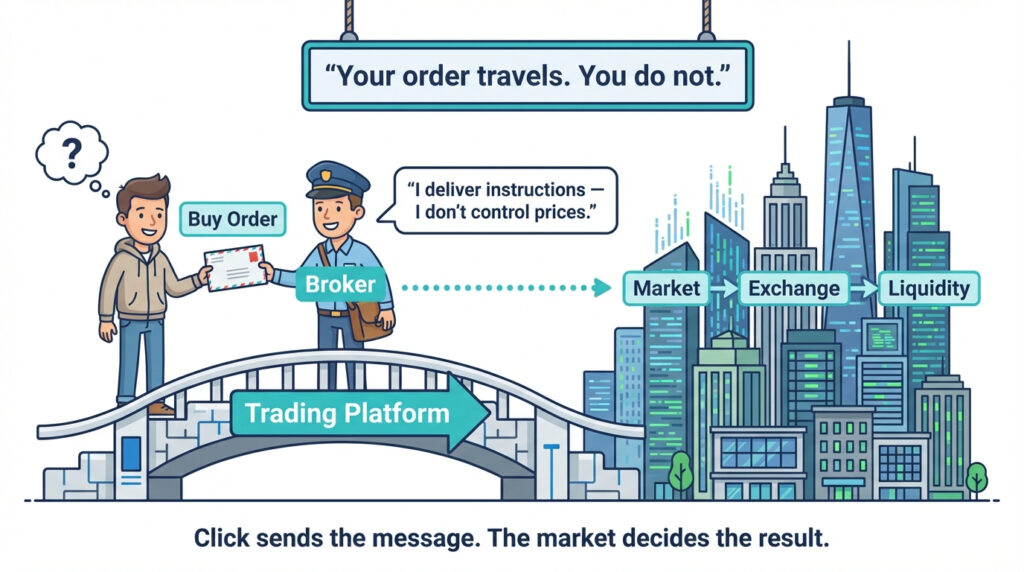
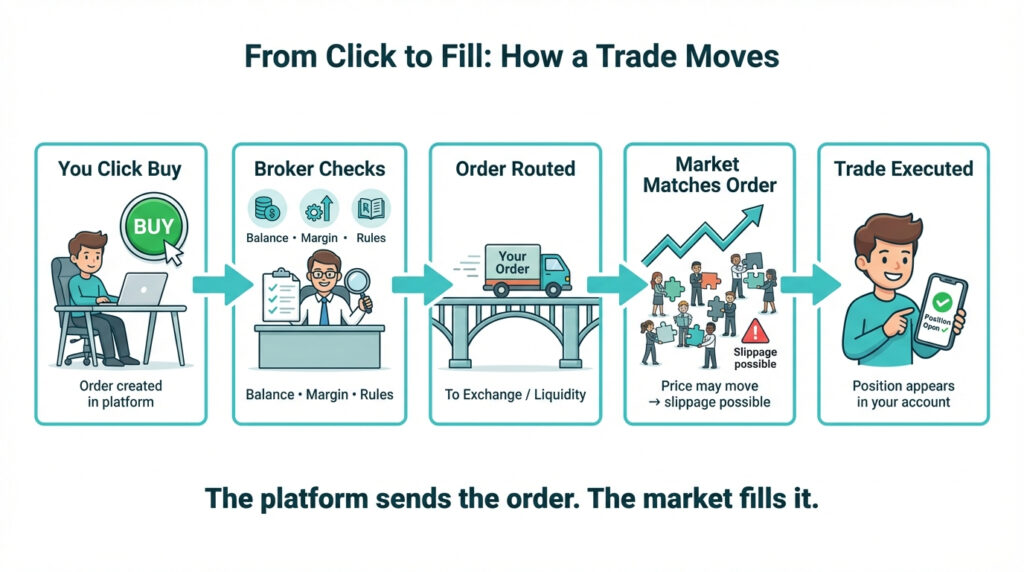
When you place a trade, you submit an order instruction, not just jump into the market. The platform forwards your order to your broker's system. The broker checks relevant account conditions, including available funds, margin requirements and product restrictions, product guidelines, and risk thresholds before proceeding to the next step.
From there, the trade can be executed either through a direct swap or via a liquidity provider, depending on the instrument. This execution pathway is part of the structure explained in Trade Mechanics & Execution Basics, where order behavior and pricing flow are shown as mechanical processes, not magic.
How Are Prices Displayed on Trading Platforms
The platform doesn't set the prices you see. They come from market sources such as exchanges or major liquidity providers. The platform shows them live as they happen.
Prices shift when supply and demand change, new information hits the market, or big players tweak their investments. The people driving this whole thing are laid out in 🔗 Financial Market Foundations, which explains how market participants, supply and demand, and trading activity contribute to price formation.
Market Orders vs Pending Orders: What's the Difference
Trading platforms usually allow two main order types.
- Market orders are intended to execute as soon as possible at an available market price.
- Pending orders are submitted with specified price conditions that determine when they may be triggered or executed.
Both are execution instructions. The platform exclusively handles those deliveries. Execution depends on market conditions, liquidity, and the order type. Watching this distinction helps avoid mix-ups when costs shift faster than expected.
For a more detailed explanation of trading instructions, the U.S. Securities and Exchange Commission (SEC) provides educational guidance on different order types, including market, limit and stop orders.
Why Can Trade Execution Prices Differ
Many newbies think trades should hit the price they're looking at right on the nose. In real markets, prices are always in motion. These conditions can result in slippage, delayed execution or partial fills.
This situation is not a platform error. It's just the way things go with markets moving in real time. The Bank for International Settlements describes how market liquidity and price formation are constantly changing, influenced by the number of participants and the flow of orders.
How Do Trading Platforms Help Manage Risk
Platforms let you manage your risks with tools such as stop losses, take profits, and position sizing. These aren't promises. These are tools designed to help traders manage positions and risk.
Risk is what you face when you can't predict the future, but you can manage it. According to this link called What Does Investment Risk Really Mean?, platforms are here to help us manage risks, not to eliminate them.
The Financial Conduct Authority (FCA) explains investment risk and returns, helping beginners understand why financial risk should be assessed before committing capital.
Why Can Trading Platforms Trigger Emotional Reactions
The trading platform refreshes instantly with live updates. Profit and loss figures change right away. Such changes can put a lot of stress on even experienced or disciplined traders.
The article Why Emotions Affect Investment Decisions? discusses how fear and greed naturally arise when we're unsure about something. Platforms really amp up emotions because they show risks in real time.
Why Do Beginners Lose Money When Trading
Most losses aren't due to the platform; they are due to how people use it.
- Overtrading.
- Ignoring risk limits.
- Chasing price movement.
- Trading with money needed for essential living expenses.
These patterns are laid out in the article How People Lose Money in Investing and How to Avoid It, highlighting that our actions play a bigger role than the gadgets we use.
How Can Demo Trading Platforms Help Beginners
Using real cash to learn platform mechanics adds too much stress. A more cautious method involves testing actions without risking money.
A demo account on the VARIANSE trading page lets newbies get the hang of buying and selling, watching prices change, and managing their emotions without risking real capital.
Platforms Do Not Replace Education
Platforms provide access, but they don't guarantee comprehension. Without education, even the best platform can turn risky.
At VARIANSE Academy, we build our education platform on solid foundations. It's all about connecting platform use to market savvy, a disciplined approach to risk, and keeping a cool head, not just mindlessly clicking buttons.
Platforms Are Tools, Not Strategies
A trading platform is like a pilot's cockpit. This tool provides data and lets you manage it, but it doesn't pick the path or guarantee wins. Strategy comes from learning, self-control, and risk management.
That's why serious traders focus more on strategy than on tech. Tools can boost your abilities, but they also make it easier to mess up.
Conclusion: How Online Trading Platforms Work
Understanding how online trading platforms work means looking beyond the buy and sell buttons. These platforms allow traders to monitor prices, submit orders, manage positions and access tools designed to support risk management.
However, trading platforms do not predict market movements or guarantee profitable outcomes. Execution prices, market volatility, liquidity and trading costs can all influence results.
By understanding how platforms connect with brokers and execution systems, beginners can develop more realistic expectations, make informed decisions and approach trading with greater discipline.








