


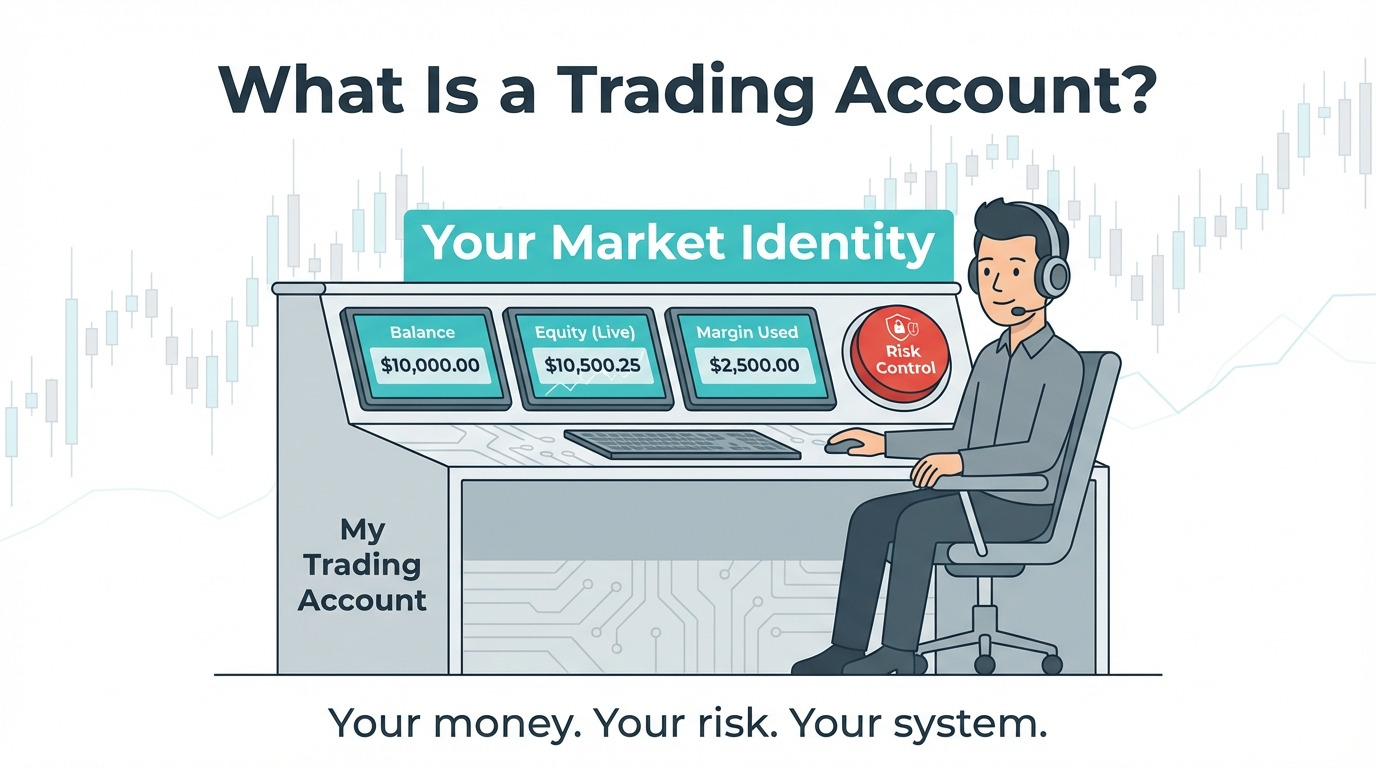
What is a trading account? When newbies ask about trading accounts, they're usually trying to figure out how their funds are held and used once they start trading. A trading account isn't just a place to hold trading funds. It's the link that connects you to the financial markets. The structure enables your capital to translate into direct market participation.
A trading account records your account funds and trading activity, keeps tabs on your trades, figures out your gains and losses, and helps monitor margin requirements and trading exposure it safe with things like margin and leverage. Trading just can't happen without it. Getting a clear picture of what a trading account is clears up any doubts and boosts your confidence before you risk any money.
What Is a Trading Account?
A trading account is like your account for accessing and managing trading activity. This is where your money's managed, your buys and sells are logged, and how much you're playing it safe or taking risks is tracked. It's not just a place to keep things; it's a working system.
Every time you place an order, open a position, or make a risk decision, it all goes through your trading account. This is a key part of your trading adventure, even more crucial than charts or indicators.
Trading Account vs Bank Account: What's the Difference
A bank account is designed to save money, make payments, and keep your finances steady every day. A trading account is set up to get you into the action, make trades, and handle the ups and downs of the market.
A bank account keeps your money safe, but a trading account willingly puts your cash into risky situations. The gap stems from the difference between saving and investing, which is laid out clearly in the article Saving vs Investing: Understanding the Difference That Shapes Your Financial Future. A trading account isn't really about keeping things safe. Taking calculated risks is the key.
How Does a Trading Account Work
When you place a trade, the broker's trading system checks whether sufficient funds or margin are available, whether margin requirements are met, and whether your exposure stays within limits. The platform then forwards your order to the broker, who relays it to the market.
This operational flow is directly linked to how things get done in Trade Mechanics & Execution Basics, where orders are treated as mechanical processes, not guesses or personal takes. Your trading account is the system that powers those mechanics.
Understanding Balance, Equity and Margin in a Trading Account
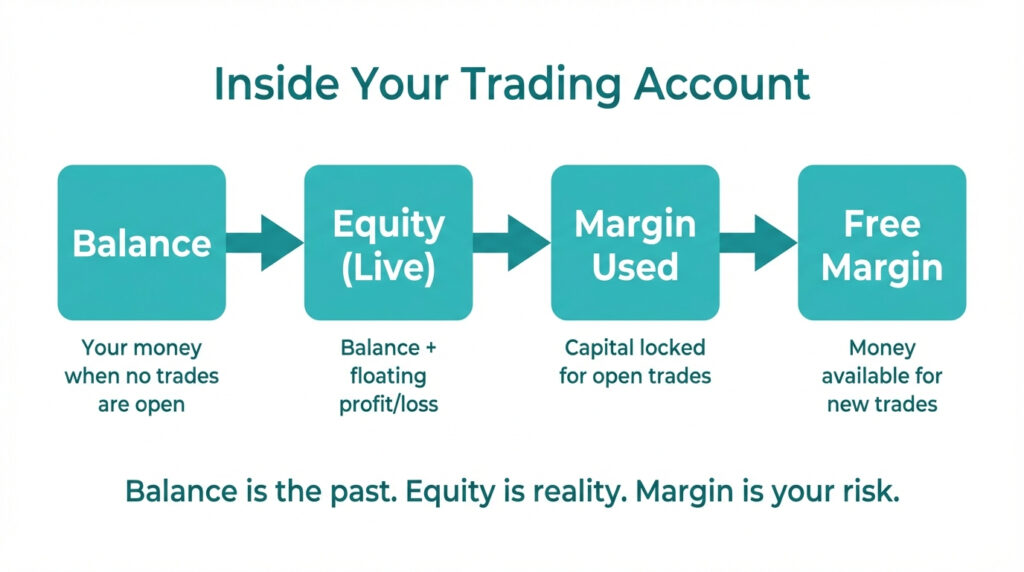
Your trading account is built on a few key principles. Balance reflects the account value excluding unrealised profit or loss on open positions. Equity reflects your balance adjusted for unrealized profit or loss, factoring in any gains or losses. The margin is the portion of your investment funds tied up in maintaining your open trades.
These values help you monitor your account's financial position and margin exposure to market fluctuations. They're more than mere digits. These are clues that help you figure out what to do.
Grasping these ideas clarifies what investment risk truly entails, which we'll explore further in the linked article.
How Do Trading Accounts Manage Risk
Each trading account is built with risk management in mind. Margin, leverage limits, and liquidation rules exist to protect both the trader and the system from extreme exposure.
This setup is in place because, as detailed in the link Why All Investments Carry Some Risk?, you can't just wipe out uncertainty from the market. It's only under our control. A trading account is like a safety net for managing risk before profits begin to accrue.
The Financial Conduct Authority (FCA) explains the relationship between investment risk and potential returns, highlighting why investors should understand the risks associated with financial products before committing capital.
What Are the Different Types of Trading Accounts
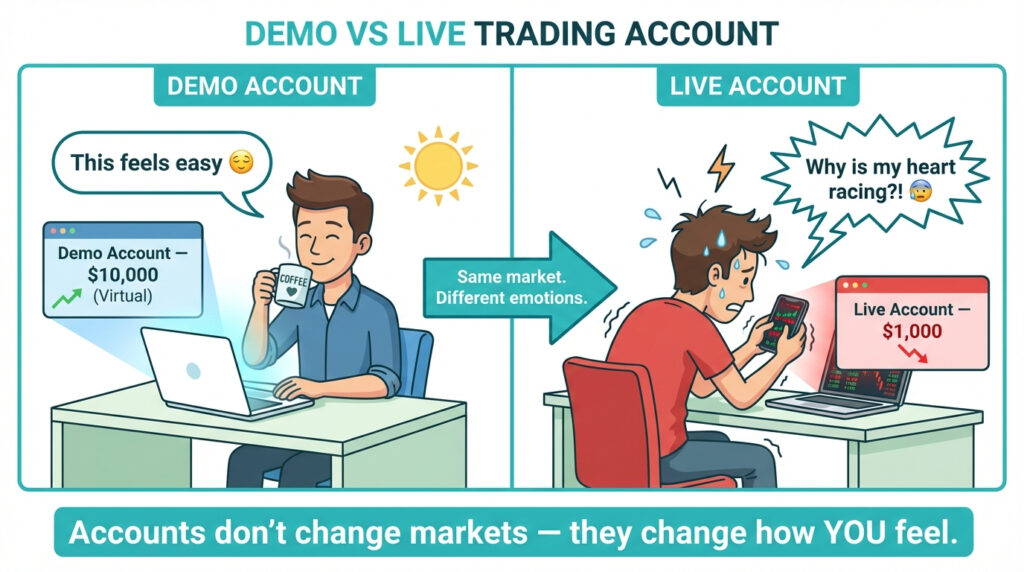
Trading accounts come in various shapes and sizes, tailored to fit different goals and skill levels. Practising with a demo account means you can try things out without spending any real money. A live account handles actual cash transactions. Some accounts cater to newbies, while others are geared professional-level trading.
Beginning in a demo environment available via the VARIANSE trading account page, beginners can become familiar with account mechanics, placing orders, and dealing with emotions without putting any of their own cash on the line.
Why Should Beginners Practise Before Live Trading
Some beginners experience significant financial losses because they see trading as an easy way to make money. This way of thinking is a key reason discussed in the article How People Lose Money in Investing and How to Avoid It?
A trading account can really amplify someone's trading behaviour. If you lack discipline, you'll start losing faster. A structured approach can support learning and more disciplined decision-making.
How Can Trading Accounts Affect Trading Psychology
A trading account displays your gains and losses as they happen. Emotions just can't be dodged. Fear pops up when we're losing. Greed pops up when you're making money.
The article Why Emotions Affect Investment Decisions? shows that how we feel can have a greater impact on how well we execute trades than just knowing the technical aspects. A trading account isn't just about money. It's all in the mind.
Why Should Education Come Before Funding a Trading Account
Opening a trading account provides access to financial markets, but it does not automatically provide the knowledge needed to make informed trading decisions.
Before committing real capital, beginners should understand how markets operate, how leverage and margin work, and why risk management matters.
At VARIANSE Academy, we provide structured educational resources on our site to make sure traders get the lowdown on markets, risk, and how people act before they dive into the money world. Education turns a trading account from risky to disciplined.
For additional guidance, Investor.gov provides educational resources covering investment accounts, financial products and the risks investors should consider before investing.
How Does a Trading Account Support Investing
A trading account serves as a practical tool that transforms our understanding of investing into tangible actions. Investing's deeper meaning is laid out in the link What Is Investing?, which explains putting your money in markets in a planned way, not just gambling. A trading account is where that structure becomes visible.
Why Is a Trading Account a Tool Rather Than a Strategy
A trading account doesn't make the call on when to buy or sell. It just does whatever you tell it to. Strategy, discipline, and patience are key before the account gets funded.
That's why traders view their trading accounts as tools for managing their investments, not just a way to make quick profits.
Conclusion: What Is a Trading Account?
What is a trading account? Your operational identity in the financial markets is your unique approach to trading and investing. The system's got your cash, gauges your risk, carries out your choices, and mirrors your self-control.
A trading account isn't inherently risky on its own. It's risky to use it without any structure, learning, or emotional insight. When you master it, it serves as the foundation for developing a more informed approach to trading.








