
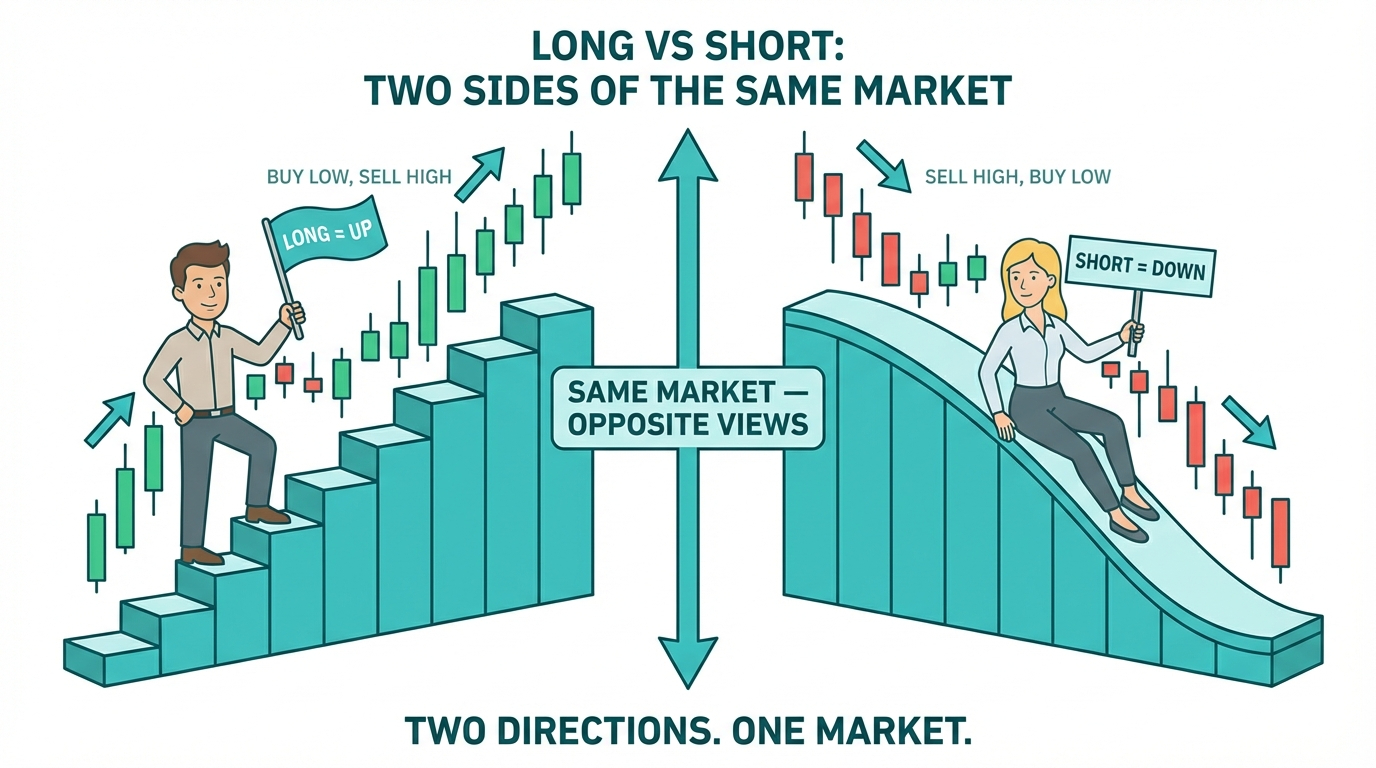
When newbies ask what "long" and "short" mean in trading, they're usually trying to figure out how traders can profit whether prices are climbing or falling. "Long" means taking a position that benefits from rising prices, while "short" means betting on price drops. These two ideas are basically the bedrock of all trading and shape how traders see the market.
Grasping the concept of long and short positions isn't about predicting market movements; it's about understanding how market participation really works. Once you get the hang of it, trading starts to feel logical, and market movements make more sense instead of just seeming random.
What Does Long Mean in Trading
A long position represents exposure that generally benefits when the price of a financial instrument increases.
For example, an investor who buys shares at £100 and later sells them at £120 makes a gross gain of £20 per share, before trading costs.
However, if the price falls to £80 and the investor sells, they realise a gross loss of £20 per share.
In traditional share investing, a long position typically involves owning the underlying shares. In derivative trading, a long position may provide exposure to rising prices without ownership of the underlying asset.
This trading method feels super intuitive because it's similar to how we think in everyday life: buy when prices are down, sell when they're up. The idea ties right into the simple explanation of investing you'll find in the link What Is Investing: you put money down hoping it'll grow over time.
What Does Short Mean in Trading
A short position represents exposure that generally benefits when the price of a financial instrument falls.
In traditional short selling, a trader typically borrows shares, sells them in the market and aims to repurchase them later at a lower price before returning them to the lender.
For example, if a trader sells borrowed shares at £100 and repurchases them at £80, the gross gain is £20 per share, before borrowing fees and other trading costs.
However, if the price rises to £120, the trader faces a gross loss of £20 per share.
Short exposure can also be created through derivatives, such as contracts for difference (CFDs), without borrowing the underlying shares directly
This idea seems odd to newbies since it flips the usual way things work, but it's just another way of saying what people think about the market. Instead of saying "this will go up", a short position means "this will go down". Both are legitimate market perspectives
Long and Short Are Market Opinions, Not Strategies
Long and short positions aren't just trading strategies on their own. These are directions. A plan helps you figure out when, why, and how much you should jump in. Whether you're betting on the price going up or down, it's just about whether it's long or short.
This difference is part of the execution framework explained in Trade Mechanics & Execution Basics, where orders and positions are shown as intentions, not forecasts.
How Long and Short Positions Are Created
Long and short positions are generally established through executed trading orders.
Opening a long position typically involves buying a financial instrument or entering a derivative contract that provides exposure to rising prices.
Opening a short position may involve selling borrowed shares or entering a derivative contract that provides exposure to falling prices.
However, buying and selling do not always create new positions.
For example, a buy order may close an existing short position, while a sell order may close an existing long position.
The article How Online Trading Platforms Work? breaks down how these platforms act as a means for communication, showing that they're more like tools for connecting rather than the ones calling the shots
How Profit and Loss Work for Long and Short
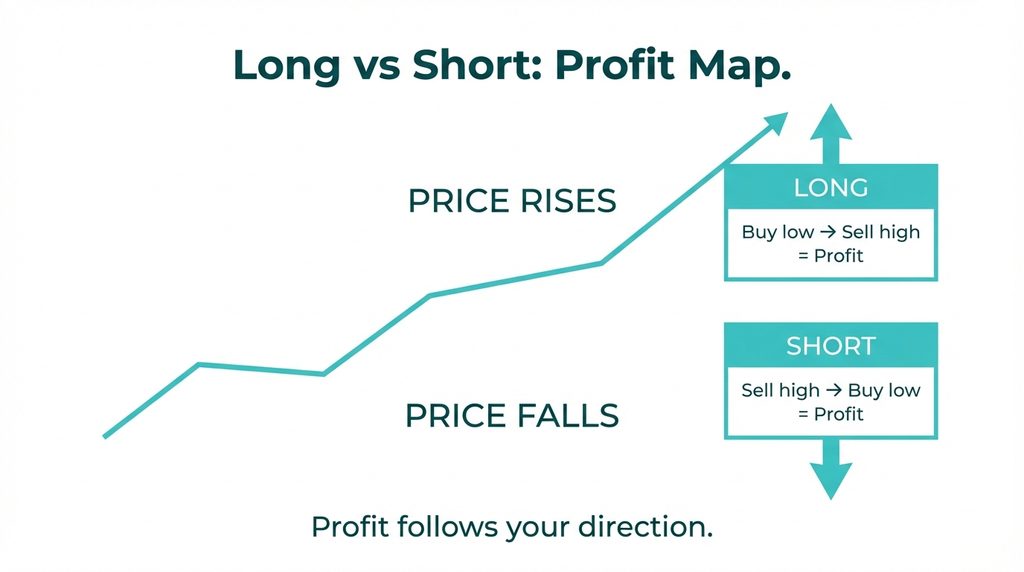
When you're holding a long position, you make money when the price climbs higher than where you first bought it. When the price dips below it, we see a loss.
When you're short, you make money if the price drops below what you paid. Price going up means we lose. This symmetry suggests that long and short positions mirror each other. They just react to price changes.
Why Do Long and Short Positions Exist in Financial Markets
Long and short positions allow market participants to take different forms of exposure to financial instruments.
Investors may take long positions when they expect prices to rise or want to hold assets for long-term investment purposes.
Short positions may be used to speculate on falling prices or to hedge risks associated with existing investments.
For example, an investor holding a portfolio of shares might use a short position in an appropriate financial instrument to offset some potential losses during a market decline.
This mix of viewpoints is key to how prices are determined, as explained in 🔗 Financial Market Foundations, where markets are considered a collection of competing guesses rather than fixed numbers.
Do Long and Short Positions Carry the Same Risk
Both long and short positions involve financial risk, but their risk characteristics are not identical.
For an unleveraged long position in ordinary shares, the maximum loss is generally limited to the amount invested if the shares become worthless.
Traditional short selling carries a different risk profile. Because an asset's price can theoretically rise without limit, potential losses on an uncovered short position can also be theoretically unlimited.
Leveraged trading introduces additional risks for both directions, as traders may control positions larger than the margin committed.
Risk also depends on liquidity, volatility, trading costs and the characteristics of the financial instrument.
This is explained in the link What Does Investment Risk Really Mean?, which says that uncertainty is the main thing you deal with in the market, whether you're buying or selling.
Emotional Pressure in Long and Short Trading
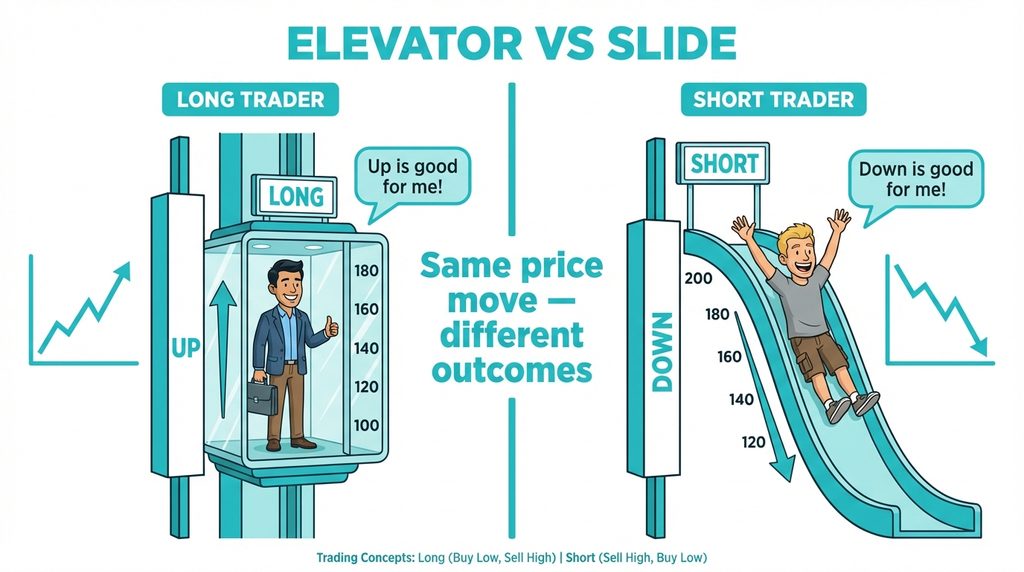
Long positions can get pretty scary when the market dives. When prices start climbing fast, people holding short positions tend to get concerned about potential losses. Emotions can have both positive and negative effects.
The psychological side of this reaction is explained in Why Emotions Affect Investment Decisions?, where emotional response is shown to be a natural reaction to uncertainty and exposure.
How Do Long and Short Positions Interact with Market Prices
Long and short positions represent different forms of exposure to market movements. However, the buying and selling activity associated with opening, adjusting or closing these positions can also influence market prices.
Price movements are affected by factors such as supply and demand, liquidity, economic developments and investor expectations.
For individual traders, the direction of a position determines how price movements affect their potential profit or loss.
Understanding this relationship helps beginners distinguish between taking market exposure and influencing market prices.
Why Beginners Should Practice Direction First
Newbie traders sometimes jump into actual trading without fully understanding directional exposure. A smarter way to learn is to spot the difference between long and short reasoning without spending any cash.
The VARIANSE trading account page offers a safe space where traders can observe how long and short positions react in real market conditions without risking their money.
Long and Short Are Tools, Not Guarantees
Holding a long position does not guarantee a profit doesn't mean it'll make money. Being short doesn't automatically mean you're safe. Both are just personal views.
When it comes to learning, staying on track, and determining the right team size, knowing where you're headed matters less. This organized learning journey is crafted within the VARIANSE Academy's educational hub, where we tackle market trends, risk management, and emotional control all at once.
Long and Short in the Bigger Picture of Trading
Trading gets a lot easier when you realise it's just a choice between prices going up or down. Participating in that reality is just about choosing between long and short.
This uncomplicated method simplifies the process, enabling novices to focus on the fundamentals without becoming overwhelmed by the specifics.
Conclusion: What Do Long and Short Mean in Trading
Long and short positions represent two different directions of market exposure.
- Long: A position that generally benefits when prices rise.
- Short: A position that generally benefits when prices fall.
Neither direction guarantees a profit, and each involves different risks depending on the financial instrument and trading conditions.
Understanding long and short positions helps beginners interpret market movements, recognize potential gains and losses, and make more informed trading decisions.
Ultimately, successful risk management depends on more than choosing the right direction. Position sizing, trading costs, market conditions, and discipline are equally important.