


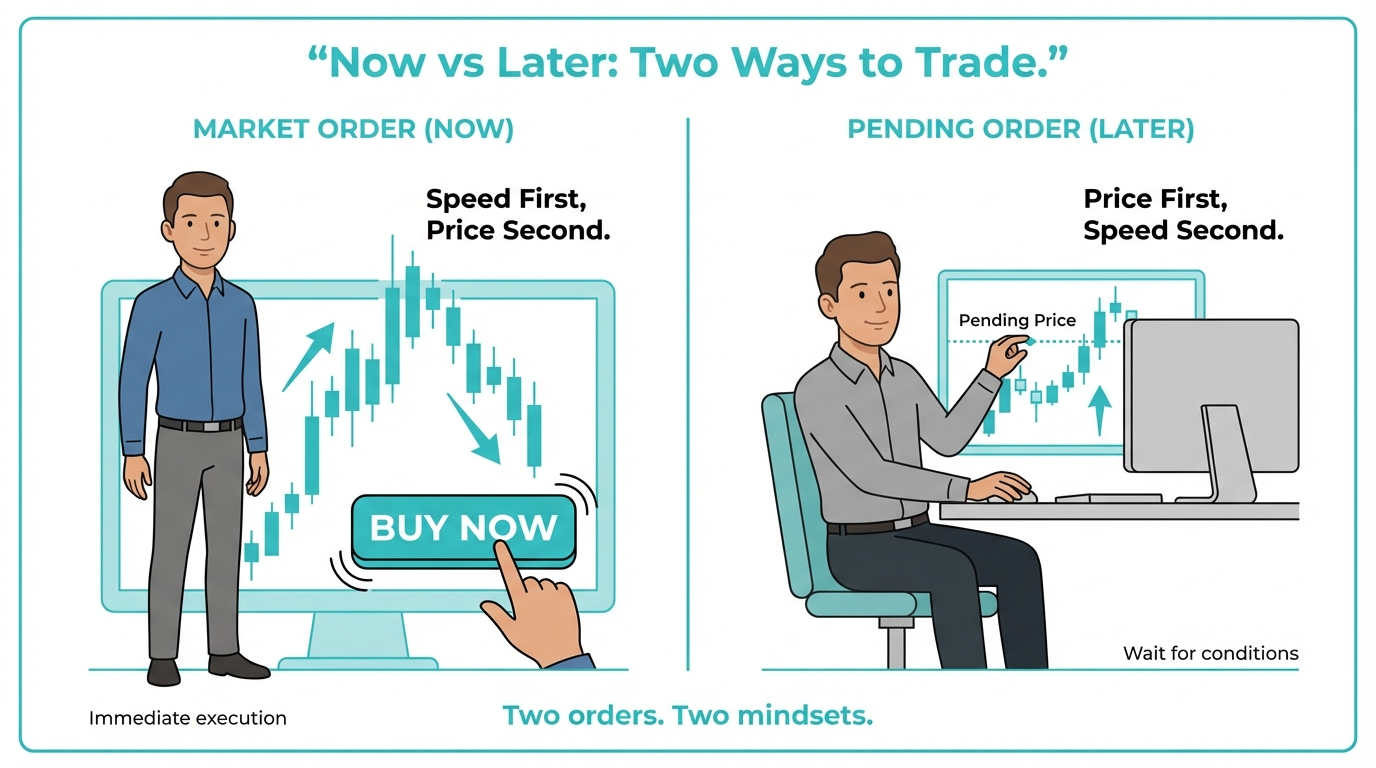
When beginners search for “market order vs. pending order", they are usually trying to understand one simple thing: “Should I enter a trade now, or should I wait for the price to reach a specific level?”
These two order types reflect distinct methods of market interaction. A market order seeks prompt execution but is not guaranteed to execute instantly or at a particular price. An order is pending with certain conditions attached.
Figuring this out isn't about picking the "better" sequence. Finding the ideal balance between control, patience, and structure is crucial for your trading style.
What an Order Really Is in Trading
An order is an instruction you give to your broker to buy or sell an asset under specific conditions. It's not a forecast. This directive outlines your preferred level of involvement in the market.
This execution flow is part of the mechanical process explained in Trade Mechanics & Execution Basics, where trading is described as instruction-driven rather than opinion-driven.
What Is a Market Order?
A market order tells the broker, "Execute my trade immediately at the best available price.”
It prioritises speed over pricing accuracy. You can't dictate the precise price. You're responsible for when things happen. The market sets the final price based on the available supply and current buying and selling activity.
When Might Traders Use Market Orders?
Market orders may be appropriate when prompt execution is more important than controlling the exact entry or exit price.
Common situations include:
- Entering a position when immediate market exposure is required.
- Closing an existing position as part of a risk management plan.
- Trading highly liquid markets where execution is generally more straightforward.
- Executing a predefined strategy that requires prompt order submission.
However, market orders can experience slippage, especially during volatile or illiquid market conditions.
What Is a Pending Order?
A pending order is an instruction to buy or sell a financial instrument when specified price conditions are met. Unlike a market order, which seeks prompt execution, a pending order allows traders to define conditions in advance.
Depending on the order type, these conditions may determine the price at which an order can execute or the level at which it becomes active. However, pending orders do not always guarantee execution.
For example, limit orders may remain unfilled if suitable prices are unavailable, while stop orders may execute at a different price from the trigger level.
Types of Pending Orders in Simple Terms
| Order type | Typical placement | Purpose |
|---|---|---|
| Buy Limit | Below the current market price | Buy at the limit price or better |
| Sell Limit | Above the current market price | Sell at the limit price or better |
| Buy Stop | Above the current market price | Trigger a buy order when prices rise to the stop level |
| Sell Stop | Below the current market price | Trigger a sell order when prices fall to the stop level |
Limit orders provide greater control over the execution price but may not be filled.
Stop orders become active when their specified trigger conditions are met. A standard stop order generally becomes a market order when triggered, meaning the final execution price may differ from the stop level.
Understanding these differences helps traders select orders that match their intended trading approach and risk tolerance.
Market Order vs Pending Order: The Core Difference
| Feature | Market order | Pending order |
|---|---|---|
| Execution timing | Seeks prompt execution | Waits for specified conditions |
| Price control | Limited | Depends on order type |
| Execution guarantee | Not guaranteed | Not guaranteed |
| Slippage | Possible | Possible, particularly with stop orders |
| Main advantage | Speed | Predefined conditions |
| Main limitation | Price uncertainty | May not execute or may trigger at an unfavourable time |
This difference is just as much about how people act as it is about the tech stuff.
How These Orders Affect Risk
Market orders make your trade known right away. If prices are bouncing around a lot, you might experience slippage.
Pending orders put you in a conditional situation. If the price doesn't hit your sweet spot, no deal happens. Risk is structured as we see it in What Does Investment Risk Really Mean?
Uncertainty's a given, but we can handle it with effective control and discipline.
Execution Quality and Market Structure
The last step for both types of orders depends on how easy it is to buy or sell in the market. In fast or illiquid markets, prices can change between when an order is placed and when it is filled.
This aligns with the Bank for International Settlements' definition of liquidity, which views price formation as a constantly changing process influenced by market participation and the flow of orders.
Market Orders Are Emotion-Driven More Often
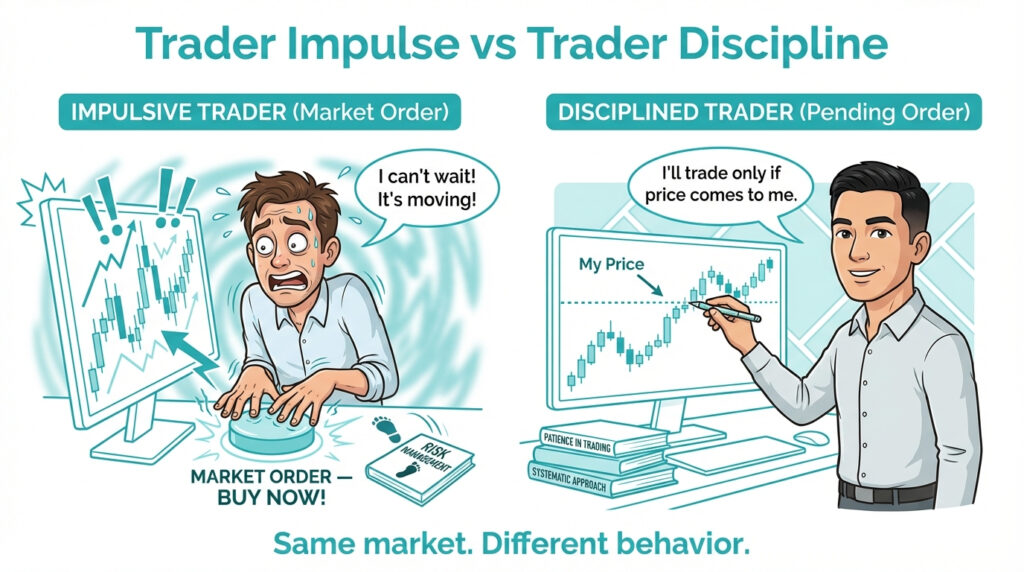
When things become heated, scary, or extremely urgent, people often place market orders.
This emotional reaction is outlined in the article Why Emotions Affect Investment Decisions?, which makes clear that when prices are changing rapidly, people tend to act more on impulse.
Pending Orders Encourage Discipline
Pending orders are making it tough to plan. Decide your price before the excitement of moving kicks in
The process builds up discipline and the ability to wait, two things newbies usually don't have much of at the start.
How Order Types Fit Into Trading Platforms
Both market and pending orders are key features of trading platforms: execution tools, not strategies.
The platform's role as a middleman is laid out in How Online Trading Platforms Work, showing that placing orders is more about chatting than taking charge.
Order Types Do Not Replace Education.
Making a smart trade isn't just about picking between market and pending orders. It's really about learning, managing risk, and keeping your emotions in check.
At VARAINSE Academy, our education page links up learning paths with the right tools, a solid grasp of the market, and a thorough understanding of psychology.
Practising Orders Without Financial Risk
Newbie learners get a leg up by picking up orderly conduct in a chill setting. A VARIANSE trading account page offers a risk-free zone where traders can experiment with different order types. Market orders and pending orders show different approaches to trading.
Market Orders and Pending Orders Reflect Different Mindsets
Pending orders reflect patience and planning. It's not a binary distinction. They show how a trader thinks and reacts when things are unpredictable.
Conclusion: Market Order vs. Pending Order: A Quick Breakdown
So, it's all about picking your style when it comes to market orders versus pending orders. A market order acts now. A pending order waits for conditions. One embraces immediacy. The other embraces structure. When you get the hang of both, your trading turns more chilled, thoughtful, and less on the fly.








