


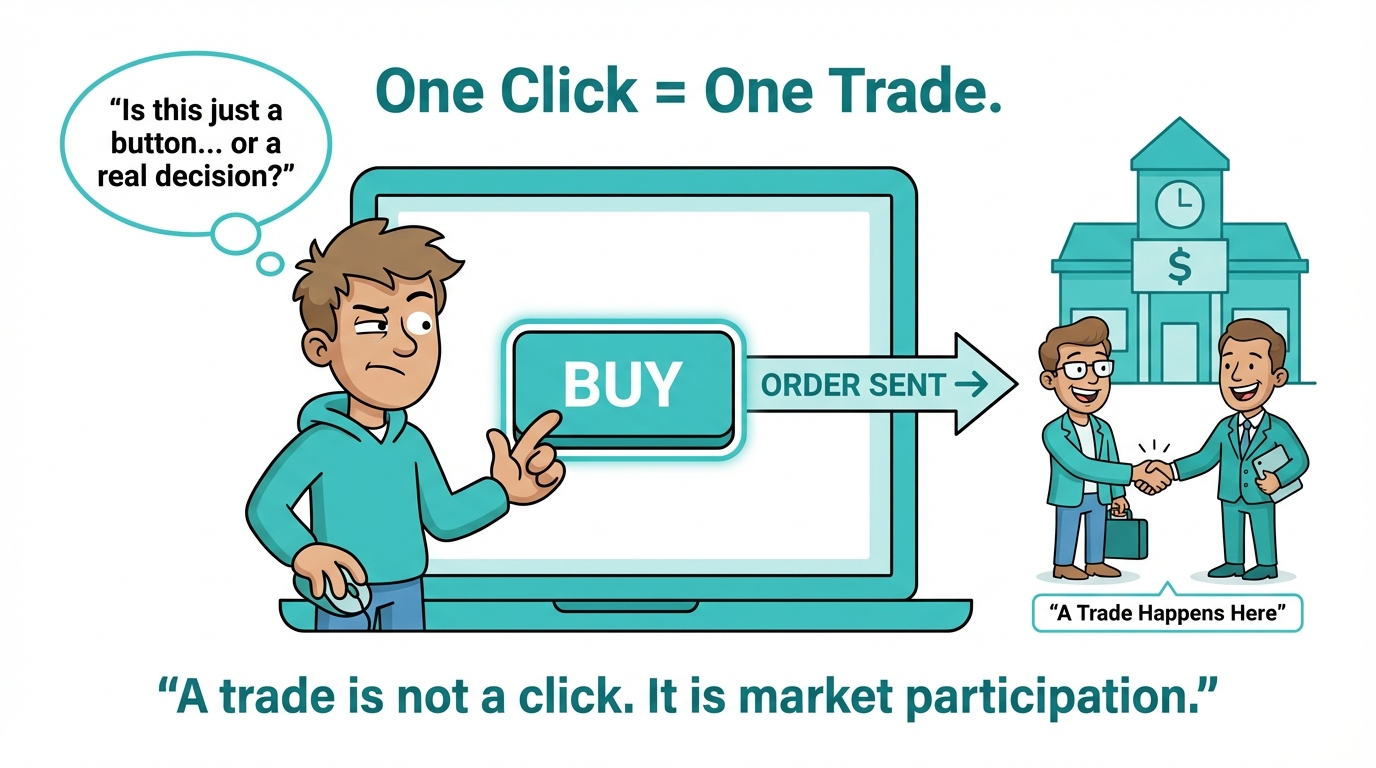
What is a trade? In financial markets, a trade is a transaction that occurs when an order to buy or sell a financial instrument is executed. Trades may involve assets such as shares, currencies, and commodities, or financial derivatives that provide exposure to changes in market prices.
For beginners, understanding how trades work means looking beyond the buy and sell buttons. Every transaction involves execution rules, potential trading costs, and financial risks.
This guide explains how trades are created, how they affect trading accounts, and why understanding risk, leverage, and profit or loss is essential.
What Is a Trade in Simple Terms?
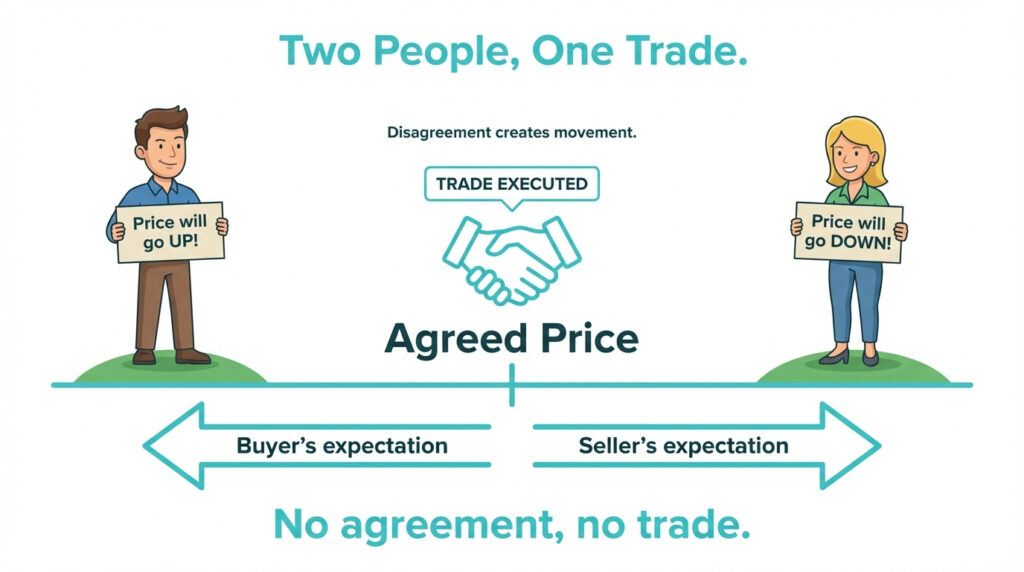
A trade occurs when an instruction to buy or sell a financial instrument is executed.
In exchange-traded markets, transactions generally involve matching buying and selling interest at an executable price.
However, not every trade takes place directly between two individual investors. Depending on the market and financial product, a broker, market maker, or another financial institution may act as the counterparty.
Market participants trade for different reasons, including investing, speculation, hedging and managing liquidity. These transactions contribute to market activity and help establish prices.
How Do Trades Contribute to Financial Market Activity
Financial markets bring together buyers, sellers, financial institutions and other participants. Trading activity contributes to price discovery, liquidity and the exchange of financial instruments.
Depending on the market, prices may be influenced by executed transactions, available buying and selling interest, and quotes provided by market participants. Price charts help traders observe these movements over time.
Every chart, every price move, and every trend comes from the buying and selling of stocks through the activity of market participant. This concept ties right into the basics of 🔗 Financial Market Foundations, where prices are determined by the level of participation, not just by guesses.
What Is the Difference Between Trading and Investing
Trading and investing both involve financial markets, but they may differ in objectives, time horizons, and decision-making approaches. Trading often focuses on buying and selling financial instruments to respond to price movements over shorter or defined periods.
Investing generally involves allocating capital to assets to achieve financial objectives over time. However, the distinction is not absolute. Investors buy and sell assets, and traders may hold positions for extended periods. Both approaches involve risk, and neither guarantees positive returns.
The main difference between these methods is outlined in the section What Is Investing?, where how you spread your money and how long you plan to invest shape your approach. Trading and investing can involve different objectives, time horizons, and risk considerations.
How Is a Trade Executed
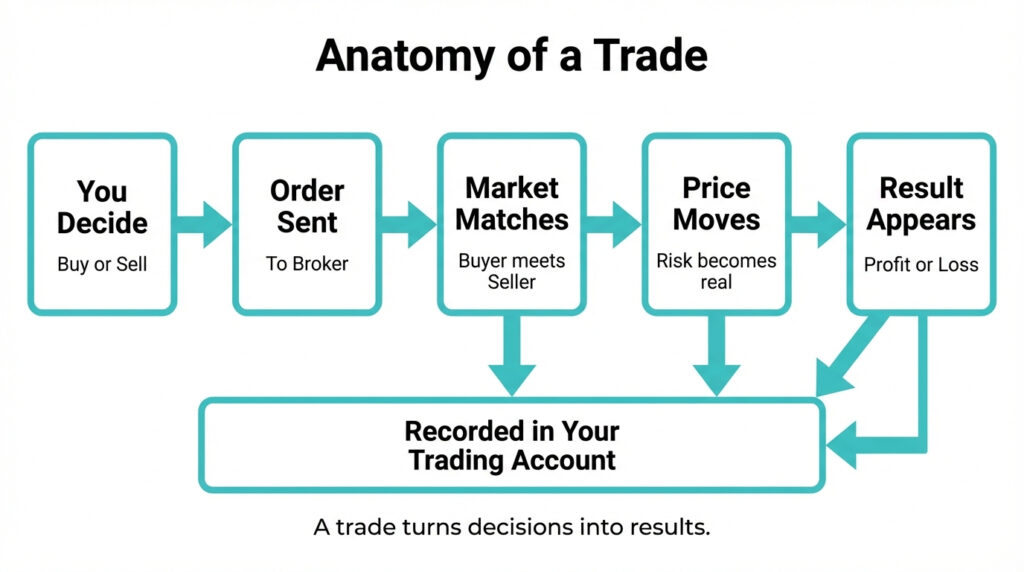
When you make a trade, you're basically giving an order to buy or sell. The order is processed according to the broker's execution arrangements, account requirements and the rules of the financial instrument.
Depending on the broker and product, the order may be executed internally, matched with another participant or routed to an external execution venue or liquidity provider. Once an order is executed, a transaction is recorded and the trader's position or holdings are updated accordingly.
The execution price may differ from the price displayed when the order was submitted, particularly during periods of market volatility or reduced liquidity.
This process is part of the execution system explained in Trade Mechanics & Execution Basics, where trades are depicted as straightforward procedures rather than guesses or opinions.
Does Every Trade Involve Risk
Trading involves financial risk because market prices can move in unexpected directions. When a transaction opens or increases a market position, the trader becomes exposed to changes in the value of that position. The financial outcome may be a profit, a loss or approximately break even, depending on price movements, position size and applicable trading costs.
Importantly, a single transaction does not always complete a trading position.
This kind of unpredictability is what we call market risk; you can read more about it in the article What Does Investment Risk Really Mean? A trade is just a risk that's clear for everyone to see
Profit and loss come from changes in market prices and trading positions.
Every trade eventually ends in a win or a loss. There is no third outcome.
The reasoning for these results is laid out in the What Is Profit and Loss? section, where the result is seen as feedback rather than just a win or a loss.
Why Costs Are Part of Every Trade
Trades always come with a price. How fees, commissions, and spreads affect a trade's profitability or cost.
These expenses are detailed in the link What Are Spreads, Fees, and Commissions?, where executing trades is presented as a structured service, not a free deal.
A Trade Exists Inside a Trading Account
A trade only becomes official when it's logged in your trading account. That account measures exposure, profit, loss, and margin.
The account's purpose is laid out in What Is a Trading Account?, which shows how capital gets into action rather than just sitting still.
How Does Leverage Affect a Trade
Leverage allows traders to control larger market positions with a smaller amount of capital committed as margin.
When leverage is used to increase position size, relatively small price movements can produce significant profits or losses compared with the margin committed.
For example, a 1% price movement on a £10,000 position represents approximately £100 in gross profit or loss, before costs, regardless of the margin required.
This amplification thing is explained in the article Understanding Leverage in Simple Terms, which says leverage is like a risk booster, not a money maker.
Why Do Trades Trigger Emotions
Trading platforms often display changing market prices and unrealised profits or losses in real time.
These fluctuations can trigger emotions such as fear, excitement, frustration and overconfidence.
For example, traders may close positions prematurely to protect small gains or hold losing positions longer than planned in the hope of a recovery.
The emotional rollercoaster of trading is laid out in Why Emotions Affect Investment Decisions?, highlighting how it's totally normal to experience emotional pressure during volatile market conditions
Why Most Beginners Misuse Trades
Newbie traders usually see trades as opportunities to generate substantial profits, not as tests of how much risk they can handle.
This pattern is one of the reasons cited in the book How People Lose Money in Investing?: a flawed setup can trump even the best-laid plans.
How Can Beginners Practice Trading Without Risking Real Money
A demo trading environment allows beginners to explore how trading orders work using simulated funds. It can help users understand order placement, price movements, trading costs and how open positions affect account values.
However, demo trading may not fully reproduce live execution conditions or the emotional pressures associated with real-money trading. You've got a safe place to see how trades work and how prices move, all set up on the VARIANSE trading account page.
Trades Belong Inside Structured Education
A trade isn't just a standalone thing. It is part of a system that covers risk, psychology, cost, and discipline.
That system is pieced together step by step on the VARIANSE Academy education page, turning trading into a more structured learning experience rather than just unstructured trading activity.
Conclusion: What Is a Trade?
Understanding what a trade is helps beginners recognise how financial market transactions work. A trade occurs when an order to buy or sell a financial instrument is executed. Depending on the product, this may involve acquiring an asset, selling an existing holding or establishing market exposure through a derivative.
Every trading decision involves considerations such as execution prices, market risk, position size and trading costs. While individual trades may generate profits or losses, successful risk management requires more than predicting market direction.
By learning how trades are executed and how they affect trading accounts, beginners can approach financial markets with greater clarity, discipline, and realistic expectations.








