
What does buy and sell mean in investing? If you’ve ever asked what ''buy'' and "sell" mean in investing, you’re really asking, "What am I actually doing when I press those buttons, and what changes after I do?"
In the world of investing, "buy" and "sell" mean more than just tapping on a screen. These are trading instructions that can open, adjust or close market positions.
For newbies, buying or selling might seem pretty straightforward. Real-life considerations include market structure, operational procedures, costs, and risk. Once you understand buying and selling, you can approach trading decisions with greater clarity and discipline.
What Do Buy and Sell Mean in Simple Terms
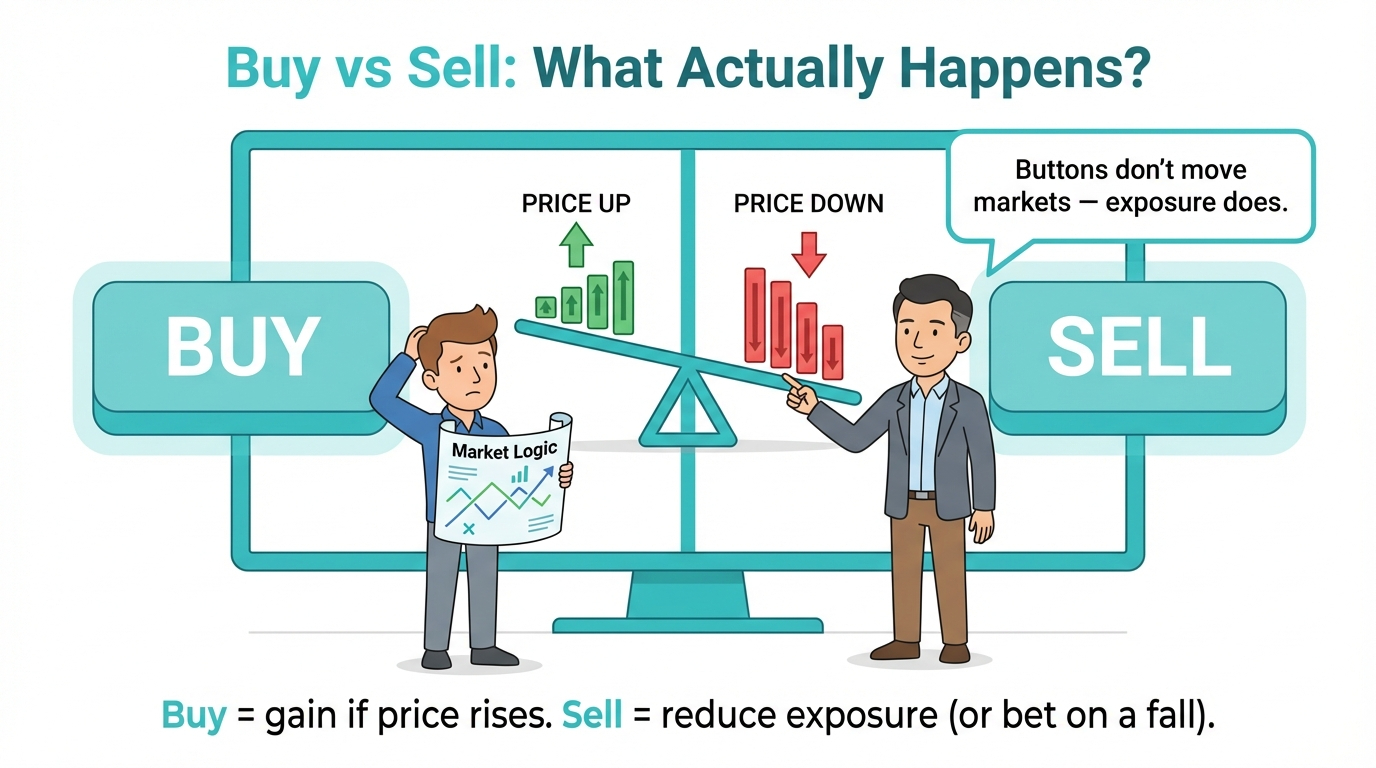
When you place a buy order, you're aiming to gain exposure to price movements in an asset, hoping it goes up. When you place a sell order, it's typically your way of reducing that risk, either by closing out your earlier purchase or, depending on the product, by taking on some exposure that gains if the price drops.
This aligns with the wider view of investing as actively engaging in market activities, as outlined in What Is Investing?
Does Buying Always Mean Owning an Asset
In certain investments, such as shares in a regular investment account, purchasing them means you actually own a piece of the company. With other financial products, such as CFDs or leveraged FX products, buying means you're signing up for a deal that follows price changes instead of actually owning the thing you're betting on
Understanding the account and product structure is key. The basic idea of how your trades are set up and monitored is outlined in What Is a Trading Account?
What Happens When You Press Buy or Sell
When you press buy or sell, you are sending an order instruction. The platform sends your order to the broker's systems, which check factors such as how much money you have, any margin requirements (if you're using leverage), and the product's rules before processing or executing the order.
The practical flow of things like orders, fills, and execution quality, plus why the price you see isn't always the price you get, is all laid out in Trade Mechanics & Execution Basics.
What Is the Difference Between Bid and Ask Prices
Newbie traders usually get puzzled: you've got a "buy" price and a "sell" price side by side. That’s normal. Markets usually display two prices: the ask price for buying and the bid price for selling. The difference between these prices is called the spread.
Trading costs are included in the setup, and the spread is usually the first expense when you start trading. This is laid out pretty straightforwardly in the article What Are Spreads, Fees, and Commissions in Trading Explained Simply.
What Do Buy to Open and Sell to Close Mean
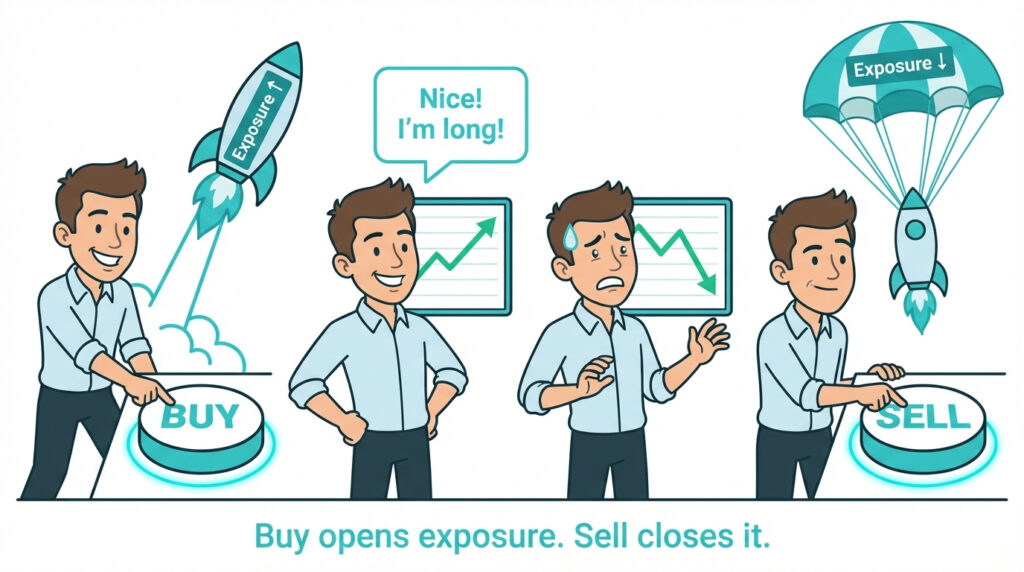
In most beginner investing journeys, you start by buying to get into the market (opening a position) and then selling to get out (closing your position). Your profit or loss is the difference between what you paid to enter and what you got out, minus your costs.
It's pretty clear why we should keep saving and investing apart. When you're dealing with cash that needs to be secure, getting out of a trade feels more like a gut reaction than a calculated move. In the article Saving vs Investing they break down the key differences between savings and investing.
What Do Long and Short Mean in Trading
When you hold a long position, you generally benefit if the price goes up. This is the usual "buy first" strategy.
When you go short on products that let you, you're set to gain if the price drops. Typically, it's about selling first with the plan to buy back later to finish the deal. Short exposure can be trickier since it might up the risk, particularly when you're using leverage.
If you're aiming for a solid understanding of investment risk before diving into more complex stuff, you'll find the definition spelt out in the link What Does Investment Risk Really Mean?
The Financial Conduct Authority (FCA) explains the risks associated with contracts for difference (CFDs), including leveraged exposure to rising and falling market prices without owning the underlying asset.
How Does Leverage Affect Buy and Sell Orders
Leverage doesn't alter the basic meaning of buying and selling. Your exposure compared to your capital changes. A relatively small price movement can result in a significant gain or loss relative to the margin committed, or a huge hit, since your bet size gets multiplied.
The nuts and bolts of this strategy are laid out in Understanding Leverage in Simple Terms, and it's crucial to view leverage as a risk-management tool, not just a quick fix.
Why Do Buy and Sell Decisions Become Emotional
When you've got an open position, you'll feel it: profit and loss updates pop up in real time, and traders may seek certainty during uncertain market conditions in a shaky world. That's why a lot of newbies bail too soon out of fear or stick around way too long chasing the money
The reasons we rush to buy and sell in a panic are laid out in Why Emotions Affect Investment Decisions?, and the usual money-losing patterns are shown in How People Lose Money in Investing and How to Avoid It?
How Can Beginners Practise Buying and Selling
The quickest way to grasp buying and selling is by watching how orders behave in real market conditions, free from financial stress.
So basically, it's about getting the hang of different order types, keeping an eye on the bid/ask price movements, and figuring out how costs play into hitting that break-even point.
A controlled starting point is set up in the demo environment on the VARIANSE trading account page, and a structured learning sequence is laid out on the VARIANSE Academy education page to ensure skills are developed in the right order.
Conclusion: What Does Buy and Sell Mean in Investing
Understanding what buy and sell mean in investing is essential for recognizing how financial market transactions work.
Buy and sell orders allow investors and traders to open, adjust or close positions, depending on the financial product and account structure.
However, buying does not always mean owning the underlying asset, and selling does not always mean exiting the market.
Execution prices, bid-ask spreads, trading costs and leverage can all influence the outcome of a transaction.
By understanding these factors, beginners can approach buying and selling with greater confidence, make more informed decisions and develop a more disciplined approach to financial markets.