


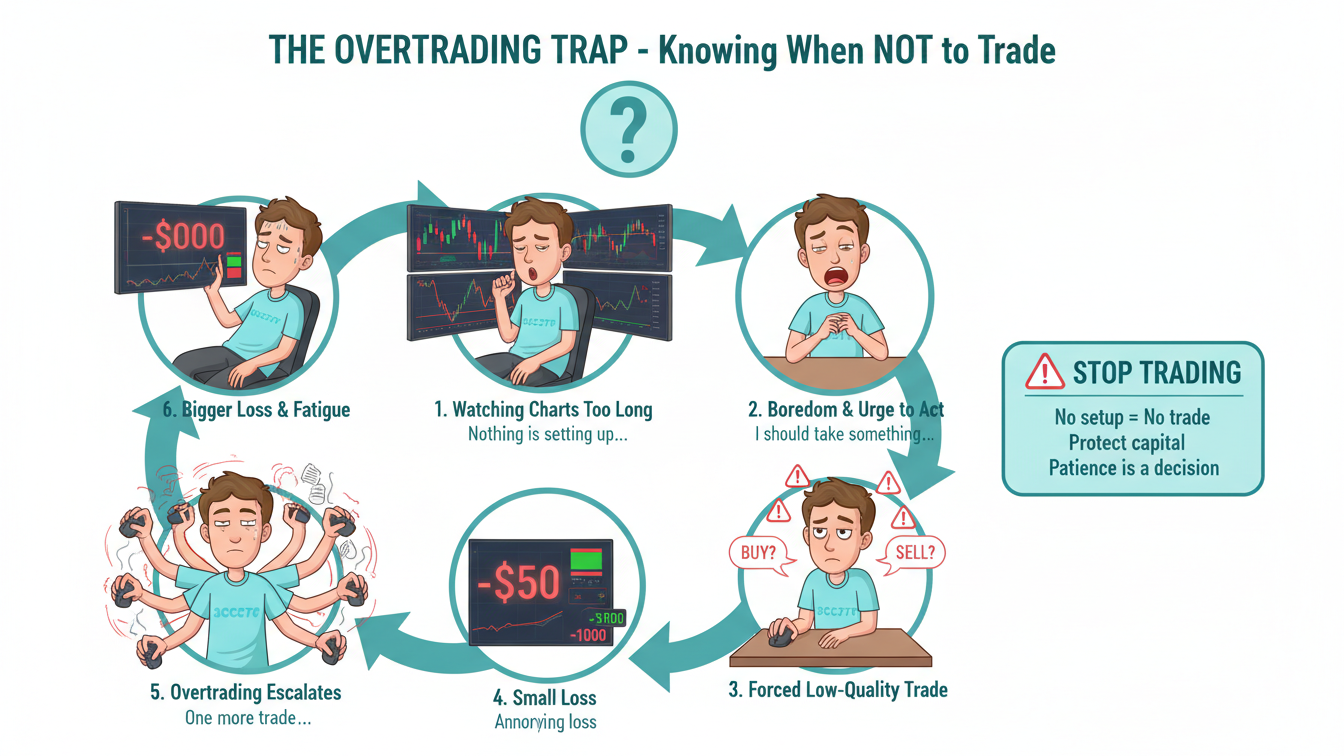
Overtrading is a common mistake that beginners often make. Trading isn’t about lack of intelligence; it’s about having a solid game plan, sticking to it, and maintaining emotional control.
Many beginners believe that the more trades they place, the more opportunities they create. In reality, overtrading usually means taking on more risk, increasing costs, and making emotional decisions.
Overtrading can wear down both capital and confidence, making long-term consistency difficult to maintain. Understanding overtrading and knowing when not to trade are key skills for anyone dedicated to Forex and CFD trading.
What Is Overtrading in Forex and CFD Trading?
Overtrading occurs when a trader opens positions too frequently, too impulsively, or with excessive position size.
Overtrading refers to a situation where the number of trades made by a trader exceeds that which is justified either by his strategy or by the circumstances of the market.
This behavior disrupts the structured decision-making process outlined in Trade Lifecycle Explained where preparation, risk management, and review are key parts of every trade.
Overtrading can also occur alongside excessive position sizing, increasing the potential financial consequences of poor decisions.
Why Overtrading Is So Common Among Beginners.
Overtrading isn't random; it follows predictable patterns of trading psychology.
More Trades Don’t Mean More Profit
Many newbies think that just being busy all the time increases their chances of making money. This belief stems from a misunderstanding of how trading actually works.
Making money isn’t just about how many trades you take; it’s more about managing risk and executing trades effectively. Every trade comes with its own set of expenses, like spreads and the risk of executing teh trade, as detailed in the article Bid-Ask Spread Explained
More trading ups the risk; it doesn’t always mean more chances for profit.
Emotional Trading and the Need for Action.
Markets are always moving, making us feel like we gotta jump in. Traders might feel uneasy when prices move without them, which can lead to rash trades.
This emotional pressure is a key part of Trading Psychology Explained with fear of missing out and frustration leading some traders to make not-so-smart choices.
Emotional trading often leads directly to overtrading.
Overtrading Psychology: The Emotional Drivers
Overtrading psychology is mostly about the mind, not the tech stuff
Revenge Trading After Losses
After losing a trade, traders may feel the urge to recover losses quickly. Some traders enter new positions without proper analysis or risk planning.
Instead of sticking to a set risk management method like Risk Per Trade Explained, traders let their feelings drive their exposure.
This behavior often accelerates losses rather than helping them recover.
Overconfidence After Winning Trades
Success in trades can lead to a misplaced sense of confidence in their ability to control the market. The trader will find himself chasing trades or even taking up larger positions than his usual risk level allows. Overconfidence raises risks.
The Financial Impact of Overtrading
Overtrading damages accounts gradually and consistently.
Increased Transaction Costs and Spread Exposure
Every form of trade has its cost of doing transactions, which include spreads, commissions, as well as slippages.
Traders engaging in unnecessary trades will be subjected to higher costs of transactions which will cut their gains. Frequent trades could lead to many situations where there is an exposure of capital.
This will depend on the trading strategy adopted as well as the environment of trading, among others. Frequent trading does not necessarily amount to overtrading.
Higher Risk Exposure and Faster Drawdowns
Trading several positions simultaneously without evaluating the total risk will increase the risk of your account, especially when the trades are correlated.
In leverage trading in Forex and CFD, negative price changes can result in significant losses as well as reduced margin.
This can destabilize account margin and increase the probability of margin calls, as explained in What Is Margin in Trading?
Overtrading and Risk Management Failure
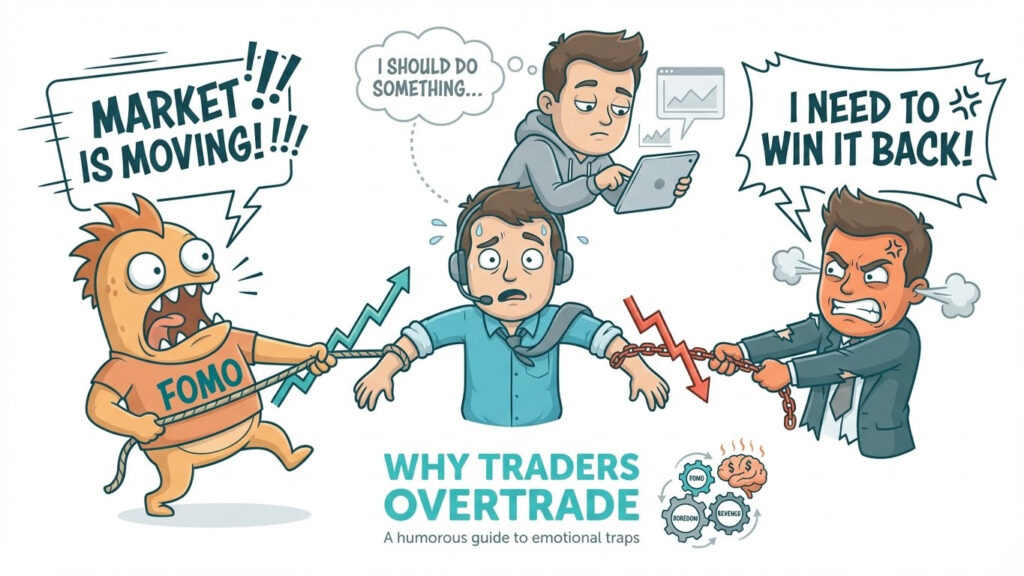
Overtrading almost always reflects weak risk management.
Risk Becomes Uncontrolled
In cases where there is no restriction on the number of trades, size of positions and exposures, traders can be exposed to greater risks.
Position sizing discipline, as detailed in Position Sizing Explained Without Confusion, makes sure that one trade or a bunch of trades won’t wreck your whole portfolio. Overtrading breaks this protection.
Position sizing can help in managing losses, but it cannot reduce the risk of the market or ensure that the trading account is safeguarded against substantial drawdowns.
Emotional Decisions Replace Structured Planning
Risk management means you gotta plan your trades before you actually make them. Overtrading replaces careful planning with quick reactions. This leads to inconsistent outcomes and unstable performance. Structure disappears.
Knowing When Not to Trade Is a Pro Skill
Experienced traders know sometimes it’s best just to chill and not make a move; this is knowing when not to trade.
Markets Do Not Always Provide Opportunity
Not all market conditions are favorable. Low liquidity, high uncertainty, or unclear market structure increase risk. Knowing when not to trade keeps your money safe and your head clear. This restraint is part of professional trading discipline.
Patience Protects Both Capital and Psychology
By knowing when not to trade, traders reduce stress, keep their safety net intact, and stay safe. This supports long-term consistency. Trading less can improve performance.
How Process and Discipline Can Help Reduce Overtrading
A defined trading procedure will assist traders in identifying unnecessary trades as well as adhering to the pre-defined entry points.
Defined Risk and Exit Rules
Entry and exit criteria as well as position sizing and risk management can create structure for the process of decision making in the course of trading.
Stop-loss orders and target profits can help traders here; however, market gaps and slippage may affect the price that will be used to fill out the trade order. Traders thus can manage their risks, although they cannot eliminate losses and anxiety.
Structured Risk Control Stabilizes Behavior
Leverage can magnify both gains and losses in Forex and CFD trading. Traders should therefore consider their overall market exposure, available margin and potential losses before opening additional positions.
The Financial Conduct Authority (FCA) provides further guidance on understanding financial risk and potential returns.
Practical Signs You May Be Overtrading
Overtrading often develops gradually.
Common warning signs include:
- Entering trades without clear reasons
- Increasing trade frequency after losses
- Feeling anxious when not trading
- Ignoring risk management limits
- Trading out of boredom rather than opportunity
Recognizing these signs early prevents long-term damage and repeated trading mistakes.
How to Stop Overtrading
Identifying overtrading begins with identifying those traits which contribute to overtrading. The trader could create set rules for entry, determine what the risk is and analyse decisions made to discover any mistakes.
Using a trading journal could assist traders in discovering these patterns, such as making more trades when there have been losses made or trading setups without a proper setup.
It may be beneficial for a new trader to develop a system using the practice of simulated trades.
Practicing trading in demo environments through VARIANSE account page lets you hone your trading discipline without risking real money.
Structured learning a VARIANSE Academy helps reduce trading mistakes. Consistency develops through controlled exposure.
Overtrading Can Be Both a Discipline and Strategy Problem
Over-trading may not necessarily be a result of lack of discipline. Unclear entry requirements, unrealistic expectations, and ineffective trading strategies may also motivate over-trading.
It is important for traders to examine both their actions and the policies that dictate their actions. This will enable them to know when their trading activities are unnecessary.
Conclusion: Overtrading Explained
Overtrading is one of the major factors why traders may be getting themselves into problems. And this is due to emotional trading, inadequate trading discipline and risk management, and not lack of opportunities.
By changing from non-stop hustling to structured trading, traders achieve better outcomes. There will be better trading discipline, stress reduction and protection of your finances.
In trading, it is all about proper risk management and not trading frequency.








