


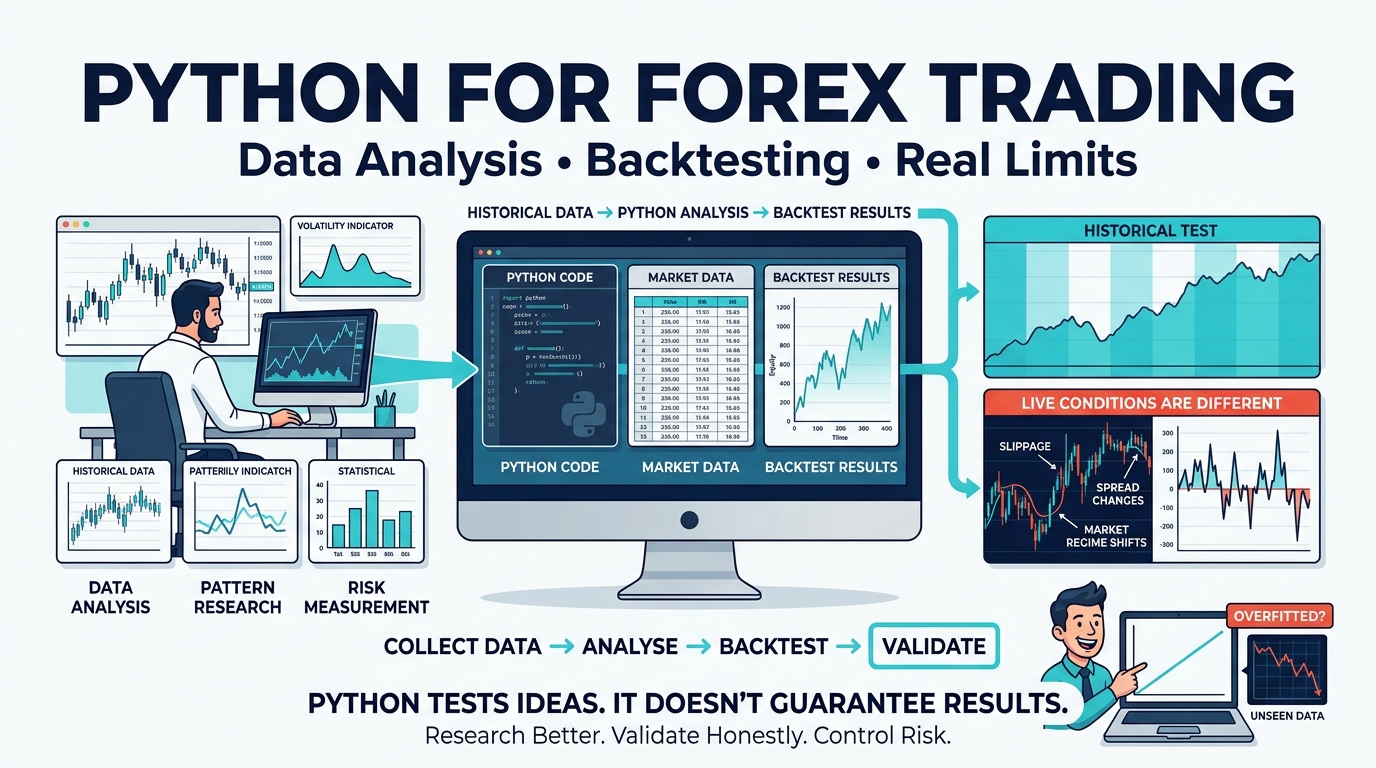
Python for forex trading is sometimes misunderstood. Many beginners think Python can just wave a magic wand and make money or predict the stock market. That belief isn’t just wrong; it’s actually quite risky.
Python’s really more about digging into data and crunching numbers than just making quick cash in the markets. Used correctly, it helps traders crunch numbers, test concepts, and avoid costly blunders before they put their cash on the line. Used wrong, it builds a false sense of security, unrealistic plans, and hopes that fall apart in real trading.
Python doesn’t replace discipline or risk management. This supports making smart choices, the same idea as staying cool with wins and losses in Process Oriented Trading.
Why Python for Forex Trading Matters
Financial markets are data- driven environments. Every candle, spread, and volatility spike is measurable data. Python lets traders deal with this data without letting feelings get in the way
Key reasons traders use Python include:
- Looking into how prices have changed over time (forex data analysis)
- Trying out trading strategies with a clear head (forex backtesting)
- Assessing risk and potential outcomes (quantitative analysis)
- Cutting down on emotional bias
- Checking out plans before actually running them (trading research)
Python doesn’t make you a pro. It shows clear results, like the Reducing Risk Trading Strategy, where fewer trades can outperform more.
What Python Is Actually Used for in Forex & CFDs
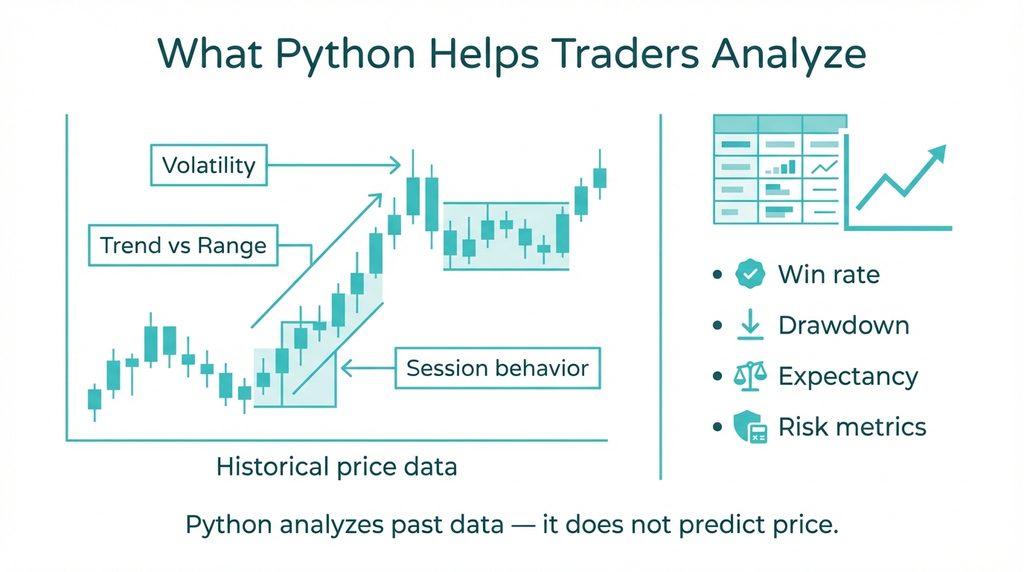
Python is widely used in Forex and CFD trading to analyze historical market data, test trading strategies, and automate repetitive analytical tasks. Its ability to process large datasets lets traders examine price behavior, measure volatility, and spot patterns that are hard to see through manual chart analysis.
However, Python does not predict market movements or guarantee profitable trading outcomes. Its value lies in helping traders make more informed, data-driven decisions while maintaining proper risk management.
Forex Data Analysis With Python
Python excels at managing large datasets quickly and efficiently. Traders often look into:
- Session-based pricing patterns
- Volatility regimes
- Trend vs frequency range
- News reaction patterns
- Currency-pair correlations
Libraries such as pandas and NumPy help traders sift through and handle data faster than reviewing charts by hand.
Key takeaway: Python boosts analysis speed, not guarantee prediction accuracy
Forex Backtesting & CFDs Analysis
Testing a strategy with past data to see how it would have done in Python helps traders do all sorts of cool stuff:
- Apply rules across thousands of trades
- Calculate the win rate, track the drawdowns, and assess the expectancy
- Spot potential pitfalls before putting money on the line
But forex backtesting is more about checking past performance than forecasting the future. Trading people who overlook this tend to get caught in teh overconfidence trap, as explained in the article Overconfidence in Trading.
Quantitative Analysis & Algorithmic Trading
Python is widely used for:
- Quantitative analysis
- Probability modelling
- Risk simulations
- Optimization’s got its limits within certain constraints
Traders don’t have to go all-tech when executing trades. Many traders who like to play it safe stick to Python for research and keep trading the old-school way. This blended method keeps your mental game in check, a key idea backed up in the article Trading Resilience.
Python Research vs Live Forex Trading — The Key Distinction
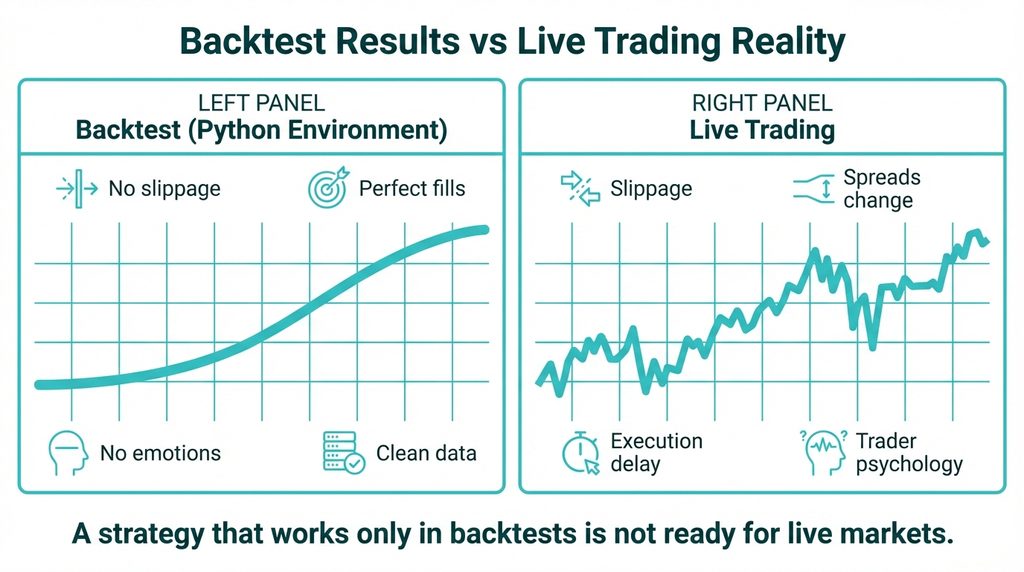
This is where many traders get trapped.
Python operates in a perfect environment:
- No slippage
- No emotional stress
- Cleaned-up historical records
- Assumptions about immediate execution
Live trading operates in a messy environment:
- Spreads fluctuate
- Orders slip
- Psychology interferes
- Markets are changing
A plan that looks perfect in Python might not work in real trading
Rule: Python checks ideas, but it doesn’t promise results. Overlooking this distinction can lead to expectancy issues, as in the article Trading Losing Streaks.
Avoiding Overfitting & False Confidence
Overfitting happens when a plan is dialed in too much to old data. Python helps out when you’re not super disciplined
Common overfitting mistakes:
- Too many indicators
- Overdoing the fine-tuning of parameters
- A tiny number of participants
- Ignoring losing periods
A professional rule applies: If a strategy only works in backtests, it’s not really effective. This kind of behavior is like the psychological slip-up we talked about in Trader Burnout & Overtrading, where you’re just throwing in the towel instead of sticking to a plan.
Who Should and Shouldn’t Use Python for Forex Trading
Suitable for traders who:
- Embrace a structured approach to learning
- I’d rather go with facts than feelings
- Embrace the slow but steady progress
- Respect the importance of risk management
- Not suitable for traders who:
- Look for quick cash gains
- Chase signals
- Don’t bother with journaling or reviewing
- Disregard the odds and the losses
Python rewards patience and discipline. It’s not cool to take shortcuts; that’s the same survival game explained in the link for Professional Trading Psychology.
How Beginners Should Start Using Python
Beginners should focus on analyzing market data and testing simple trading ideas before exploring advanced automation. The goal is to understand how Python supports trading decisions, not to build complex systems immediately.
Start with:
- Downloading historical forex data
- Figuring out the cost and the essential stats
- Trying out a straightforward guideline
- Measuring results truthfully
Avoid starting with:
- Complex algorithms
- Artificial intelligence forecasting tools
- Fully automated robots
Complexity does not automatically improve trading performance. Without a clear understanding of market behavior, strategy testing, and risk management, sophisticated tools can introduce more errors than they fix.
Risk, Execution & Broker Reality
Forex and CFD performance depends heavily on:
- Broker’s performance in executing trades
- Spread behaviour
- Liquidity conditions
Python cannot fix:
- Not so great at handling risks
- Overtrading
- Emotional control challenges
It only exposes them faster.
For real trading conditions, always combine Python research with a demo trading account before going live.
Conclusion: Python Is a Tool, Not an Edge
Python for forex trading is great, but only if you use it wisely. It’s great for filtering out bad ideas, assessing risk, and setting clear expectations. It doesn’t forecast the stock market, automatically cut losses, or replace self-control.
Traders who survive long-term use Python to back up a process, not to dodge accountability. Tools just amplify our actions; they don’t fix them.








